
I have always found solace in the rhythm of the ocean. Its vastness mirrors my own internal landscape, a constant ebb and flow of emotions that can feel overwhelming in their intensity. When grief settled upon me like a suffocating blanket, after experiencing the profound loss of my sibling, the world around me seemed to lose its color, its vibrancy. The mundane tasks of daily life became Herculean efforts, and the laughter of others felt like a discordant melody in my muted existence. In this desolation, a beacon of hope appeared in the form of a funded beach house – a sanctuary specifically designed for those grappling with significant loss. This article delves into my personal journey of coping with grief within this unique setting, exploring the multifaceted benefits and challenges I encountered.
My initial encounter with the concept of a funded grief retreat was through a support group facilitator. I was skeptical, burdened by the common misconception that grief was a private, solitary battle. However, the sheer exhaustion from battling the relentless waves of sorrow pushed me to explore this unconventional avenue. I learned that these initiatives are often born from personal experiences of loss or from dedicated philanthropic organizations that recognize the profound impact of grief on an individual’s well-being. Their mission is clear: to provide a nurturing environment where individuals can process their loss without the added pressures of financial strain or daily responsibilities.
The Financial Barrier to Healing
For many, myself included, the idea of a restorative retreat seems like an unattainable luxury. Grief often brings with it not only emotional turmoil but also financial instability, as individuals may struggle to maintain employment or incur unexpected expenses related to their loss. My own finances were stretched thin, making the prospect of a self-funded escape impossible. The funded beach house eradicated this barrier entirely, allowing me to focus solely on my healing journey. It was a profound act of compassion, a recognition that healing should not be a privilege.
The Curated Environment: More Than Just a House
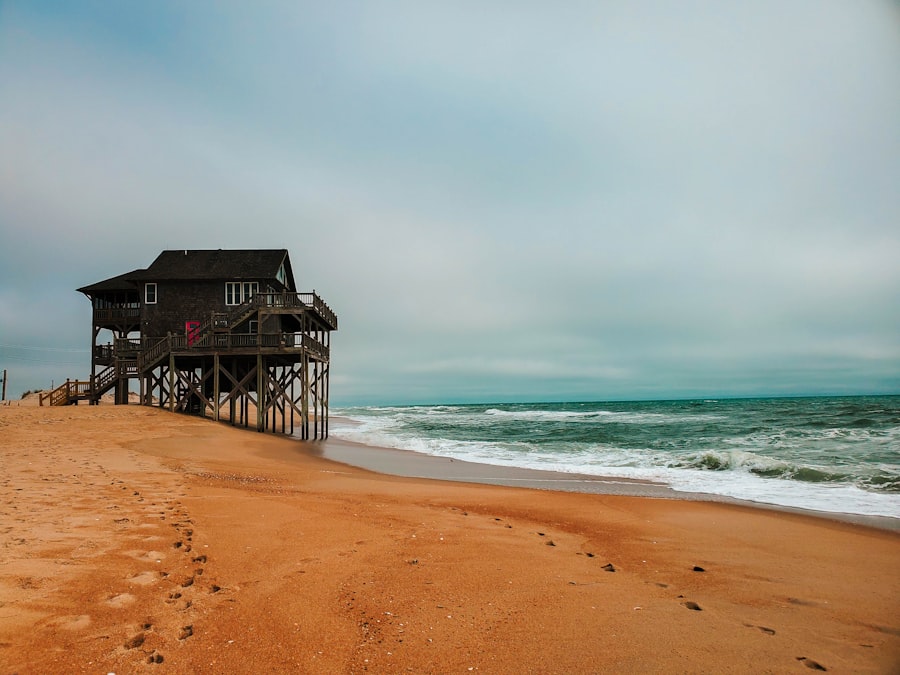
This was not merely a house by the sea; it was a meticulously curated environment designed to foster contemplation and recovery. The architecture, the interior design, even the choice of books on the shelves, all contributed to a sense of calm and introspection. I found myself drawn to the large windows overlooking the ocean, and the soft, natural light that permeated every room. My assigned room was simple yet elegant, with a comfortable bed and a private balcony where I could listen to the waves crash against the shore. This deliberate design, I came to realize, was a silent invitation to shed the weight I carried.
In exploring the emotional journey of grief and its unexpected intersections with life events, I came across a poignant article that resonates deeply with my experience of funding a beach house as a means to cope with loss. The piece delves into how such spaces can serve as sanctuaries for reflection and healing. You can read more about this topic in the article titled “Finding Solace: How a Beach House Became a Refuge in Grief” at this link.
Immersing Myself in the Ocean’s Embrace: Nature as a Therapeutic Agent
The decision to situate these retreats by the ocean is, in my experience, no accident. The ocean itself became a powerful therapeutic agent, a constant companion in my journey of processing loss. Its vastness, its untamed beauty, and its cyclical nature offered me a unique lens through which to view my own grief.
The Rhythmic Comfort of the Waves
The rhythmic sound of the waves, a constant whisper against the shore, became a lullaby for my troubled mind. I spent hours simply listening, allowing the ebb and flow to mirror the surges and retreats of my own emotions. It was a non-judgmental presence, a steady beat in a world that often felt chaotic. This auditory anchor helped me to quiet the relentless internal monologue of sorrow and guilt that had plagued me for months.
The Symbolic Power of the Horizon
The horizon line, where sky met sea, became a profound metaphor for me. It represented both an ending and a new beginning, a boundless expanse that held both what I had lost and what lay ahead. I often found myself staring at it, my thoughts drifting like the clouds above, allowing difficult memories to surface and then gentle dissipate, much like a wave receding from the shore. This visual representation of infinity offered a sense of perspective on my finite existence and the infinite nature of love.
Engaging with the Sand and Sea
Beyond observation, I found immense comfort in physically engaging with the natural environment. Walking barefoot on the sand, feeling the cool grains beneath my feet, provided a grounding sensation. Collecting shells became a mindful activity, each unique shell a small testament to the beauty that can still be found amidst brokenness. Even simply dipping my toes into the frigid ocean water offered a jolt of present-moment awareness, pulling me away from the endless loop of rumination. It was a tangible connection to life, even as I grappled with death.
Structured Support and Individual Autonomy: A Balanced Approach
One of the most remarkable aspects of this funded retreat was the delicate balance it struck between providing structured support and allowing for individual autonomy. I was not forced into activities or group therapies, yet resources were readily available should I choose to engage with them. This personalized approach truly respected the unique nature of each individual’s grief journey.
Optional Group Therapy Sessions
While I initially hesitated, I eventually found myself drawn to the optional group therapy sessions. Sharing my experiences with others who understood, who had walked their own paths of sorrow, created a powerful sense of community. The vulnerability in the room was palpable, and the shared tears and quiet nods of understanding provided a deeper sense of connection than any well-meaning platitude ever could. These sessions, facilitated by experienced grief counselors, offered practical coping strategies and a safe space for emotional release.
Access to Individual Counseling
In addition to group sessions, individual counseling was available. I utilized this resource to delve deeper into specific aspects of my grief, exploring the complexities of my relationship with my sibling and the lingering questions that haunted me. The counselor acted as a compassionate guide, helping me to navigate the labyrinthine corridors of my emotions without judgment. It was a space where I could unravel the knots of my sorrow at my own pace.
Unstructured Time for Personal Reflection
Crucially, there was ample unstructured time, a precious commodity in the relentless pace of modern life. This freedom allowed me to engage in activities that were personally restorative. I rediscovered my love for sketching, capturing the ever-changing moods of the ocean in my notebook. I read books that resonated with my experience, finding solace in the words of others who had faced similar losses. This autonomous time was not about escaping my grief but about fully experiencing it, in a space where I felt safe and unburdened by external expectations.
The Unexpected Gifts of Shared Experience: Building Connections

Though I arrived at the retreat feeling isolated in my grief, I left with a profound appreciation for the connections I forged with others. The shared experience of loss, while heartbreaking, also created a unique bond among the residents.
Bonds Forged in Shared Vulnerability
There is a profound intimacy that develops when individuals are willing to be truly vulnerable with one another. In the shared space of the beach house, this vulnerability was not a weakness but a strength. We found common ground in our narratives of loss, in the ache in our hearts, and in the quiet moments of shared understanding. We cooked meals together, shared stories on the porch as the sun set, and offered silent comfort when tears flowed freely. These were not friendships born of convenience but of a deep, resonant empathy.
Learning from Diverse Grief Narratives
Each individual brought a unique story of loss, and listening to these narratives broadened my understanding of grief itself. I learned that while the pain of loss is universal, its manifestation and its journey are deeply personal. Hearing how others navigated their sorrow offered me new perspectives and validated feelings I had previously thought were unique to me. It shattered the illusion that there was a “right” way to grieve.
The Power of Simply Being Present
Sometimes, the most profound support came not from elaborate conversations or advice, but from simply being present with one another. A shared glance, a comforting hand on an arm, a quiet presence during a moment of intense sadness – these acts of unspoken compassion spoke volumes. This silent solidarity was a powerful reminder that I was not alone in my struggle.
After the loss of a loved one, many people seek solace in places that hold special memories, and for some, a funded beach house can provide a much-needed escape. In a recent article, the emotional journey of individuals finding healing through such retreats is explored, highlighting how these serene environments can aid in the grieving process. If you’re interested in learning more about this topic, you can read the full story in the article found here.
Beyond the Horizon: Integrating Healing into Daily Life
| Metric | Value | Description |
|---|---|---|
| Funding Amount | 150,000 | Total amount raised to fund the beach house |
| Grief Support Sessions | 12 | Number of grief counseling sessions held at the beach house |
| Occupancy Rate | 85% | Percentage of time the beach house is occupied for grief support retreats |
| Retreat Duration | 3 days | Average length of each grief support retreat |
| Participants Served | 48 | Total number of individuals who have attended grief retreats |
| Maintenance Costs | 5,000 | Annual maintenance expenses for the beach house |
As my time at the funded beach house drew to a close, a new set of anxieties began to emerge: how would I integrate this newfound solace into my “real” life? The retreat had provided a much-needed respite, a cocoon for healing, but the world outside still held its challenges.
Developing New Coping Mechanisms
The structured support and the therapeutic environment of the beach house equipped me with invaluable coping mechanisms. I learned the importance of mindfulness, of anchoring myself in the present moment when intrusive thoughts threatened to overwhelm me. I embraced journaling as a consistent outlet for my emotions. I discovered the restorative power of nature walks, not just by the sea, but in local parks and green spaces. These tools, honed during my time at the retreat, became essential for navigating the complexities of daily life.
The Gradual Re-entry Process
The transition back to my regular routine was, predictably, not without its challenges. The quiet solitude of the beach house gave way to the demands of work and social interactions. Initially, the noise and bustle felt jarring, a stark contrast to the serenity I had grown accustomed to. However, the intentional practice of self-compassion and the continued utilization of my newly acquired coping skills made this re-entry a gradual rather than an abrupt process. I allowed myself to feel the disorientation without judgment, acknowledging that healing is not a linear path.
Advocating for Grief Support Systems
My experience at the funded beach house instilled in me a deep commitment to advocating for more accessible grief support systems. I realized the immense privilege I had been afforded, and I believe that such sanctuaries should not be limited to a fortunate few. I now actively seek opportunities to share my story, to reduce the stigma surrounding grief, and to highlight the vital importance of spaces that prioritize emotional well-being after loss. It is my hope that by sharing my journey, I can contribute to a future where healing is a right, not a luxury. The funded beach house was not merely a temporary escape; it was a pivotal chapter in my grief journey, a place where the vastness of the ocean mirrored the vastness of my sorrow and, in doing so, allowed me to slowly find my way back to the shore.
FAQs
What does “funded beach house with my grief” mean?
“Funded beach house with my grief” refers to the concept of using the emotional and financial outcomes related to personal grief—such as inheritance, insurance payouts, or other resources obtained after a loss—to purchase or invest in a beach house.
Is it common to use inheritance money to buy property like a beach house?
Yes, many people choose to use inheritance money or financial resources received after a loved one’s passing to invest in real estate, including beach houses, as a way to create lasting memories or secure a family asset.
Are there financial considerations to keep in mind when buying a beach house with funds related to grief?
Absolutely. It’s important to consider taxes, maintenance costs, insurance, and potential emotional impacts before purchasing a beach house with funds obtained through grief-related means.
Can buying a beach house help with the grieving process?
While purchasing a beach house can provide a peaceful retreat and a place to create new memories, it is not a substitute for professional grief counseling or support. It may offer comfort but should be part of a broader healing strategy.
What legal steps should be taken when using inheritance or grief-related funds to buy property?
It’s advisable to consult with legal and financial professionals to ensure proper handling of inheritance, clear title transfer, and compliance with estate laws before purchasing property with grief-related funds.