
The humble router, a device many of us take for granted, sits at the very heart of our digital lives. It’s the silent gatekeeper, the invisible architect of our online experiences, the unseen conductor of the symphony of data that flows into and out of our homes. For decades, its primary function has been straightforward: to connect us to the internet, to be the bridge between our local networks and the boundless expanse of the digital world. However, as our reliance on connectivity deepens and the demands placed upon our networks escalate, the limitations of traditional router technology are becoming increasingly apparent. We are on the cusp of a revolution, a paradigm shift that promises to transform routers from mere conduits into intelligent, adaptive hubs, capable of much more than simply forwarding packets. This article will explore the burgeoning advancements in router technology, examining how these innovations are poised to redefine our relationship with connectivity, ushering in an era of unprecedented speed, security, and seamless integration.
The evolution of the router is a fascinating study in technological adaptation. Initially, routers were relatively simple devices, performing a single, critical task: routing traffic between different networks. Think of them as single-lane bridges, diligently directing vehicles from one side to the other, with little regard for the type of vehicle or the urgency of its journey. As the internet grew and our digital needs diversified, these single-lane bridges began to show strain. The advent of Wi-Fi introduced a new layer of complexity, requiring routers to manage wireless connections alongside wired ones. This led to the more familiar, albeit still limited, routers of the early 21st century, often described as the “black boxes” of our homes. They were functional, certainly, but lacked any real intelligence or adaptability.
From Basic Connectivity to Network Management
The transition from basic connectivity to active network management marked a significant step. Early Wi-Fi routers were essentially broadcast stations, emitting a signal that devices could latch onto. However, as the number of connected devices within a household exploded – smartphones, laptops, smart TVs, gaming consoles, and increasingly, smart home appliances – managing these multiple streams of data became a challenge. Bandwidth, once a seemingly inexhaustible resource, now felt like a precious commodity, constantly being stretched thin. This led to the development of rudimentary Quality of Service (QoS) features, allowing users to prioritize certain types of traffic, like streaming video over background downloads. This was akin to giving traffic police the ability to direct emergency vehicles to the front of the queue, a welcome improvement, but still a far cry from a truly dynamic and intelligent traffic control system.
The Bottleneck of Bandwidth and Latency
The ever-increasing demand for higher bandwidth and lower latency has been a relentless driver of innovation. Applications like 4K video streaming, online gaming, and real-time collaboration demand immediate access to data without frustrating delays. Traditional routers, while improving in speed, often struggled to keep pace with these demands, especially in environments with multiple users and devices competing for a slice of the available bandwidth. We’ve all experienced the frustration of a buffering video or a lagging game, moments where the digital world seems to stutter and freeze. These were clear indicators that the static, one-size-fits-all approach of older routers was no longer sufficient. The network infrastructure needed to become more agile, more responsive, and more capable of predicting and managing user needs.
In preparation for the upcoming router update, it’s essential to consider the importance of optimizing your home network for better performance and security. A related article that delves into effective strategies for enhancing your network experience can be found at this link. This resource provides valuable insights on how to maximize the benefits of your new router, ensuring that you are well-equipped for the future of connectivity.
The Dawn of Intelligent Wi-Fi Standards
The most significant advancements in router technology in recent years have been driven by the development of new Wi-Fi standards. These are not merely incremental upgrades; they represent a fundamental re-imagining of how wireless data is transmitted and managed. Think of these new standards as upgrading from a single-lane road to a multi-lane superhighway, with intelligent traffic management systems that can adapt to changing conditions in real-time.
Wi-Fi 6 and Wi-Fi 6E: Enhancing Efficiency and Capacity
Wi-Fi 6 (802.11ax) and its successor, Wi-Fi 6E, have brought about substantial improvements in efficiency, capacity, and performance. Wi-Fi 6 introduced key technologies like Orthogonal Frequency-Division Multiple Access (OFDMA) and Multi-User Multiple-Input Multiple-Output (MU-MIMO). OFDMA allows a router to communicate with multiple devices simultaneously on the same channel, much like a conductor leading an orchestra where each instrument plays its part without interfering with others. MU-MIMO, further enhanced in Wi-Fi 6, allows the router to transmit and receive data to and from multiple devices simultaneously, rather than sequentially. This significantly reduces congestion and improves overall network speed, especially in densely populated environments. Wi-Fi 6E extends these capabilities into the 6 GHz band, providing additional spectrum that is less congested than the traditional 2.4 GHz and 5 GHz bands. This is akin to opening up new, less crowded lanes on our superhighway, offering even greater capacity and lower latency for compatible devices.
The Promise of Wi-Fi 7: A Leap into the Future
Wi-Fi 7 (802.11be) is the next frontier, promising even more substantial gains. It builds upon the foundations of Wi-Fi 6/6E, introducing technologies such as Multi-Link Operation (MLO), wider channels (up to 320 MHz), and enhanced Multi-User MIMO. MLO allows devices to connect to the router simultaneously across multiple frequency bands and channels, further increasing throughput and reducing latency. Imagine a vehicle that can travel on multiple roads at once, seamlessly switching between them to optimize its journey. Wider channels mean more data can be transmitted at any given time, like widening the lanes of our superhighway. These advancements are not just about faster download speeds; they are about enabling entirely new classes of applications and experiences that demand ultra-reliable, low-latency connectivity.
Beyond Speed: The Rise of the Smart Router
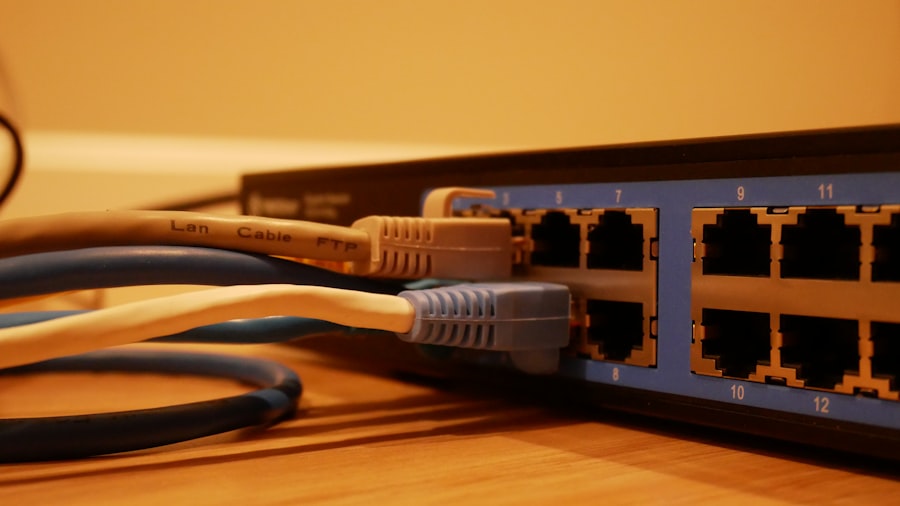
The revolution in router technology extends far beyond mere speed enhancements. Routers are evolving into intelligent devices capable of actively managing and optimizing our digital environments, blurring the lines between networking hardware and Artificial Intelligence.
AI-Powered Network Optimization
Artificial Intelligence (AI) is emerging as a cornerstone of next-generation router technology. AI algorithms can analyze network traffic patterns, identify bottlenecks, and dynamically reconfigure network settings to ensure optimal performance. This includes proactively identifying and mitigating potential issues before they impact the user experience. Think of an AI-powered router as a highly skilled traffic engineer who not only monitors traffic flow but also anticipates congestion and reroutes vehicles before any significant delays occur. This proactive approach is crucial for maintaining seamless connectivity in increasingly complex digital ecosystems.
Enhanced Security Features and Threat Detection
As our lives become more intertwined with the digital world, so too do the threats we face. Traditional routers often relied on basic firewall functionalities, leaving them vulnerable to a growing array of sophisticated cyberattacks. Newer routers are incorporating advanced security features, including AI-driven threat detection, intrusion prevention systems, and automatic firmware updates that patch vulnerabilities in real-time. This is like upgrading from a simple lock on your front door to a sophisticated smart home security system that not only alerts you to intruders but also actively defends against them. The router is becoming the first line of defense in our digital fortresses.
Seamless Integration with the Smart Home Ecosystem
The proliferation of smart home devices has created a demand for routers that can intelligently manage and orchestrate these interconnected systems. Next-generation routers are designed to seamlessly integrate with a wide range of smart home devices, facilitating easier setup, improved performance, and enhanced control. This means your router can act as the central nervous system of your smart home, ensuring that your smart lights, thermostats, security cameras, and entertainment systems all communicate effectively and efficiently. The once-separate devices now operate in harmony, orchestrated by an intelligent router.
The Future of Foreplay: Redefining Interaction and Experience
While the term “foreplay” might evoke a particular connotation, in the context of revolutionizing router technology, it refers to the preparatory stages, the foundational elements that enable richer, more immersive digital experiences. It’s about creating the optimal conditions for our digital interactions.
Immersive Entertainment and Gaming
The advancements in router technology are paving the way for truly immersive entertainment and gaming experiences. With ultra-low latency, higher bandwidth, and improved reliability, we can expect seamless 4K and 8K video streaming without buffering, lag-free online gaming that feels as responsive as playing in person, and the burgeoning possibilities of augmented reality (AR) and virtual reality (VR). Imagine stepping into a virtual world with no perceptible delay between your actions and the on-screen response, or witnessing the nuance of a cinematic masterpiece streamed directly to your home with pristine clarity. These are the experiences that the future of connectivity is enabling.
Enhanced Remote Work and Collaboration
The shift towards remote work and distributed teams has amplified the need for robust and reliable connectivity. Next-generation routers will provide the backbone for seamless remote collaboration, enabling crystal-clear video conferencing, instantaneous file sharing, and uninterrupted access to cloud-based resources. This means that geographical boundaries will become even less of a barrier to productivity and innovation. It’s about creating a virtual office space that feels as connected and functional as if everyone were in the same room.
The Foundation for Emerging Technologies
Beyond immediate applications, advanced router technology serves as the essential infrastructure for a host of emerging technologies. From the Internet of Things (IoT) with its ever-expanding array of connected devices, to the development of the metaverse and beyond, robust and intelligent networking is paramount. Routers are not just facilitating current needs; they are building the highways for the innovations of tomorrow. They are the silent enablers of a future we can only begin to imagine.
As technology continues to evolve, the importance of optimizing our home networks becomes increasingly clear. A recent article discusses the upcoming router update that promises to enhance performance and security, making it essential reading for anyone looking to improve their internet experience. For more insights on this topic, you can check out the article on foreplay for the future router update at this link. Staying informed about these advancements can help ensure that your network is ready for the demands of tomorrow.
The User Experience: Simplicity Meets Sophistication
| Metric | Description | Value | Unit |
|---|---|---|---|
| Firmware Version | Current version of the router firmware | 1.4.2 | Version |
| Update Size | Size of the upcoming firmware update | 25 | MB |
| Expected Downtime | Estimated time router will be offline during update | 5 | Minutes |
| New Features | Number of new features included in the update | 3 | Count |
| Security Patches | Number of security vulnerabilities fixed | 7 | Count |
| Performance Improvement | Expected increase in throughput after update | 15 | Percent |
| Compatibility | Number of new devices supported | 10 | Count |
| Release Date | Scheduled date for the update rollout | 2024-07-15 | Date |
Despite the underlying technological complexity, the goal of revolutionary router technology is to create a user experience that is both sophisticated in its capabilities and remarkably simple in its operation.
Intuitive Interfaces and Simplified Setup
Gone are the days of struggling with complex configuration menus. Future routers will feature intuitive, user-friendly interfaces, often managed through intuitive mobile apps. The setup process will be streamlined, with guided installations that make connecting to the internet and configuring your network as easy as plugging in a device. This democratizes access to advanced networking features, making them accessible to everyone, regardless of their technical expertise.
Proactive Troubleshooting and Self-Healing Networks
The concept of a “self-healing network” is becoming a reality. AI-powered routers will be capable of detecting and resolving many common network issues automatically, without requiring user intervention. If a device is experiencing connectivity problems, the router can diagnose the issue and attempt to fix it, or provide clear, actionable guidance to the user if manual intervention is necessary. This dramatically reduces the frustration associated with network troubleshooting.
Personalized Network Experiences
Ultimately, revolutionizing router technology is about empowering users with greater control and personalization over their digital lives. This means tailoring network performance to individual needs, enhancing security for specific devices, and creating a digital environment that is optimized for the way each of us lives, works, and plays. The router transforms from a passive device into an active partner in our digital journey, ensuring that our connectivity is not just functional, but also intelligent, secure, and deeply personal. This is the future of the router, a future where our connection to the world is as seamless, as responsive, and as intelligently managed as the most intricate dance.

WATCH NOW ▶️ EXPOSED: I Walked Into My Own Funeral To Stop Her $1.2M Scam
FAQs
What is the “Foreplay for the Future” router update?
The “Foreplay for the Future” router update is a software upgrade designed to enhance the performance, security, and features of compatible routers. It aims to prepare routers for upcoming technologies and improve overall user experience.
Which routers are compatible with the “Foreplay for the Future” update?
Compatibility depends on the router manufacturer and model. Typically, newer models from major brands that support firmware updates will be eligible. Users should check their router’s official support page or update utility to confirm compatibility.
How do I install the “Foreplay for the Future” router update?
Installation usually involves downloading the update through the router’s web interface or a dedicated app provided by the manufacturer. Users should follow the specific instructions provided by their router’s support resources to ensure a successful update.
What improvements does the “Foreplay for the Future” update provide?
The update generally includes enhanced security protocols, improved network stability, better bandwidth management, and support for new networking standards. It may also introduce new features to optimize connectivity and user control.
Is it safe to update my router with the “Foreplay for the Future” update?
Yes, updating your router with official firmware updates like “Foreplay for the Future” is safe and recommended. It helps protect your network from vulnerabilities and ensures optimal performance. Always download updates from the official manufacturer to avoid security risks.