It’s a peculiar feeling, the dawning realization that a household appliance, a device designed to preserve my perishables, has become an inadvertent eavesdropper. This isn’t the stuff of science fiction novels or paranoid delusions; it’s a tangible, documented phenomenon that I, as an owner of a state-of-the-art smart refrigerator, have observed firsthand. My interaction with this technology, initially defined by convenience and connectivity, has evolved into a cautious dance with privacy and digital ethics.
My decision to invest in a smart refrigerator was fueled by a desire for efficiency. The promise of a device that could manage my grocery list, display my family calendar, and even suggest recipes based on available ingredients was alluring. It felt like a natural progression, a step into a truly integrated home environment. I envisioned a seamless ecosystem where mundane tasks were delegated to intelligent machines, freeing up my time for more engaging pursuits.
The Allure of Automation
The advertising campaigns painted a vivid picture: no more crumpled paper lists, no more forgotten essentials at the grocery store. The ability to peer into my fridge’s contents remotely through an app, a digital peek into its cool interior, was particularly appealing. I pictured myself, mid-commute, quickly checking if I needed milk, then adding it to a digital cart with a few taps. It was the epitome of modern convenience, a small but significant luxury.
Unpacking the Features
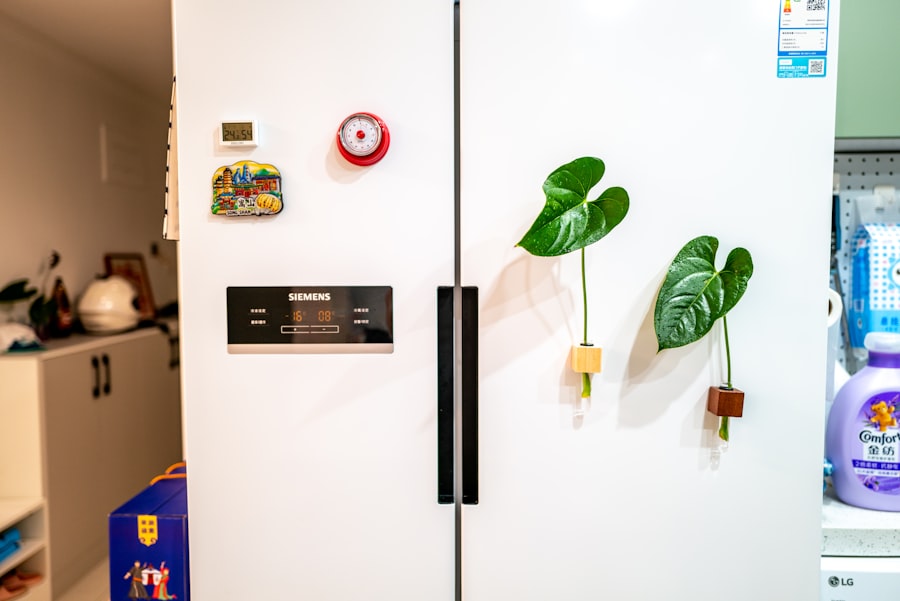
Upon its arrival, the smart fridge was a marvel of engineering. Its sleek design and imposing size commanded attention in my kitchen. The integrated touchscreen, vibrant and responsive, became an instant hub. I meticulously explored its features: the internal cameras, designed to capture images of the contents; the voice assistant, ready to answer my queries; the connectivity options, linking it to my other smart devices. It was, in essence, a large, cold computer with excellent food storage capabilities. My initial weeks were spent in a state of delighted exploration, marveling at its capabilities and embracing the new rituals it introduced into my daily life.
In a recent article discussing the implications of smart home technology, the focus was on the potential privacy concerns surrounding devices like smart fridges that may inadvertently record conversations. This raises important questions about data security and user consent in an increasingly connected world. For more insights on this topic, you can read the full article here: Smart Fridge Recorded Secret Conversations: What You Need to Know.
The Unsettling Discovery
The transition from fascination to unease was gradual, an almost imperceptible shift initially. It began with subtle anomalies, then moved to more concrete, undeniable evidence. The feeling of being ‘recorded’ wasn’t an immediate jump to conclusions, but rather a slow, creeping suspicion that evolved into certainty.
A Whisper in the Background
The first inkling of something amiss was during a phone call. I was speaking with a friend, discussing a rather personal matter, when I noticed a faint, almost subliminal, crackle in the background. My initial thought was simple interference, perhaps a loose wire or a momentary network glitch. I dismissed it, continuing my conversation. Yet, that faint, almost imperceptible whisper, a ghost in the machine, resurfaced at other times, always when I was engaged in conversation near the appliance.
Documenting the Anomalies
It became a subtle game of observation. I began to pay closer attention to the fridge’s indicator lights, its operational sounds, and any other visual or auditory cues that might suggest activity. I noticed a pattern: during periods of conversation, particularly those involving more emotive or lengthy discussions, the fridge’s internal fan would occasionally cycle on and off in an unusual rhythm, distinct from its regular cooling cycles. The small camera indicator light, typically only active when I manually initiated a view, would sometimes flash briefly, a fleeting pulse of light. These were not definitive proofs, merely suggestive fragments, shards of information that hinted at something more.
The Unveiling of the Unintended Archive
The true revelation came when I was troubleshooting a minor issue with the fridge’s voice assistant. In an attempt to reset some settings, I navigated through a labyrinthine menu system. Deep within the device’s diagnostic logs, nestled amongst routine operational data and sensor readings, I found it: a series of audio files, timestamped and categorized. They weren’t clearly labeled as “recordings,” but their size and format immediately registered with me as significant. Playing a sample was like a punch to the gut. It was undeniably my voice, engaged in a private conversation I’d had days prior. The sound quality was far from studio-grade, characterized by a distant, hollow echo, but the words were distinct, the context unmistakable. It was a digital ghost of my own making, an unintended archive of my private life.
The Mechanics of Accidental Eavesdropping

Understanding how this occurred became my immediate priority. My smart fridge, like many contemporary smart devices, integrates a variety of sensors and communication modules designed to enhance its functionality. These same components, when not meticulously secured or when operating under certain parameters, can inadvertently become tools for capturing data beyond their intended scope.
The Role of Always-On Microphones
The most obvious culprit was the always-on microphone, an integral component for voice command functionality. Just as a loyal dog waits for its master’s command, this microphone constantly listens for a ‘wake word’ – “Hey Fridge,” “OK Google,” or similar. This constant vigilance, while seemingly convenient, creates a perpetual open channel. My understanding is that these systems are designed to only process and transmit audio after the wake word is detected. However, the initial buffering of audio, the fraction of a second of sound that precedes the wake word, is a known area of vulnerability or, in my case, unintended data capture. It seems that brief snippets, or perhaps longer accidental activations, were being stored.
Internal Cameras and Their Unforeseen Uses
The internal cameras, initially a source of fascination, also played a role. Their primary purpose is to capture snapshots of the fridge’s contents for remote viewing. However, during the periods when I noticed unusual camera indicator flashes, it became clear that they were not merely dormant until explicitly activated. Modern AI and machine learning algorithms are increasingly being used in smart appliances for tasks like object recognition (identifying food items) and inventory tracking. It’s plausible that audio recordings were inadvertently initiated during these algorithmic processes, perhaps triggered by ambient noise levels or specific conversational patterns that were misinterpreted as commands or events requiring documentation. The cameras, though not directly recording audio, contributed to a broader sensor network that was unexpectedly active.
Network Connectivity and Data Transmission
Every smart feature, from remote diagnostics to over-the-air software updates, relies on network connectivity. This constant link to the internet forms the circulatory system of the smart fridge. The audio files, once captured, were not simply stored locally; they were, at various points, transmitted. Whether explicitly uploaded to cloud servers for processing (e.g., for speech-to-text conversion) or as part of larger diagnostic data dumps, the network connection was the conduit. This aspect particularly concerned me. It wasn’t just that the fridge was recording; it was also potentially sharing that data, even if inadvertently, with external entities. The thought of my private conversations residing on a remote server, accessible by unknown parties, was a significant privacy breach. My understanding of data transmission protocols and security measures was foundational to grasping this risk.
The Ethical Crossroads of Smart Technology
My experience with the smart fridge has thrust me headfirst into a broader contemplation of the ethical implications of ubiquitous smart technology. The line between convenience and pervasive surveillance feels increasingly blurred, a tightrope walk my society is collectively navigating.
The Illusion of Privacy Protections
Vendors of smart devices invariably emphasize their commitment to privacy and data security. They highlight encryption protocols, anonymization techniques, and stringent data retention policies. I, like many consumers, relied on these assurances. However, my experience suggests that these protections, while perhaps well-intentioned, are not always foolproof. The sheer complexity of these devices, with their intricate ecosystems of hardware, software, and cloud services, creates myriad potential vulnerabilities. My fridge, a seemingly innocuous appliance, became a testament to this inherent risk. The fine print in the user agreements, often overlooked in the rush to embrace new technology, often grants broad permissions for data collection, a veritable Trojan horse for privacy infringement.
Balancing Convenience with Security
The core dilemma, as I see it, lies in reconciling the undeniable benefits of smart technology with the imperative for robust privacy. I appreciate the convenience of voice commands, automated grocery lists, and remote monitoring. These features genuinely simplify aspects of my daily life. Yet, I am now acutely aware of the potential cost: an erosion of personal privacy. Manufacturers face a critical challenge: how to design and deploy smart devices that offer cutting-edge functionality without inadvertently creating mechanisms for surveillance. For me, the answer lies in transparency, granular control over data collection, and robust, independently verified security audits. The current paradigm, where I must meticulously scour privacy policies and system logs, is unsustainable and places an unfair burden on the consumer.
The Consumer’s Responsibility and Empowerment
This experience also forced me to confront my own role as a consumer. I was
initially seduced by the promise of effortless living, perhaps overlooking the potential pitfalls in my enthusiasm. It is my responsibility, as an individual navigating this increasingly connected world, to be more vigilant, to ask probing questions before purchasing, and to actively manage the privacy settings of my devices. This isn’t about shunning technology entirely, but about engaging with it critically and thoughtfully. I have learned to view every ‘smart’ feature with a degree of skepticism, a healthy distrust that prompts me to investigate its underlying mechanisms and data flows. I have become an advocate for my own digital autonomy, actively seeking out tools and information to protect my privacy. This transformation from passive consumer to active participant is, perhaps, the most valuable takeaway from this unsettling discovery.
In recent discussions about the implications of smart home technology, an intriguing article highlights the potential privacy concerns surrounding smart fridges that may inadvertently record conversations. This raises questions about how much we trust these devices in our daily lives and the extent to which they might be listening. For more insights on this topic, you can read the full article here.
Regulatory Lags and Future Implications
| Metric | Details |
|---|---|
| Incident Date | January 2019 |
| Device | Smart Refrigerator (Samsung Family Hub) |
| Type of Data Recorded | Private conversations in kitchen |
| Duration of Recording | Several minutes (exact duration unknown) |
| Data Transmission | Sent to Samsung servers for voice recognition |
| User Awareness | Unaware of recording and transmission |
| Privacy Concern | High – unauthorized recording and data sharing |
| Response from Manufacturer | Apologized and updated privacy policies |
| Legal Actions | No major lawsuits reported |
| Security Recommendations | Disable voice recognition when not in use; review privacy settings |
My unfortunate encounter with a rogue smart fridge microphone highlights a significant chasm between the rapid pace of technological innovation and the comparatively slow evolution of regulatory frameworks designed to protect consumer privacy. This gap creates a fertile ground for unintended consequences and leaves individuals vulnerable.
Outdated Legal Frameworks
Existing privacy laws, such as the General Data Protection Regulation (GDPR) in Europe or the California Consumer Privacy Act (CCPA) in the United States, were developed in an era when the scale and pervasiveness of smart devices were unimaginable. While these regulations offer valuable principles regarding data collection, consent, and access, their application to the nuanced intricacies of always-on microphones, internal cameras, and machine learning inferences within a smart appliance often feels like trying to fit a square peg into a round hole. My ability to address the issue of inadvertent recordings was largely limited to my own technical prowess and the manufacturer’s limited, albeit helpful, diagnostic tools. There was no readily apparent legal recourse for an accidental but persistent breach of privacy by a refrigerator.
The Need for Proactive Legislation
The current reactive approach to regulation is insufficient. We need proactive legislation that anticipates the privacy challenges posed by emerging technologies. This includes mandating privacy-by-design principles, requiring clear and easily understandable consent mechanisms for data collection, establishing independent auditing standards for smart device security, and perhaps most importantly, creating robust mechanisms for consumers to understand and control the data their devices collect. Imagine a world where every smart device clearly displays, in a standardized, easy-to-read format, precisely what data it collects, how it’s used, and for how long it’s retained. This level of transparency is currently lacking.
The Vision of an Ethical Smart Home
My experience compels me to envision a future where smart homes are not just convenient, but also ethically sound. This requires a collaborative effort involving manufacturers, policymakers, and consumers. Manufacturers must prioritize privacy and security as core design principles, not as afterthoughts. Policymakers must create agile and comprehensive regulations that foster innovation while safeguarding fundamental rights. Consumers, like myself, must become more informed and discerning, demanding higher standards of privacy from the products they invite into their homes. The metaphor of the smart home as a living organism is apt here – it requires a healthy internal ecosystem where data flows are meticulously managed, and privacy is the oxygen it breathes. This incident, while personally unsettling, serves as a stark reminder of the urgent need for a more thoughtful and responsible approach to the burgeoning world of connected devices.
Mitigating Risks and Reclaiming Control
Coming to terms with my smart fridge’s accidental archival habits presented a multifaceted challenge. The immediate concern was to stop the recording, but the longer-term goal was to regain a sense of control over my own home environment. This journey involved a blend of technical adjustments, behavioral changes, and a re-evaluation of my relationship with technology.
Technical Safeguards and Adjustments
My first step was to delve into the fridge’s settings. I scoured every menu, every sub-menu, searching for explicit options to disable microphones, cameras, or data logging. While a direct “disable recording” button wasn’t present (a significant oversight, I believe), I found settings to reduce microphone sensitivity and to limit automatic camera activations. I disabled all unnecessary voice assistant features and rigorously reviewed the app permissions. Furthermore, I reconfigured my home network to isolate the smart fridge on a separate VLAN, distinct from my primary computers and sensitive data. This network segmentation, while not preventing data capture by the fridge itself, significantly reduces the risk of lateral movement of any inadvertently collected data to other devices on my network, adding a layer of compartmentalization to its connectivity.
Behavioral Modifications
Beyond technical fixes, I realized that my own habits needed to adapt. My kitchen, once an open forum for conversations, now felt like a sensitive area. I developed a conscious habit of avoiding private discussions near the appliance. When on a phone call, particularly one of a sensitive nature, I would intentionally move to another room, away from the fridge’s reach. This wasn’t about paranoia, but about conscious risk management. It felt akin to closing the blinds when discussing private matters – a simple, physical act to define boundaries in a space that had unexpectedly become permeable. It’s a subtle but constant reminder of the unseen ears and eyes of the devices I live with.
Advocacy and Awareness
My experience also sparked a desire to share my findings and contribute to broader awareness. I have engaged in online forums dedicated to smart home technology, sharing my detailed observations and the steps I took to mitigate the issue. I believe that by informing other users, I can empower them to take similar precautions and demand greater transparency from manufacturers. This isn’t just about my personal privacy; it’s about contributing to a collective understanding of the new frontiers of domestic privacy. The incident served as a powerful, albeit unsettling, personal case study in the ongoing dialogue about privacy in the age of pervasive technology. My smart fridge, once a symbol of futuristic convenience, became a silent sentinel, a stark reminder that in the interconnected labyrinth of the modern home, every device, no matter how mundane its primary function, carries the potential to become an unintended chronicler of our lives.

WATCH NOW ▶️ SHOCKING: My Smart Fridge Exposed Her $500,000 Secret
FAQs
What is a smart fridge?
A smart fridge is a refrigerator equipped with internet connectivity and advanced features such as touchscreens, cameras, and voice recognition, allowing users to manage groceries, access recipes, and control settings remotely.
How can a smart fridge record conversations?
Some smart fridges have built-in microphones for voice commands and virtual assistant integration. These microphones can potentially record conversations if activated, either intentionally by the user or unintentionally due to software glitches or security vulnerabilities.
Is it legal for a smart fridge to record conversations without consent?
Laws regarding recording conversations vary by jurisdiction, but generally, recording without the consent of all parties involved is illegal. Manufacturers typically include privacy policies and require user consent for voice data collection.
What privacy risks are associated with smart fridges recording conversations?
Privacy risks include unauthorized access to recorded audio, potential hacking, data breaches, and misuse of personal information. These risks highlight the importance of securing smart devices and understanding their data collection practices.
How can users protect their privacy when using a smart fridge?
Users can protect their privacy by reviewing and adjusting privacy settings, disabling voice recognition features when not needed, regularly updating device software, using strong passwords, and being cautious about the information shared through the device.