The hum of modern life, for many of us, is increasingly accompanied by the silent hum of technology embedded within our homes. This evolution has moved beyond mere convenience, transforming our residences into vigilant sentinels. As I’ve explored the landscape of smart home technology, a particularly compelling application has emerged: its role in actively deterring and even apprehending those who would seek to violate the sanctity of our personal spaces. This isn’t just about receiving a notification on my phone when a door opens; it’s about a sophisticated ecosystem working in concert to paint a digital picture of intrusion, often in real-time.
When I think about how my home has become a guardian, I often picture it not as a passive shell, but as a network of finely tuned senses. These aren’t the dull, organic senses of a sleeping person, but rather the sharp, ever-vigilant digital eyes and ears that constantly scan our surroundings. The integration of various smart devices creates a layered defense, each contributing to a comprehensive understanding of what’s happening within and around my property.
Motion Detection as the First Line of Defense
At the forefront of this digital defense are motion sensors. These devices, often unobtrusive little units placed strategically throughout my home, are the initial triggers for the smart home security system. They act like the subtle tremor that alerts a seismograph to an impending earthquake, signaling immediately that something has changed in the environment.
Passive Infrared (PIR) Sensors: The Subtle Detectors
My PIR sensors are the workhorses here. They detect changes in infrared radiation, essentially heat signatures. When a living being, with its inherent body heat, moves through a monitored area, it creates a noticeable shift that these sensors pick up. It’s akin to a heat-seeking missile, but instead of hunting adversaries, it’s identifying the presence of warmth where there shouldn’t be any.
Understanding PIR Technology
The underlying principle is simple: all objects with a temperature above absolute zero emit infrared radiation. PIR sensors contain specialized lenses that focus this radiation onto a pyroelectric sensor. When an object moves, the amount of infrared radiation reaching different parts of the sensor changes, creating a voltage. This change is what my smart home system interprets as motion.
False Alarm Mitigation: The Art of Discrimination
One of the primary challenges with motion sensors has historically been false alarms. A pet’s movement, a gust of wind blowing curtains, or even sunlight flickering through a window could previously trigger a notification. However, modern smart home technology has become remarkably adept at distinguishing genuine threats from benign occurrences.
Pet-Immune Sensors
I’ve seen significant advancements in pet-immune sensors. These are designed to disregard movement below a certain weight threshold or by differentiating movement patterns. It’s like having a bouncer at a club who knows the regulars and lets them in while scrutinizing newcomers.
Environmental Filtering
Some systems also incorporate environmental filtering capabilities. They learn the typical patterns of a location, such as the sway of trees outside a window or the normal thermal fluctuations of a room. This allows them to ignore these predictable changes, focusing only on anomalies.
Microwave and Ultrasonic Sensors: The Complementary Senses
While PIR sensors are excellent for detecting the presence of heat, other types of motion sensors provide complementary detection methods, adding layers of reliability.
Microwave Sensors
These sensors emit low-level microwave radiation and measure the reflected waves. When an object moves within the sensor’s range, it causes a Doppler shift in the reflected waves, which the sensor detects. This is similar to how a police radar gun works, essentially measuring the speed of movement.
Ultrasonic Sensors
Ultrasonic sensors emit high-frequency sound waves and measure the time it takes for them to return after bouncing off objects. Similar to how bats use echolocation, any movement that alters the echo pattern triggers an alert. Combining these different sensing technologies can create a more robust and less fallible system.
Visual Evidence: The All-Seeing Eyes of Security Cameras
Beyond simply detecting presence, smart home security cameras are the eyes that provide definitive visual proof of any activity. They are the journalists of my home security, recording events and providing objective accounts. When the motion sensors trigger, it’s the cameras that bring the narrative to life, transforming abstract alerts into concrete images.
Indoor Cameras: Monitoring the Interior Breach
When I consider the interior of my home, the deployment of indoor cameras becomes a crucial element. These devices are strategically placed to cover common entry points and high-traffic areas. They act as silent, unwavering witnesses to anything that transpires within the confines of my living space when I’m not there.
Discreet Placement and Wide-Angle Lenses
The effectiveness of indoor cameras often hinges on their discreet placement. They are often disguised as everyday objects or installed in inconspicuous locations. Wide-angle lenses are standard, allowing a single camera to monitor a broad area, maximizing coverage without the need for an excessive number of devices. This is like having a single lookout who can survey a vast expanse of territory.
Night Vision and Two-Way Audio Capabilities
Many indoor cameras are equipped with infrared night vision, enabling them to capture clear footage even in complete darkness. This is crucial, as intruder activity often occurs under the cover of night. Furthermore, the inclusion of two-way audio is a significant deterrent. It allows me to communicate with anyone detected inside my home, potentially scaring off an intruder or offering assistance if it’s a false alarm.
Outdoor Cameras: Securing the Perimeter
The battle for home security often begins at the property line, and outdoor cameras are my digital sentries standing guard. They are the first line of visual defense, capturing any suspicious activity before it even reaches my doors and windows.
Weatherproofing and Durability
Outdoor cameras are engineered to withstand the elements. They are constructed with robust, weather-resistant materials to endure rain, snow, extreme temperatures, and direct sunlight. This ensures their continuous operation regardless of environmental conditions, much like a well-built fortress designed to withstand sieges.
Advanced Features: Person Detection and Activity Zones
Modern outdoor cameras offer sophisticated features that significantly enhance their security capabilities. Person detection, for example, allows the camera to distinguish between people and other moving objects like animals or swaying branches. This drastically reduces false alerts. Activity zones allow me to define specific areas within the camera’s view that I want to monitor closely, such as my driveway or the front porch. Any motion or detection within these designated zones triggers an alert, streamlining the notification process and ensuring I am alerted to relevant events.
Smart Doorbell Cameras: The Intelligent Gatekeepers
My smart doorbell camera is more than just a way to see who’s at the door; it’s an intelligent gatekeeper, a digital butler with a watchful eye. It’s the first point of interaction for anyone approaching my home, and its capabilities extend far beyond simply ringing a bell.
Two-Way Communication and Remote Viewing
The ability to see and speak to visitors remotely is a game-changer. If I’m not home, I can answer the door, whether it’s a delivery person or an unexpected guest. This also means I can confront potential intruders before they even attempt to gain entry, warning them that they’ve been seen.
Deterrent Effect of Visible Technology
The mere presence of a smart doorbell camera, with its visible lens and often blinking indicator light, acts as a significant deterrent. It signals to potential trespassers that their actions are being recorded, making them think twice before proceeding. It’s like a flashing neon sign that says, “You are being watched.”
Motion-Triggered Recordings and Alerts
When my doorbell camera detects motion at my front door, it begins recording and sends an alert to my smartphone. This means I’m immediately aware of any activity, even if no one rings the bell. This granular control over notifications ensures I’m not bombarded with irrelevant information, but rather alerted to interactions that matter.
In recent years, the integration of smart home technology has significantly transformed the way homeowners protect their properties, making it easier to catch thieves in the act. A related article discusses innovative security measures that utilize smart cameras and alarm systems to deter criminal activity and provide real-time alerts to homeowners. For more insights on how these technologies are reshaping home security, you can read the full article here.
The Networked Response: How Devices Communicate and Cooperate
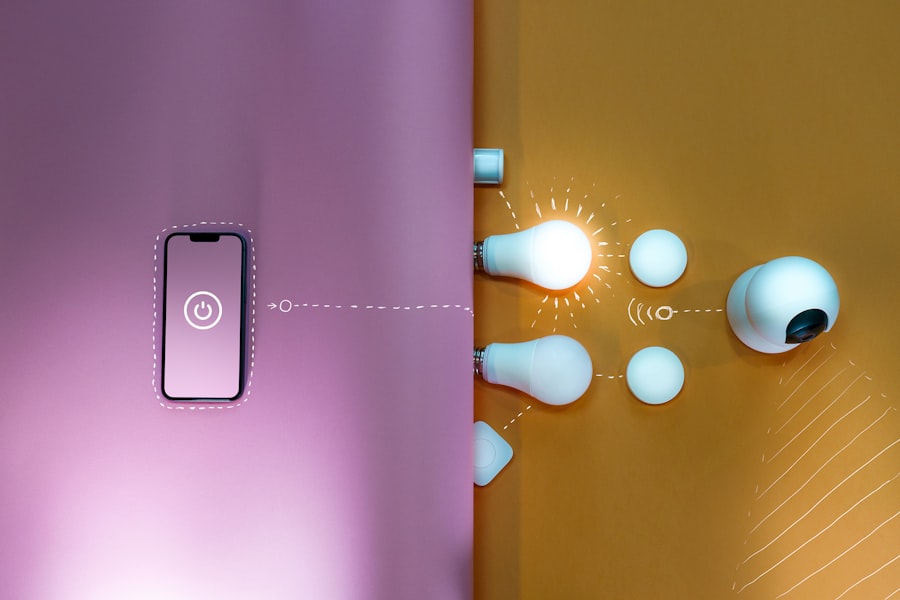
The true power of smart home technology in catching thieves lies not just in individual devices, but in their ability to communicate and cooperate. They form a cohesive unit, a digital orchestra where each instrument plays its part in orchestrating a symphony of security. When one device senses something amiss, it alerts the others, creating a cascading effect that amplifies the detection and response.
Central Hubs and Smart Home Ecosystems
At the heart of this networked response are smart home hubs and integrated ecosystems. These act as the central nervous system, receiving data from all connected devices and orchestrating their actions. They are the conductors, ensuring all parts of the system work in harmony.
Integration Protocols: The Universal Language
The ability of different smart devices to communicate relies on standardized integration protocols. Technologies like Wi-Fi, Zigbee, and Z-Wave form the invisible threads that connect my smart devices, allowing them to share information seamlessly. This is like having a universal translator enabling diverse individuals to understand each other.
Wi-Fi: The Ubiquitous Backbone
Wi-Fi is the most common protocol for smart home devices, leveraging my existing home network. Its widespread availability makes it easy to connect a variety of devices, from cameras to smart plugs.
Zigbee and Z-Wave: The Dedicated Networks
Zigbee and Z-Wave are low-power wireless protocols specifically designed for smart home devices. They create their own mesh networks, which can extend the range and reliability of communication, making them ideal for connecting sensors and other devices that don’t require high bandwidth.
Cloud Platforms and Mobile Applications: My Command Center
The cloud platforms and mobile applications associated with my smart home devices serve as my personal command center. From here, I can monitor all connected devices, receive alerts, review footage, and even control certain aspects of my home remotely. It’s my digital cockpit, allowing me to pilot my home’s security from anywhere in the world.
Real-time Notifications and Alerts
The immediate delivery of alerts to my smartphone is the cornerstone of this networked response. Whether it’s a motion detection, a door sensor trigger, or a camera alert, I’m informed instantly, allowing for a swift assessment of the situation.
Remote Access and Control
Beyond receiving alerts, I can remotely access my cameras to view live feeds and review recorded footage. This allows me to verify alarms and gather evidence if necessary. I can also arm and disarm my system, control smart locks, and adjust lighting, all from my mobile device.
Triggered Actions: Automating the Response to Intrusion
The intelligence of a smart home security system isn’t just about detection; it’s about automated response. When a threat is identified, the system can be programmed to perform a series of actions designed to deter, document, and alert. This is where the technology truly becomes proactive rather than just reactive.
Lighting and Sound Deterrents
My smart home can be programmed to react to intrusions with a digital barrage of light and sound. When suspicious motion is detected, lights can automatically turn on, illuminating the area and startling potential intruders. Smart speakers can also be activated to play loud noises or pre-recorded deterrent messages. It’s like the home itself is shouting, “You’re not welcome here!”
Simulating Occupancy
One effective strategy is to simulate occupancy even when I’m away. Smart lights can be programmed to turn on and off at random intervals, mimicking the presence of residents. This can make a vacant home appear occupied, discouraging burglars who often target unoccupied properties.
Visual and Auditory Scares
For more direct deterrence, a sudden burst of bright lights coupled with a loud alarm sound can be highly effective. This sudden sensory assault can disorient and frighten an intruder, often prompting them to flee.
Smart Lock Integrations and Lockdown Procedures
In a more serious scenario, my smart home system can integrate with smart locks to further secure my property. If an intrusion is confirmed, the system can automatically lock all smart doors, preventing further unauthorized entry. This is like sealing the hatches on a ship when a storm approaches.
Reinforcing Entry Points
When the system identifies a breach, it can communicate with smart locks to ensure all doors are secured. This is a critical step in containing any potential incident and preventing wider access to the property.
Capturing the Evidence: Documenting the Event for Law Enforcement

When a breach occurs, the immediate goal transitions from mere detection to effective documentation. Smart home technology plays a crucial role in providing irrefutable evidence that can be used to identify and apprehend the perpetrators. They become the silent, digital investigators, gathering the clues necessary for justice.
Comprehensive Video Recording and Storage
The video footage captured by smart cameras is the primary evidence. Understanding how this footage is recorded, stored, and accessed is vital.
Local Storage vs. Cloud Storage
I have the option to store footage locally on an SD card within the camera or in the cloud through a subscription service. Each has its advantages and disadvantages.
Advantages of Cloud Storage
Cloud storage offers the benefit of off-site backup, meaning the footage is safe even if the camera or recording device is stolen or damaged. It also allows for easier remote access from anywhere with an internet connection. This is akin to having a secure vault for my most important data.
Advantages of Local Storage
Local storage can be more cost-effective over the long term and provides an additional layer of privacy as the footage doesn’t necessarily leave my network. However, it’s vulnerable to physical theft or damage.
Evidence Preservation and Retrieval
The ability to easily retrieve and preserve footage is paramount. My smart home system allows me to download specific clips or entire recordings, which I can then provide to law enforcement.
Timestamping and Metadata
All recorded footage is automatically timestamped, providing an accurate chronology of events. Metadata, such as the time, date, and location of the recording, is also embedded, adding invaluable context to the evidence. This is like the meticulous note-taking of a seasoned detective, ensuring every detail is recorded and accounted for.
Facial Recognition and Object Detection During Intrusion
The sophistication of smart cameras extends to their ability to analyze the captured footage in real-time, identifying specific individuals or objects.
Identifying Known Individuals
Some advanced systems offer facial recognition capabilities. While privacy concerns are important, this can be incredibly useful for distinguishing between family members, friends, and potential intruders. If my system recognizes a familiar face at the door, it won’t trigger an alert. However, if it encounters an unknown face in a prohibited area, it flags it as suspicious.
Object Detection for Suspicious Items
Beyond human faces, some cameras can be trained to detect specific objects that might indicate malicious intent, such as a crowbar or a tool commonly used for forced entry, appearing in critical areas. This adds another layer of intelligence to the detection process.
The Deterrent Effect: Making My Home a Harder Target
While the technology is adept at catching thieves, its most significant impact is often in preventing them from attempting to break in altogether. The visible presence of smart security technology acts as a constant, silent warning.
The Psychological Impact of Technology
The knowledge that a home is equipped with smart security measures can create a powerful psychological deterrent. Burglars are opportunistic by nature, and they seek the path of least resistance.
Visible Cameras and Sensors
The mere sight of cameras and motion sensors on the exterior of my home sends a clear message: this property is monitored. It’s like a “Beware of the Dog” sign, but with digital teeth. They know that their actions are likely to be recorded and that they will be detected.
Smart Doorbells and Lighting
Even seemingly simple devices like smart doorbells and automated lighting can contribute to the deterrent effect. The prospect of being seen and spoken to by a remote homeowner, or experiencing sudden illumination, can dissuade casual trespassers.
Integration with Neighborhood Watch Programs and Law Enforcement
The effectiveness of smart home security can be amplified when integrated with broader community efforts.
Sharing Alerts and Information
Some systems allow for the sharing of alerts with designated neighbors or even authorized neighborhood watch groups. This creates a more connected and responsive community security network. It’s like building a coalition of informants, each contributing to the overall safety of the area.
Providing Timely and Accurate Information to Authorities
When an incident does occur, the detailed and accurate evidence provided by my smart home system facilitates a more efficient response from law enforcement. This leads to a higher likelihood of apprehension and prosecution.
In recent years, the integration of smart home technology has proven to be an effective tool in enhancing home security and catching thieves in the act. Homeowners are increasingly turning to smart cameras and alarm systems that can alert them to suspicious activity in real-time. For a deeper understanding of how these innovations are transforming home security, you can read more in this insightful article about the impact of smart home tech on crime prevention. Check it out here.
The Future of Smart Security: Evolving Threats and Evolving Solutions
| Smart Home Technology | Effectiveness in Catching Thieves (%) | Average Response Time (minutes) | Reported Reduction in Theft Incidents (%) | Common Features |
|---|---|---|---|---|
| Smart Security Cameras | 85 | 3 | 40 | Motion detection, real-time alerts, video recording |
| Smart Door Locks | 70 | 5 | 30 | Remote locking/unlocking, access logs, tamper alerts |
| Smart Alarm Systems | 90 | 2 | 50 | Intrusion detection, sirens, emergency notifications |
| Video Doorbells | 75 | 4 | 35 | Two-way audio, motion alerts, visitor recording |
| Smart Lighting | 60 | 6 | 25 | Automated lighting schedules, motion-activated lights |
As technology continues to advance, so too will the sophistication of both home security systems and the methods employed by those who seek to violate them. It’s a constant arms race, and I’m eager to see how my home’s digital defenses will continue to evolve.
Artificial Intelligence and Machine Learning in Security
The integration of Artificial Intelligence (AI) and Machine Learning (ML) is set to revolutionize home security, making systems even more intelligent and adaptive.
Predictive Analytics for Threat Assessment
AI can analyze vast amounts of data from various sources to identify patterns and predict potential threats. This could involve identifying unusual activity in a neighborhood or recognizing behaviors that are statistically correlated with criminal intent. It’s like having a crystal ball that can foresee trouble.
Adaptive Learning and Anomaly Detection
ML algorithms can learn the unique patterns of my home and its surroundings, becoming better at distinguishing between normal activity and genuine threats over time. This means my system will become more refined and less prone to false alarms as it adapts to my environment.
Drones and Advanced Surveillance Capabilities
While still in their nascent stages for widespread consumer adoption, drones are emerging as a potential future component of home security, offering an aerial perspective.
Perimeter Patrols and Remote Monitoring
Imagine a small drone that can be dispatched to patrol the perimeter of my property or investigate a suspicious noise, providing a visual overview from above. This offers an unprecedented level of situational awareness.
Integration with Existing Systems
The seamless integration of such advanced technologies with current smart home ecosystems will be crucial for their practical application, ensuring all aspects of my home’s security work together in concert.
Enhanced Privacy and Security Measures
As smart home technology becomes more pervasive, ensuring the privacy and security of the data it collects is paramount.
End-to-End Encryption and Data Protection
Robust encryption protocols will be essential to protect sensitive data from unauthorized access. My personal information and the footage captured by my devices must be kept secure.
User Control and Transparency
Ultimately, I want to remain in control of my data and have clear information about how it is being used. Transparency from technology providers is crucial for building trust and ensuring responsible deployment of these powerful tools. My smart home is my sanctuary, and its security, both from external threats and internal data breaches, is non-negotiable.

WATCH NOW ▶️ SHOCKING: My Smart Fridge Exposed Her $500,000 Secret
FAQs
What types of smart home technology can help catch thieves?
Smart home technology such as security cameras, motion sensors, smart doorbells, and alarm systems can help catch thieves by recording footage, detecting unusual activity, and alerting homeowners or authorities in real time.
How do smart security cameras assist in identifying intruders?
Smart security cameras capture high-definition video footage and often include features like night vision, facial recognition, and motion detection. This allows homeowners to monitor their property remotely and provides clear evidence to law enforcement if a theft occurs.
Can smart home devices alert homeowners during a break-in?
Yes, many smart home devices are designed to send instant notifications to homeowners’ smartphones or other devices when suspicious activity is detected, enabling quick response and potentially deterring thieves.
Are smart locks effective in preventing unauthorized entry?
Smart locks enhance home security by allowing keyless entry, remote locking and unlocking, and activity logs. They can prevent unauthorized access by requiring authentication methods such as codes, biometrics, or smartphone verification.
Is it necessary to integrate multiple smart home devices for better security?
Integrating multiple smart home devices into a unified security system improves overall effectiveness by providing comprehensive monitoring, coordinated alerts, and automated responses, which collectively increase the chances of catching thieves and preventing theft.