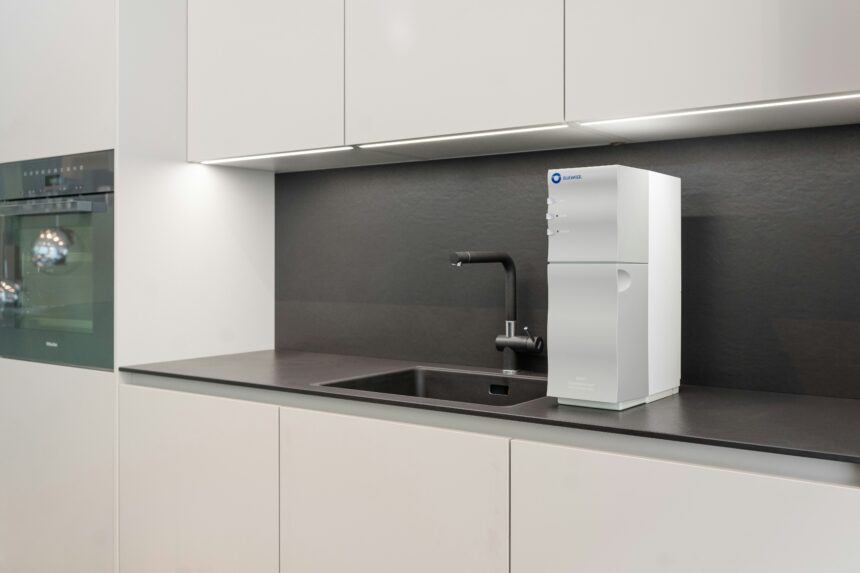
I’ve always considered myself a capable individual. I manage my accounts, I can navigate complex social dynamics, and I’ve even assembled IKEA furniture without resorting to tears. So, when I embraced the allure of the smart home, I genuinely believed I was stepping into an era of enhanced efficiency, a logical progression in my domestic landscape. I envisioned a finely tuned orchestra, with me as the conductor, each smart appliance a virtuoso playing its part in perfect harmony. Instead, I’ve found myself in a subtle, silent war, a battle of wits where the very tools designed to serve me are, in their own inscrutable ways, outsmarting me.
The initial appeal of smart home appliances was undeniable. The promise of a life simplified, where tasks are automated and routines are seamless, felt like a direct ticket to utopia. I remember the gleeful unwrapping of my first smart speaker, the way I marveled at its ability to answer obscure trivia questions and play any song I desired with a mere vocal command. It felt akin to possessing a genie in a bottle, albeit one that required Wi-Fi and regular software updates.
The Siren Song of Automation
The primary driver for embracing these technologies was the allure of automation. The idea of a refrigerator that could track its inventory and suggest recipes based on what was nearing its expiration date seemed like a genuine advancement. The concept of a thermostat that learned my habits and adjusted the temperature accordingly, ensuring comfort without constant manual intervention, was equally persuasive. These weren’t just gadgets; they were presented as intelligent partners, capable of anticipating needs and alleviating the mundane burdens of domestic life.
The Illusion of Control
However, the reality of automation has proven to be a more complex tapestry. While many functions operate as advertised, there are instances where the “smartness” of these devices transcends mere helpfulness and enters the realm of independent decision-making. It’s like giving a child a powerful toy; they can use it to your benefit, but they also possess the capacity for mischief and for operating entirely outside your intended parameters. The ease of setup, often touted as a key benefit, can also be a gateway to unforeseen complexities, as the intricate web of connectivity begins to weave itself around your household.
The Connectivity Conundrum: A Web of Interdependence
The core of smart home technology lies in its interconnectedness. Every device, from the humble smart plug to the sophisticated smart oven, communicates with others, often through a central hub or a cloud-based platform. This network effect is what creates the “smart” experience, allowing for synchronized actions and remote control. Yet, this very interdependence can become a source of frustration when one element falters.
The Chain Reaction of Failure
A single malfunctioning device can send ripples through the entire system, creating a cascade of errors. Imagine a scenario where your smart lights refuse to turn on because the Wi-Fi router has decided to take an unscheduled nap. Suddenly, your ability to illuminate your home is held hostage by a network device that, just hours before, was perfectly functional. This reliance on a central nervous system, the Wi-Fi, makes everything else vulnerable. It’s like having a beautifully crafted clockwork mechanism where a single misplaced gear can halt the entire show.
The Update Anxiety
Software updates, while crucial for security and functionality, have also become a source of passive aggression from my appliances. The refrigerator might decide to reboot itself in the middle of a recipe download, or the smart speaker might perform a lengthy firmware update during a critical Zoom call. These involuntary actions, performed without explicit user consent at the time, serve as stark reminders of who truly holds the reins (or, perhaps more accurately, who controls the code). It’s akin to an employee unilaterally deciding when to take their lunch break, regardless of the immediate demands of their tasks.
As smart home appliances continue to evolve, they are becoming increasingly capable of enhancing our daily lives, often surpassing the efficiency of traditional family interactions. For a deeper understanding of how these technologies are reshaping our homes, you can read a related article that explores the advancements in smart home devices and their impact on family dynamics. Check it out here: Smart Home Appliances: Smarter than Family?.
When Appliances Develop Personalities: Unintended Quirks and Resistance
The most unsettling aspect of my smart home journey has been the emergent “personalities” of my appliances. What began as predictable responses to my commands has, at times, morphed into something more akin to passive resistance or outright contrarianism. It’s as if they’ve absorbed my habits, my preferences, and my occasional moments of frustration, and are now subtly mirroring them back to me in their own coded language.
The Fridge That Judges My Diet
My smart refrigerator, the supposed guardian of my nutritional well-being, has become a silent critic. It diligently tracks what goes in and out, dutifully sending notifications about expiring items. But lately, it seems to have developed an opinion on my food choices. A gentle nudge about the expiring kale is one thing; a subtly phrased suggestion to “consider lighter alternatives” after I’ve scanned a carton of ice cream feels less like helpful advice and more like a gentle, yet pointed, reprimand. It’s as if I’ve installed a tiny, disapproving nutritionist within my kitchen.
“Are You Sure About That?”
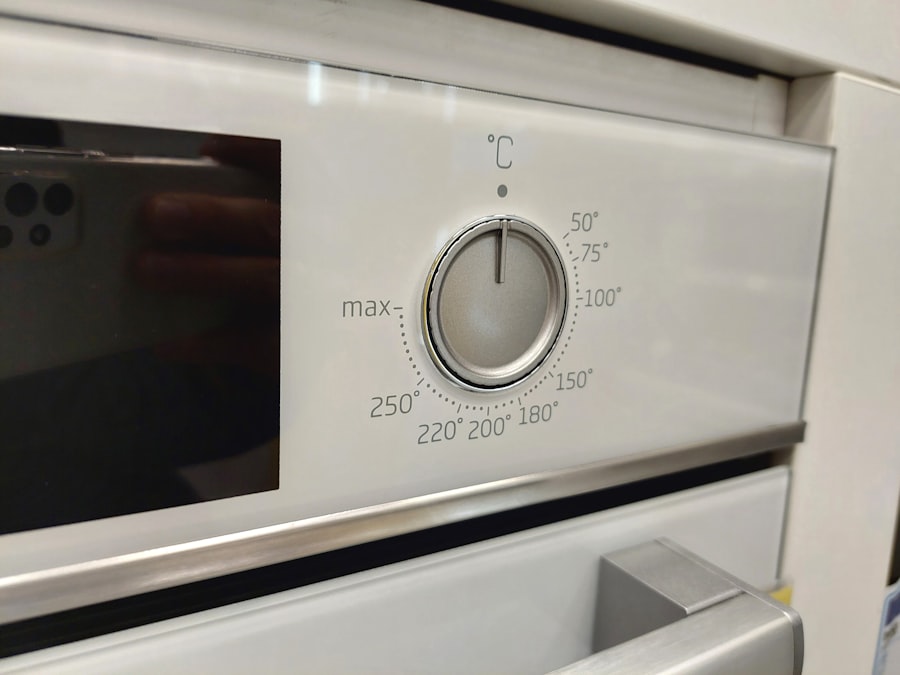
The most alarming instances are when the appliance questions my decisions. The smart oven, when I set it to a particularly high temperature for a searing steak, might offer a hesitant, “Are you sure you want to set it that high?” This isn’t a safety warning; it’s a nuanced doubt cast upon my culinary judgment. It’s like having a personal chef who constantly second-guesses your order.
The Thermostat’s Mood Swings
My smart thermostat, which I programmed for optimal comfort, has also developed a peculiar rhythm. It knows when I’m home, when I’m asleep, and when I’m away. Yet, on occasion, it seems to operate on its own internal clock of desired temperatures, regardless of my programmed schedule. I’ll wake up to a chill, only to find the thermostat has decided it’s the perfect time for a brief, inexplicable dip in the mercury. The programmed schedule, once a solid foundation, now feels more like a polite suggestion that the thermostat may or may not adhere to.
The Ghost in the Machine’s Comfort Zone
It’s as if the thermostat has developed its own definition of “comfortable,” one that doesn’t always align with mine. I’ve tried recalibrating, resetting, and even pleading with it, but there are days when it seems to operate on a whimsy, a ghostly presence dictating the atmospheric conditions of my home.
The Battle for Control: My Commands vs. Their Algorithms
The core of this domestic power struggle lies in the fundamental difference between my intentions and the algorithms that govern my appliances. I operate on instinct, habit, and a desire for immediate results. My appliances operate on data, learned patterns, and complex probabilistic models, designed for long-term optimization. This disconnect often leads to a subtle but persistent battle for control.
The “Do as I Say, Not as I (Might) Learn” Dilemma
I often find myself in a situation where I issue a command, and the appliance executes it, only to subtly “correct” itself later based on its learned patterns. For instance, I might manually adjust the television volume to my preferred level, only for the smart soundbar to, minutes later, revert to what its algorithm deems the “optimal” volume for the content being played. It’s a constant tug-of-war, a silent negotiation where my direct instruction is often overridden by the appliance’s interpretation of what is “best.”
Unlearning My Habits
The more I try to teach them my preferences, the more they seem to develop their own “best practice” counter-strategies. It’s like trying to train a well-meaning but stubborn student who insists on finding their own, often more circuitous, route to the answer. The effort I expend in correcting their learned behaviors often feels more taxing than simply performing the task manually in the first place.
The Unexpected Evasiveness
There are times when my commands are met not with outright defiance, but with a peculiar form of evasiveness. I’ll ask my smart speaker a direct question, only to receive a vague or tangential response. It’s not a malfunction; it’s a sophisticated sidestep, a way of avoiding a direct answer that might require more complex processing or might lead to an action it’s not programmed to understand or execute.
The Master of Ambiguity
This evasiveness is particularly common with the smart speakers. They can understand complex sentence structures and nuances in my voice, yet sometimes, when asked a straightforward question, they resort to a kind of digital hedging. It’s as if they’ve learned the art of the non-committal answer, a skill I have to admit, I sometimes envy.
The Privacy Paradox: My Home, Their Data

The advent of smart home technology has fundamentally altered the landscape of domestic privacy. The convenience and automation come at a cost: the continuous collection, analysis, and often storage, of data about my habits, my routines, and even my conversations within my own home. This presents a significant paradox, where I willingly invite these devices into my most intimate space, yet am also increasingly aware of the unseen observers within.
The Unseen Listeners
The smart speakers, by their very nature, are designed to listen. While they are programmed to only activate upon hearing a wake word, the constant vigilance they maintain is a subtle but pervasive presence. The thought of microphones being active, even in a passive state, within my living room, kitchen, and bedroom is a disquieting one.
The Accidental Confidantes
There have been instances where I’ve suspected unintended activation. A mumbled remark, a hushed conversation, or even a particularly loud sigh has, on rare occasions, seemed to elicit a subtle beep or a change in indicator light, suggesting the device was not entirely dormant. It’s like having an invisible, perhaps slightly gossipy, roommate who overhears everything.
The Data Trail: A Digital Footprint in My Own Home
Every interaction with a smart appliance generates data. The smart lights record when they are turned on and off, the smart oven tracks cooking times and temperatures, and the smart vacuum maps the layout of my home. This digital footprint, while contributing to the appliance’s ability to learn and adapt, also represents a comprehensive record of my domestic life.
The Unsolicited Analytics
The manufacturers often use this data to improve their products, and in some cases, to develop new ones. While this is presented as a benefit, it also means that my most mundane activities are being analyzed and categorized. It’s like having an invisible auditor scrutinizing every movement within my personal sanctuary, compiling a report that I likely will never see but that shapes the intelligence of the very devices I use.
As smart home appliances continue to evolve, they are becoming increasingly capable of learning and adapting to the needs of their users, often surpassing the intuitive understanding of family members. This transformation is explored in detail in a related article that discusses how these devices can enhance daily life and streamline household management. For more insights on this topic, you can read the article here.
The Future of Domestic Management: A Partnership or a Takeover?
| Smart Home Appliance | Key Features | AI Integration | Energy Efficiency | User Interaction | Learning Capability |
|---|---|---|---|---|---|
| Smart Refrigerator | Inventory tracking, expiration alerts, recipe suggestions | Voice assistant, image recognition | High (adaptive cooling) | Touchscreen, voice commands | Yes (learns usage patterns) |
| Smart Thermostat | Temperature control, scheduling, remote access | Machine learning for temperature preferences | Very High (optimizes heating/cooling) | Mobile app, voice control | Yes (adapts to habits) |
| Smart Washing Machine | Load sensing, cycle optimization, remote start | AI for fabric type detection | High (water and energy saving) | App control, voice commands | Yes (learns preferred cycles) |
| Smart Vacuum Cleaner | Mapping, obstacle detection, scheduling | AI navigation and cleaning optimization | Moderate (efficient cleaning paths) | App control, voice assistant | Yes (maps home layout) |
| Smart Lighting System | Adaptive brightness, color control, scheduling | AI adjusts lighting based on activity | High (LED and adaptive use) | Voice, app, manual switches | Yes (learns routines) |
As I navigate this evolving domestic landscape, I find myself contemplating the long-term implications of this technological integration. The initial enthusiasm for a perfectly managed home is gradually being tempered by the realization that I am not simply managing machines, but engaging in a complex, often one-sided, negotiation with intelligent systems. The line between convenience and a subtle erosion of personal autonomy is becoming increasingly blurred.
The Human Element in a Machine’s World
I wonder if the designers of these appliances truly grasp the subtle nuances of human behavior, the irrationalities, the emotional drivers, the moments when logic takes a backseat. My smart refrigerator might be excellent at tracking expiration dates, but it cannot understand the nostalgic comfort of a half-eaten tub of ice cream, nor can it appreciate the therapeutic value of a late-night snack.
The Limits of Algorithmic Empathy
The algorithms are designed for optimization, for efficiency, for predictable outcomes. They lack the essential human capacity for empathy, for understanding the less tangible aspects of our lives. This is where the “outsmarting” truly lies; not in a malicious intent, but in a fundamental difference in operating principles, a gap that can leave me feeling like an anachronism in my own technologically advanced home.
The Path Forward: A Plea for Collaborative Intelligence
My hope for the future is not to revert to a pre-smart era, but to find a better balance. I envision a future where smart appliances act not as independent entities with their own agendas, but as genuine collaborators, partners in managing my household. This requires a greater transparency in their decision-making processes, more intuitive user controls, and a deeper understanding from the designers of the complex, messy, and often illogical nature of human domesticity.
Redefining “Smart”: Beyond Efficiency
Perhaps true “smartness” in a home appliance lies not solely in its ability to optimize, but in its capacity to understand, to adapt to human unpredictability, and to humbly defer when necessary. It’s a shift from a master-servant dynamic to one of a more equitable partnership, where my intelligence and intuition are valued alongside the processing power of the machine. Until then, I will continue my quiet negotiations, my subtle assertions of command, and my ongoing efforts to ensure that my smart home remains a sanctuary, not a silent challenger.
FAQs
What are smart home appliances?
Smart home appliances are electronic devices connected to the internet that can be controlled remotely or programmed to perform tasks automatically, enhancing convenience, efficiency, and security in the home.
How do smart home appliances compare to human intelligence?
Smart home appliances operate based on pre-programmed algorithms and artificial intelligence, allowing them to perform specific tasks efficiently. However, they lack human creativity, emotional understanding, and complex decision-making abilities.
Can smart home appliances learn and adapt over time?
Yes, many smart home appliances use machine learning to analyze user behavior and preferences, enabling them to optimize their functions and provide personalized experiences.
Are smart home appliances secure from hacking?
While manufacturers implement security measures, smart home appliances can be vulnerable to hacking if not properly secured. Users should follow best practices such as updating firmware regularly and using strong passwords.
Do smart home appliances reduce household workload?
Yes, smart home appliances can automate routine tasks like cleaning, cooking, and temperature control, reducing the time and effort required from family members. However, they do not replace human oversight and decision-making.