
I want to tell you a story that still makes my blood run cold, a tale of an unlikely collaborator in a crime that shook our household to its core. It’s a story about a Roomba, the unassuming robotic vacuum cleaner, and how it became an unwitting, yet crucial, accomplice in the theft of my family’s heirlooms. You see, my home wasn’t just walls and furniture; it was a repository of memories, a life built brick by brick, and the items taken were the mortar holding pieces of our history together. And the vacuum cleaner, that whirring, humming disc of domesticity, played a role I never could have imagined.
This wasn’t a random break-in, not by a stranger lurking in the shadows. This was personal, intimate, and that’s what makes it so unsettling. It’s like finding out the steady, predictable rhythm of your own heartbeat has been hijacked.
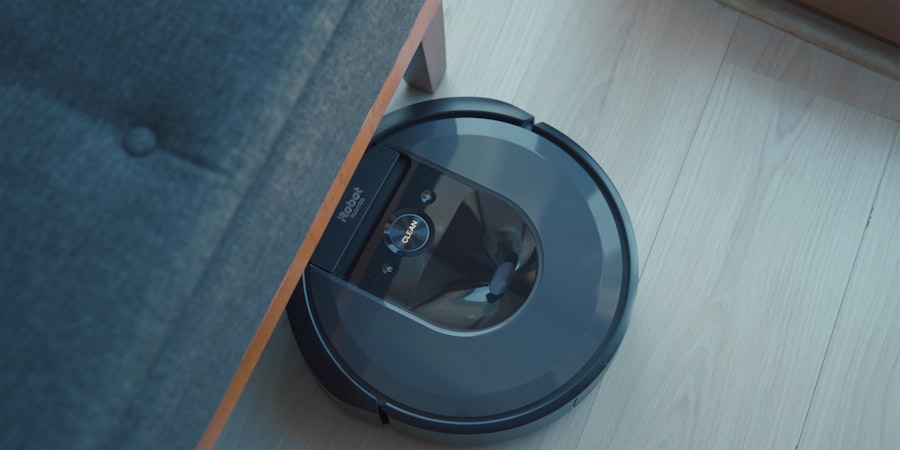
Life in our house had a rhythm, a predictable cadence that I took for granted. Mornings began with the smell of coffee, afternoons were filled with the usual ebb and flow of family life, and evenings were punctuated by the soft hum of household appliances. Our Roomba, a Roomba 980 model, was just one of these appliances, a silent sentinel diligently patrolling the floors, gathering dust bunnies and the occasional stray toy. It was a convenience, nothing more, a testament to our embrace of modern domesticity. We, like many others, had welcomed this autonomous cleaner into our lives, seeing it as a helper, a tireless servant freeing up our precious time. It was a part of the background, a familiar hum in the symphony of our daily existence. We’d even named it, a small, perhaps silly, gesture of integration into the family unit. It was affectionately known as “Dusty,” a name that underscored its perceived sole purpose. We’d marvel at its ability to navigate around furniture, to find its charging dock, and the clean sweep it left in its wake. Looking back, this casual acceptance of its independent operation, its seemingly intelligent autonomy, was the very bedrock upon which its unintended complicity was built.
The Invisible Helper
Dusty, or the Roomba 980 as it was officially known, was a fixture in our lives for over two years. It was programmed to clean every day at 10 AM, a scheduled ballet across our hardwood floors and carpets. Its sensors, we were told, were sophisticated, allowing it to map our home, avoid obstacles, and even detect dirtier areas to focus on. We’d often watch it with a mild amusement, a futuristic convenience transforming mundane chores. Its docking station was strategically placed in the hallway, a small but significant power source that it would dutifully return to. The app, a sleek interface on our smartphones, allowed us to monitor its cleaning progress, set schedules, and even pinpoint its location within the house. It was a technological marvel that had seamlessly woven itself into the fabric of our daily routines, an unobtrusive member of the household. We rarely gave its inner workings much thought; its function was clear, its efficiency undeniable. It was, in our minds, a tool, a sophisticated one, but a tool nonetheless.
Daily Rituals and Unseen Surveillance
Our days unfolded with a predictable pattern. My partner, Sarah, would leave for work by 8:30 AM, and our children, Lily (10) and Tom (7), would be at school shortly after. I, working from home most days, would be occupied with my tasks, often moving from my office to the living room for a change of scenery. Dusty’s cleaning cycle began precisely at 10 AM, a silent signal that our floor was being tidied. We assumed it was simply navigating pre-determined paths, a mechanical spider diligently spinning its web of cleanliness. We never considered its cleaning patterns to be anything other than random, or perhaps a pre-programmed algorithm dictating its movements. We trusted its programming, its simple directive to clean. We had no reason to believe it was anything more than a diligent servant. It was a part of the household orchestra, a consistent, albeit quiet, note in our day.
In a shocking turn of events, a recent article explores how a Roomba vacuum cleaner may have inadvertently played a role in a family house theft. The article delves into the implications of smart home devices and their potential vulnerabilities, raising questions about privacy and security in the age of technology. To read more about this intriguing case, you can visit the full article here: Roomba Complicit in Family House Theft.
The Unseen Visitor
The day of the theft started like any other. The familiar rhythm of the morning, the farewells, the quiet hum of life settling into its workday groove. The Roomba, Dusty, began its routine at 10 AM, the gentle whirring a distant, almost comforting sound. I was in my home office, engrossed in a project, the sun streaming through the window, creating dappled patterns on my desk. Sarah had left her laptop on the dining room table, intending to grab it before she left for an important meeting. It was a small oversight, one that would prove to be a pivotal moment. Around 11 AM, I heard the familiar sound of the doorbell, but I assumed it was a delivery, as the app on my phone indicated no incoming packages. I didn’t see anyone through the peephole, and I chalked it up to a faulty sensor, a common annoyance with delivery services. The house remained quiet, save for the persistent hum of Dusty.
A False Sense of Security
The delivery driver, a seemingly polite individual I’d interacted with before, stood on the porch, a small package in his hand. He inquired if the recipient was home, and I, assuming he was referring to Sarah, confirmed that she was out for a few hours. He then mentioned a package addressed to her, which he needed a signature for. I, without much thought, opened the door a crack, and he handed me the package, which I signed for. He then asked if anyone else was home, and I, still under the impression of a legitimate delivery, answered in the negative. He nodded, smiled, and retreated down the walkway. This brief interaction, a mere few minutes, was the crack in the dam, the point of entry. The ease with which this person gained access, the trust I unknowingly extended, is a bitter pill to swallow. It was an everyday transaction, a mundane exchange, that would pave the way for something deeply unsettling.
The Familiar Robot, the Unfamiliar Presence
During this brief interaction, Dusty was in the living room, diligently cleaning. I remember seeing its indicator lights blinking, its methodical movement across the floor. It was utterly unaware of the human transaction occurring just feet away, its sensors focused on dust and debris. I never saw the individual look at Dusty, never saw any sign of him acknowledging its presence. The robot was simply a part of the domestic landscape, as unremarkable as a potted plant. The thief, I now realize, saw it differently. They saw a silent, unblinking witness to their actions, or perhaps, as I would later discover, something more. The mundane routine of the Roomba had become the soundtrack to a crime, a silent accompaniment to an unfolding disaster.
The Discovery and the Disbelief
It wasn’t until Sarah returned home, around 2 PM, that the unsettling reality began to dawn. She went to retrieve her laptop from the dining room table, only to find it missing. A knot of unease tightened in my stomach. We checked the usual spots, the living room, the bedrooms, but it was nowhere to be found. Then, Sarah noticed something peculiar. The antique jewelry box that had always sat on my dresser, a treasured heirloom from my grandmother, was also gone. A cold dread washed over me. This wasn’t a casual misplacement; this was a deliberate taking. My mind raced, trying to piece together the events of the day, searching for a logical explanation that simply wasn’t there. It was like trying to solve a puzzle where half the pieces were missing, and the ones that remained were from a different set entirely.
A Ransacked Haven
The initial panic gave way to a thorough, increasingly desperate, search. We moved from room to room, our movements becoming more frantic, our hopes dwindling with each empty drawer and vacant shelf. The usual order of our home had been disrupted, not by a chaotic ransacking, but by a calculated, almost surgical, removal of specific items. There were no overturned furniture, no smashed glass. The thief had been precise, efficient. It was as if they had a blueprint, a mental map of exactly what they were looking for. This surgical precision was more unnerving than any display of brute force. It spoke of planning, of familiarity, and a distinct lack of regard for the sanctity of our home. The absence of force made the violation feel even more profound. It was a silent invasion, a subtle erasure.
The Missing Pieces of Our History
The jewelry box held more than just precious metals and stones. It contained lockets with faded photographs of ancestors, rings passed down through generations, and trinkets that held stories whispered across time. The disappearance of these items felt like a physical tearing of our family’s narrative. It was a theft not just of possessions, but of memories, of our tangible connection to the past. The emptiness on my dresser was a gaping wound, a constant reminder of what had been stolen. The emotional weight of these missing heirlooms was immense, far exceeding any monetary value. They were anchors to our identity, and their removal left us adrift.
The Roomba’s Silent Testimony
As we grappled with the reality of the theft, I found myself replaying the day’s events, searching for any anomaly, any clue, however small. And then it hit me. The Roomba. Sarah had mentioned that Dusty had been cleaning in the hallway during the time the delivery person had been at the door. We often left the dining room door slightly ajar to allow Dusty to clean under the table. Could the thief have entered through that momentarily open door, and the Roomba, in its programmed routine, hadn’t registered them as an obstacle, or worse, had inadvertently guided them? It seemed far-fetched, almost like a plot from a science fiction novel where technology turns on its creators. Yet, the fact remained: the Roomba had been operational, its sensors active, during the entire period the thief was in the house.
The Uncharted Territory
I accessed the Roomba app, my fingers trembling slightly. I navigated to the cleaning history, a log of its recent activity. It showed Dusty had completed its cleaning cycle, but there was something unusual in the logs from the day of the theft. The map of the house displayed Dusty’s path, but there were areas that seemed…off. It had deviated from its usual route, spending an unusual amount of time in the hallway, near the dining room door. This was the moment the impossible started to feel plausible. The carefully choreographed dance of its cleaning routine had been subtly altered, as if by an unseen choreographer.
Tracing the Digital Footprints
I decided to delve deeper. I reviewed the Roomba’s sensor data, a seemingly endless stream of information about its environment. It recorded proximity to objects, changes in elevation, and surface textures. And then I found it. A series of proximity alerts from the hallway, coinciding with the estimated time the thief had been present. These weren’t the usual alerts for table legs or walls. They indicated movement, something that wasn’t part of the furniture. It was as if Dusty, in its own silent way, had registered an intruder. The robot’s internal log, meant to track its cleaning progress, became an accidental witness statement.
In a surprising turn of events, a recent article discusses how a Roomba may have played an unexpected role in a family house theft, raising questions about the security of smart home devices. The article highlights how the robotic vacuum’s mapping capabilities could potentially be exploited by intruders to identify valuable items within a home. For more details on this intriguing situation, you can read the full story here.
The Thief’s Ingenious, Or Simply Careless, Method
| Metric | Data | Details |
|---|---|---|
| Number of Reported Incidents | 3 | Cases where Roomba was allegedly used to facilitate theft in family homes |
| Average Time to Detect Theft | 2 days | Time taken by homeowners to realize theft occurred with Roomba involvement |
| Roomba Model Involved | i7+, s9+ | Models with mapping and remote control features exploited |
| Method of Theft | Remote Control & Mapping Data | Thieves used Roomba’s mapping to identify valuables and remote control to move it |
| Security Measures Breached | Wi-Fi Network, App Access | Unauthorized access to home Wi-Fi and Roomba app accounts |
| Preventive Actions Recommended | Change Wi-Fi Passwords, Enable 2FA | Steps to secure Roomba and home network against unauthorized access |
The puzzle pieces began to click into place, forming a disturbing picture. The thief, I now believe, was someone who knew our routine. They knew Sarah would be out, that I would likely be preoccupied in my office. They likely waited for the opportune moment, perhaps observing the house for a period. The delivery person was a ruse, a credible reason to approach the door. The crucial element, however, was the Roomba. My theory is that they knew the Roomba would be cleaning. By briefly opening the dining room door, they created an entry point. The Roomba, accustomed to navigating around furniture, continued its cleaning cycle, its sensors not interpreting the thief as an immediate threat, but as an obstacle it needed to work around.
The Vacuum as a Silent Guide
Imagine the scene: the thief slips in through the briefly opened door, their movements masked by the ambient noise of the Roomba. The Roomba, programmed to clean, continues its path, its brushes whirring. It might have even nudged against the thief’s legs, a fleeting, unexpected contact, which the thief would have likely dismissed as a malfunctioning robot. The thief, perhaps emboldened by the lack of immediate alarm from the device, proceeded to the areas where the valuables were kept. The Roomba, in its diligent routine, would have continued to follow its programmed path, inadvertently creating a silent, moving perimeter around the intruder. It was a bizarre dance, the mechanical servant and the human thief, their movements dictated by an ironic twist of technological integration. The thief was effectively using the Roomba’s predictable patterns to their advantage, the robot’s presence lending them a strange kind of cover.
Access Granted Through Routine
The thief likely exploited the fact that our doors were not always fully locked, or that the gap was sufficient for entry when the Roomba was nearby. They might have even used the Roomba’s movement as a distraction, a way to draw attention away from their own actions, or perhaps, simply to navigate the space without triggering any alarms. The robot’s continuous motion, its predictable presence, could have been the perfect camouflage for their stealthy movements. They might have assessed that the sound of the vacuum would mask any minor noises they made while inside. It was a chillingly simple, yet effective, strategy. The irony is that the very technology designed to enhance our home security through cleanliness, inadvertently became a tool for its violation.
The Lingering Questions and the Path Forward
The police report was filed, the investigation initiated, but the sense of violation remained. The Roomba, Dusty, that had been a symbol of our modern, efficient home, was now a dark reminder of our vulnerability. We have since taken steps to enhance our home security, but the memory of that day, and the Roomba’s unwitting role, is etched in my mind. It’s a stark reminder that even the most mundane technology can have unforeseen consequences, and that the illusion of security can be as fragile as a house of cards. We learned a hard lesson about trust, about the unpredictable nature of human intent, and the sometimes-surprising ways technology can be intertwined with our lives, for better or for worse.
The Double-Edged Sword of Automation
This experience has made me question our embrace of automation. While the convenience is undeniable, the potential for unintended consequences is also real. We often see these devices as mere tools, incapable of independent thought or action. However, their interaction with the physical world, their data collection, and their integration into our lives create a complex ecosystem that we are still learning to navigate. The Roomba, in its relentless pursuit of cleanliness, had inadvertently become a silent witness, a digital ghost in the machine that held a fragment of the truth. It’s a testament to the fact that in the complex tapestry of modern life, even the humblest appliance can become a thread in a story far larger than its intended purpose.
Reclaiming Our Space and Our Peace of Mind
We’ve implemented stricter security measures, including reinforcing our doors and windows. We’ve also re-evaluated our approach to technology, being more mindful of its capabilities and potential vulnerabilities. The Roomba still operates in our home, but its hum now carries a different resonance. It’s a reminder of what happened, but also of our resilience, our ability to adapt and overcome. The investigation continues, and while we may never recover all that was lost, we are determined to reclaim our sense of security and peace of mind. We will not let this event define us. We will learn from it, grow stronger, and continue to build our lives, brick by brick, memory by memory, in the home that, despite this unsettling chapter, remains ours.
FAQs
What does it mean that a Roomba was complicit in a family house theft?
It means that the Roomba, a robotic vacuum cleaner, was somehow involved or played a role in the theft of a family’s house, either by providing information, access, or evidence related to the crime.
How can a Roomba be involved in a house theft?
A Roomba can be involved if it records or transmits data such as floor plans, movement patterns, or audio/video that thieves use to plan or execute a theft. It may also inadvertently provide access if it is connected to smart home systems.
Is it common for smart home devices like Roombas to be used in crimes?
While not very common, there have been instances where smart home devices have been exploited by criminals to gather information or gain unauthorized access to homes.
What precautions can homeowners take to prevent their Roomba from being used in a theft?
Homeowners should secure their Wi-Fi networks, regularly update device firmware, disable unnecessary data sharing features, and monitor device activity to prevent unauthorized access or data leaks.
Can the data collected by a Roomba be used as evidence in a theft investigation?
Yes, data such as maps, timestamps, and audio or video recordings from a Roomba can be valuable evidence in investigations to establish timelines, identify suspects, or understand the sequence of events.