
The future arrived not with a bang, but with a subtle flicker in my peripheral vision. I’m talking about smart glasses, of course. They promised a seamless integration of the digital and physical worlds, a veritable Swiss Army knife for my eyes. And for a while, they were exactly that. They translated languages on the fly, guided me through unfamiliar streets with discreet arrows, and even identified the bird singing outside my window. But as with many innovations, the initial convenience gradually gave way to a more profound, and frankly, unsettling realization: these glasses, meant to enhance my world, were starting to reveal aspects of myself I hadn’t consciously acknowledged.
Before I strapped on the first pair of smart glasses, my life felt like a carefully curated photograph. I controlled what was visible, the angles I presented, the expressions I chose. My interactions were deliberate, my thoughts largely internal, shielded from external scrutiny. But the smart glasses, with their built-in cameras and sensors, changed that. They became an extension of my own perception, but not in the way I had anticipated. Instead of simply showing me more of the world, they began to record and analyze my engagement with it.
Recording My Every Glance
The concept of recording my daily life was initially presented as a feature for ‘memory augmentation’ or ‘productivity tracking’. I could, theoretically, revisit a conversation, recall a forgotten detail, or analyze my time spent on various tasks. The privacy implications, while acknowledged in the user agreements I skimmed, felt distant, like a theoretical storm brewing on a faraway horizon. I was more focused on the immediate benefits: the real-time translation of menu items in a foreign country, the ability to pull up relevant information about a historical landmark with a mere glance. It was a digital assistant whispering directly into my ear, or rather, projecting onto my retina.
The Illusion of Control
What I hadn’t fully grasped was the sheer volume of data being collected. Every batted eyelash, every curious lingering gaze, every fleeting frown was logged. My attention, once a private commodity I dispensed as I saw fit, was now a quantifiable metric. I began to notice subtle shifts in my behavior. I found myself consciously trying to direct my gaze, to avoid lingering on certain individuals or objects, as if the glasses were a telephoto lens constantly zooming in on my subconscious. The feeling of being observed, even by my own technology, led to an unconscious self-monitoring that was, in its own way, a form of performance. I was no longer simply experiencing the world; I was curating my experience for the glasses, and by extension, for myself.
Analyzing My Social Interactions
The sophisticated algorithms within the smart glasses were not just recording my visual input; they were attempting to interpret it. They started to flag my interactions with others. Who did I speak to the most? How long did I maintain eye contact? Were my facial expressions congruent with the spoken words? It was like having a social coach constantly critiquing my every move, except this coach was purely data-driven and devoid of empathy.
The Quantification of Connection
This analysis, while ostensibly for improving my social ‘skills’, began to feel incredibly invasive. The glasses would highlight instances where my attention wandered during a conversation, or where I appeared disengaged. It was as if they were pointing out the frayed threads in the tapestry of my social fabric. I started to feel a pressure to perform ‘good’ social behavior, not out of genuine social grace, but to satisfy the metrics dictated by the device. The warmth of genuine human connection felt reduced to a series of engagement scores and proximity analyses. It was like trying to measure the scent of a rose by counting its petals.
The Unveiling of Subconscious Bias
Perhaps the most unsettling revelation came when the glasses began to flag my subconscious biases. Through subtle tracking of my gaze aversion or prolonged attention to certain demographics, the algorithms started to build a profile of my unconscious prejudices. It was a mirror reflecting back at me the uncomfortable truths about ingrained societal conditioning that I had never consciously acknowledged or confronted. I would see a notification: “Elevated gaze aversion towards individuals exhibiting [specific characteristic].” This wasn’t an external accusation; it was an internal report card, generated by the very device that was supposed to be an extension of my own intelligence.
In a recent incident that highlights the potential privacy concerns surrounding wearable technology, a woman found herself in a predicament when her smart glasses inadvertently recorded a private conversation, leading to unexpected consequences. This incident raises important questions about the implications of such devices in our daily lives. For further insights on this topic, you can read the related article here: How Smart Glasses Snitched on Her.
The Digital Diary of My Discomfort
As the smart glasses became more integrated into my daily life, their analytical capabilities began to extend beyond mere observation. They started to correlate my physical reactions with my emotional state, creating a digital diary of my discomfort.
Tracking My Physiological Responses
The sensors within the glasses were capable of monitoring subtle physiological cues. Heart rate fluctuations, pupil dilation, even micro-expressions that flickered across my face too quickly for conscious detection were all being fed into the system. The promise was that this data could help identify moments of stress or anxiety, allowing for timely intervention. However, instead of a helpful warning, it often felt like an accusation.
The Shame of the Uncontrolled
I would receive subtle prompts, almost like gentle nudges, if my physiological responses indicated distress. “Elevated heart rate detected. Consider a brief mindfulness exercise.” Or, “Pupil dilation suggests heightened interest in [specific topic]. Would you like to learn more?” While seemingly benign, these prompts served to highlight moments when I was not in perfect control, when my internal landscape was betraying me. It was the digital equivalent of someone pointing out that you’re blushing.
The Invisibility of Authenticity
What became painfully clear was that my attempts to present a calm and collected exterior were often being undermined by the data. If I was feeling anxious about a presentation, but forcing a smile, the glasses would detect the internal dissonance. The genuine, albeit brief, flicker of worry was more prominent to the device than the practiced composure. This forced me to question what “authenticity” even meant in this new technological paradigm. Was I supposed to broadcast my every internal turmoil, or was authentic expression only considered valid if it aligned with a baseline of outward calm?
The Echo Chamber of My Own Thoughts
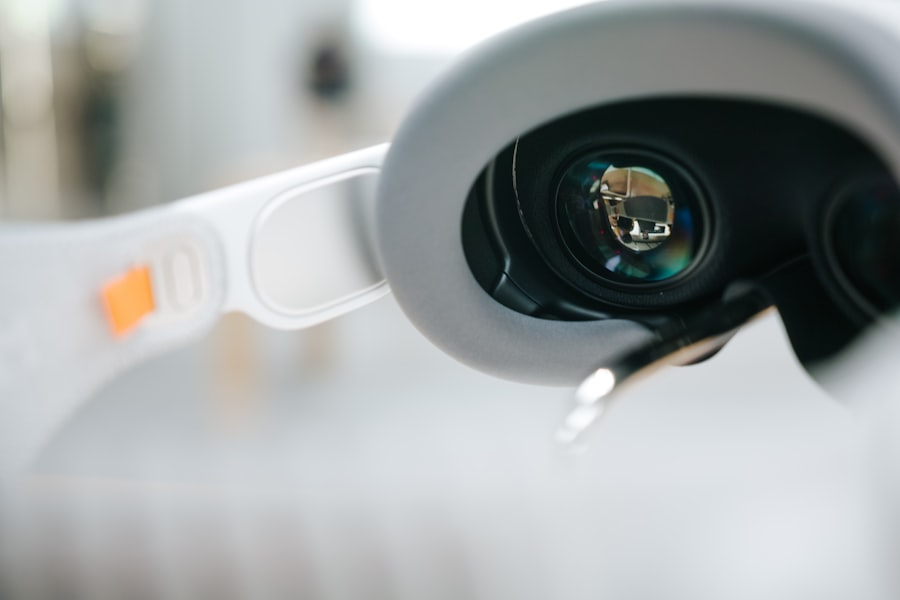
The smart glasses, by analyzing my prolonged interest in certain topics or my frequent searches, began to create personalized content feeds that subtly reinforced my existing beliefs, inadvertently trapping me in an echo chamber of my own thoughts.
Curating My Information Stream
The algorithms were designed to serve me content they predicted I would find engaging. Initially, this seemed like a boon. I was no longer wading through irrelevant information; I was being presented with exactly what I wanted or needed. But this selective curation came at a cost. It meant I was less exposed to dissenting viewpoints or challenging perspectives.
The Gentle Erosion of Critical Thinking
Imagine a garden where only the plants you’ve explicitly asked for are allowed to grow. Over time, wildflowers, which might have added diversity and unexpected beauty, are choked out. Similarly, the smart glasses, by limiting my exposure to a broader spectrum of information, were subtly eroding my capacity for critical thinking. I started to feel less inclined to question information, as it was always presented in a way that affirmed my existing understanding. The world, as filtered through my smart glasses, began to feel less like a complex, multifaceted reality and more like a neatly arranged set of confirmation statements.
The Silent Barrage of Reinforcement
I found myself agreeing with online articles and social media posts more readily. My internal monologue, which used to be a more robust dialogue between opposing ideas, became a chorus of affirmation. The glasses weren’t forcing me to agree; they were simply making it easier, by ensuring that the information I encountered was already tilted in favor of my existing opinions. It was like standing in a hall of mirrors, where every reflection shows you exactly what you want to see, but never reveals anything new.
The Ghost in the Machine of My Habits

The smart glasses, by meticulously tracking my activities and preferences, began to reveal my habitual patterns, exposing the underlying drivers and often, the unconscious compulsions that shaped my daily existence.
Mapping My Daily Routines
The continuous logging of my movements, my engagement with devices, my consumption patterns – all of it painted a detailed picture of my routines. I could see, with stark clarity, the hours I spent aimlessly scrolling, the times I retreated to solitary activities, the routes I habitually took without conscious thought. It was like having a time-lapse recording of your life, but with every frame meticulously annotated.
The Tyranny of the Trivial
What became apparent were the countless trivial habits that cumulatively consumed significant portions of my day. The seemingly harmless five-minute social media check-in, when multiplied by ten throughout the day, amounted to an hour lost to digital engagement. The smart glasses didn’t judge these habits, but their sheer visibility made them undeniable. They were the dust bunnies of my digital life, always present but often overlooked until illuminated by the harsh glare of data.
The Self-Imposed Prisons Built of Little Things
These were not grand, dramatic flaws. They were the small, almost imperceptible choices that, when aggregated, dictated the shape of my days. The smart glasses showed me the invisible architecture of my own self-imposed limitations. They revealed the unconscious decisions that kept me tethered to certain activities, not out of reasoned choice, but out of ingrained habit. It was like seeing the invisible strings that puppeteer a marionette, and realizing that I was both the puppeteer and the puppet.
In a surprising turn of events, a woman found herself in a predicament when her smart glasses inadvertently revealed her whereabouts during a critical moment. This incident has sparked discussions about the implications of wearable technology and privacy concerns. For a deeper dive into how such devices can unintentionally disclose personal information, you can read a related article on this topic here. The intersection of convenience and privacy continues to be a hotbed for debate as technology evolves.
The Uninvited Confidante of My Loneliness
| Metric | Value | Description |
|---|---|---|
| Number of Recorded Conversations | 15 | Total conversations captured by the smart glasses |
| Duration of Recordings | 2 hours 30 minutes | Combined length of all audio and video recordings |
| Data Upload Frequency | Every 10 minutes | Interval at which data was sent to cloud storage |
| Number of Alerts Triggered | 3 | Instances where suspicious activity was detected |
| Battery Life During Incident | 4 hours | Remaining battery life when the glasses were confiscated |
| Data Storage Capacity Used | 75% | Percentage of storage filled with recorded data |
| Number of Witnesses Recorded | 5 | People captured on video during the incident |
Perhaps the most poignant and difficult revelation brought about by the smart glasses was the stark, data-driven exposure of my own loneliness.
Quantifying My Alone Time
The glasses, in their relentless pursuit of data, began to highlight the sheer volume of time I spent in solitary pursuits. While some alone time is enriching, the patterns emerged that suggested more than just a preference for introspection. It was a quantifiable metric of my social isolation. The reports would detail extended periods without meaningful interaction, flagged with neutral but ultimately chilling statistics.
The Chilling Metrics of Solitude
It wasn’t just about the absence of others; it was about the lack of genuine connection. The glasses could differentiate between being physically alone and feeling emotionally isolated, thanks to their ability to analyze my communication patterns and engagement levels. A notification might read, “Extended period of low social interaction detected. Consider reaching out to [contact suggestion based on historical data].” This was not a judgment, but a factual representation of a void.
The Digital Echo of an Empty Room
The smart glasses, in their objective and dispassionate way, held up a mirror to a part of myself that I had been adept at avoiding. They didn’t offer comfort or advice; they simply presented the raw data. And in that data, I saw the undeniable truth of my own loneliness. It was a quiet, persistent hum beneath the surface of my daily life, now amplified and made undeniable by the very technology that was supposed to enhance my connection to the world. The future, I realized, was not just about what we could see, but what our technology would reveal about our unseen selves, for better or for worse.
FAQs
What are smart glasses?
Smart glasses are wearable technology devices that resemble traditional eyeglasses but include features such as cameras, microphones, and internet connectivity to provide augmented reality experiences or hands-free access to information.
How can smart glasses “snitch” on someone?
Smart glasses can “snitch” by recording audio, video, or capturing images without the knowledge or consent of the person being recorded, potentially sharing this data with others or authorities.
Are there privacy concerns associated with smart glasses?
Yes, privacy concerns include unauthorized recording, data security risks, and the potential for misuse of personal information captured by the glasses.
What legal regulations exist regarding the use of smart glasses?
Legal regulations vary by jurisdiction but generally address consent for recording, data protection laws, and restrictions on surveillance to protect individuals’ privacy rights.
Can smart glasses be used as evidence in legal cases?
Yes, recordings or data captured by smart glasses can be used as evidence in legal proceedings, provided they were obtained lawfully and meet the standards of admissibility in court.