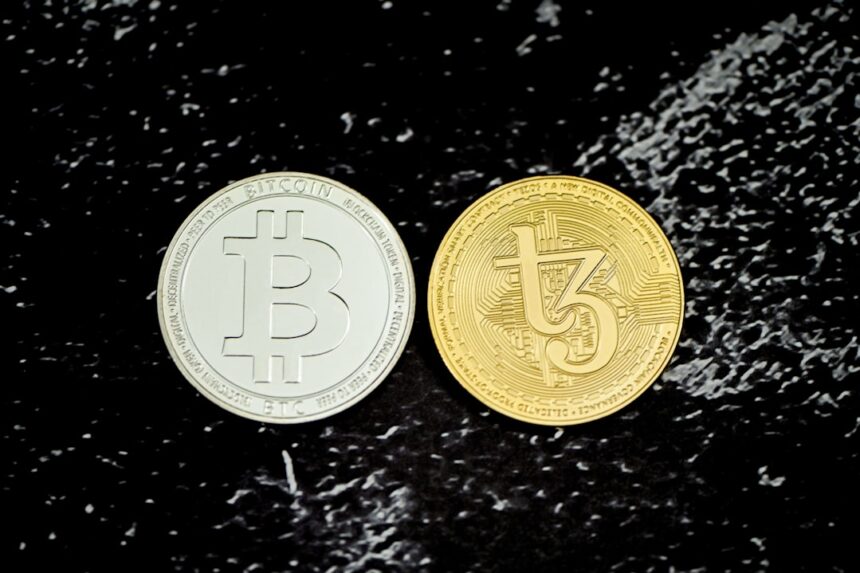
I am writing to you today to share a rather unique love story, one intertwined not with starlight and shared glances, but with the intricate pathways of cryptocurrency. My partner and I, as we embarked on our journey into marriage, found ourselves navigating a landscape increasingly defined by digital assets, and it became a fascinating experiment to see how these technologies, particularly Monero (XMR) and Bitcoin (BTC), would weave themselves into the fabric of our shared life. This is not a tale of instant riches or speculative frenzy, but rather a grounded account of how two distinct cryptocurrencies, each with its own philosophy and functionality, became subtle yet significant players in our marital union.
Our foray into the world of cryptocurrencies began independently, as it did for many. We were drawn to the nascent promise of decentralized finance, the idea of taking greater control over our own wealth, and the sheer novelty of it all. When our relationship began to solidify, so did the idea of merging our digital assets. It wasn’t a matter of pooling every penny, but rather of establishing a shared space, a digital stronghold, where we could collectively manage a portion of our cryptocurrency holdings.
The Bitcoin Foundation: A Store of Value and a Shared Vision
Bitcoin, as the progenitor of the cryptocurrency revolution, naturally formed the bedrock of our digital investment. Its reputation as “digital gold” resonated with our desire for a stable, long-term store of value. We approached our Bitcoin holdings with a measured perspective, akin to acquiring a piece of rare art rather than speculating on volatile stocks. The understanding was that this was not mere money to be spent on everyday whims, but an asset to be grown and preserved for the future.
The Acquisition Strategy: Dollar-Cost Averaging Through Life’s Milestones
Our Bitcoin acquisition strategy was deliberately unhurried. Instead of seeking a magic entry point, we employed dollar-cost averaging, investing a fixed amount regularly, regardless of market fluctuations. This approach mirrored our own approach to building a relationship: steady, consistent effort over time, weathering the inevitable ups and downs. We saw our regular Bitcoin purchases as small, deliberate investments in our shared financial future, like planting seeds that we hoped would one day bear fruit. This practice also served as a tangible reminder of our commitment, a recurring act of foresight woven into our weekly routines.
Storage and Security: A Fortress of Private Keys
The paramount concern for any cryptocurrency holder is security, and for us, this was amplified by the fact that our holdings were shared. We invested in hardware wallets, treating them with the utmost care and reverence. The private keys became a sacred trust, a digital inheritance entrusted to both of us. We developed contingency plans, ensuring that if fate should intervene, access to our digital wealth would not be lost. This process of securing our Bitcoin led to in-depth discussions about responsibility, trust, and the practicalities of digital asset management, making us more seasoned custodians of our joint finances.
The Monero Introduction: Privacy as a Cornerstone of Trust
While Bitcoin offered a robust store of value, its transparency, while a feature for some, presented a different set of considerations for a married couple. This is where Monero entered the picture. We were drawn to Monero’s commitment to privacy, its ability to obscure transaction details, and its focus on fungibility. For us, this translated into a digital representation of the privacy we valued in our personal lives.
The “Secret Sauce”: Undisclosed Transactions for Shared Expenses?
The concept of Monero’s untraceable transactions sparked intriguing discussions. While we didn’t engage in any illicit activities, the idea of certain shared expenses being handled with a degree of inherent privacy was appealing. Imagine a scenario where we wanted to contribute to a surprise gift for a mutual friend, or discreetly cover a shared bill without the immediate accounting visible on a public ledger. Monero offered a digital equivalent of a whispered agreement, a quiet acknowledgment of mutual support without the need for every detail to be broadcast. This wasn’t about deception, but about an added layer of thoughtful discretion within our private sphere.
Fungibility and Fairness: The “Like-for-Like” Principle
Monero’s fungibility, the idea that each unit of XMR is interchangeable with any other unit, resonated with our understanding of fairness in a partnership. In a relationship, we aim for an equitable distribution of effort and resources. Similarly, with fungible currency, there’s no inherent premium or discount attached to specific coins based on their history. This principle aligned with our belief that contributions within our marriage, regardless of their specific digital origin, should be valued equally. We saw our Monero holdings as a digital embodiment of this “like-for-like” principle, a currency that didn’t carry hidden baggage from its past.
In the context of tracing cryptocurrencies like Monero and Bitcoin during divorce proceedings, it’s essential to understand the implications of digital asset ownership. A related article that delves into the complexities of cryptocurrency in marriage and divorce can be found at this link. This resource provides valuable insights into how these digital currencies can complicate financial disclosures and asset division in legal separations.
Navigating Marital Finances: A Digital Tapestry of Choices
As we moved deeper into marriage, the integration of our cryptocurrency holdings became a more nuanced affair. It wasn’t about distinct budgets for Bitcoin and Monero, but rather how their inherent characteristics could inform our financial decisions as a unit.
The “Rainy Day” Fund: Bitcoin’s Resilience and Monero’s Flexibility
Our approach to saving and spending evolved. Bitcoin, with its established track record and perceived security against inflation, became our primary “rainy day” fund. It was the digital equivalent of a robust emergency kit, ready to be deployed if unforeseen circumstances arose. The idea was to hold it for significant future needs, akin to a long-term investment that we wouldn’t want to disrupt with frequent withdrawals.
Monero, on the other hand, offered a different kind of flexibility. Its privacy features made it suitable for more immediate, yet still considered, expenses that we preferred to keep within our intimate financial discussions. This could include contributions to shared hobbies, unexpected travel expenses, or even gifts that we wanted to keep a surprise from each other. The inherent privacy allowed for a more fluid exchange of value without the need for an immediate audit trail.
The “Unseen Contribution” Meter: Monero’s Quiet Support
I’ve often thought of Monero as the “unseen contribution meter” in our marriage. It’s the currency that facilitates those small acts of generosity or support that don’t require grand pronouncements. When one of us is traveling and wants to send a little extra for a shared treat upon return, or when we decide to spontaneously contribute to a cause we both believe in, Monero provides a convenient and discreet channel. It’s the digital equivalent of a knowing nod and a quiet exchange, reinforcing our shared values and mutual consideration without the need for itemized receipts.
The Long-Term Horizon: Bitcoin as the Anchor
Our Bitcoin holdings serve as the anchor for our long-term financial vision. We envision it as a hedge against future economic uncertainties and a potential resource for significant life events, such as future property investments or contributions to our children’s education. This steady, less frequently accessed aspect of our digital wealth allows us to look towards the horizon with a degree of confidence, knowing that a portion of our future is being diligently preserved. It’s like tending to a sturdy oak tree, expecting it to provide shade and shelter for generations to come.
The Digital Dialogue: Open Communication and Mutual Understanding
The integration of cryptocurrencies into our marriage, especially two with such distinct philosophies, necessitated constant and open communication. This wasn’t a one-time conversation but an ongoing dialogue. We frequently discussed our portfolio performance, our comfort levels with market volatility, and how we envisioned using these assets moving forward.
Decoding the Cryptic: Explaining Transaction Flows and Privacy Features
It was essential for both of us to understand not just the financial implications but also the technical underpinnings. I found myself explaining the nuances of Bitcoin’s blockchain and Monero’s ring signatures, and my partner, in turn, shared their insights into market trends and risk management. This mutual education fostered a deeper appreciation for the technologies and solidified our shared understanding of our digital estate. It was a collaborative effort, like learning a new language together to better understand each other’s perspectives.
Setting Boundaries: Avoiding Speculative Gambles and Maintaining Financial Harmony
Crucially, we established clear boundaries around speculative trading. Our cryptocurrency holdings were not intended to be a source of constant excitement or anxiety. We agreed to avoid impulsive decisions driven by market hype and to maintain a balanced approach, prioritizing long-term growth and security over short-term gains. This mindful approach prevented our digital assets from becoming a point of contention, ensuring that our financial discussions remained constructive and harmonious.
Beyond Transactions: Cryptocurrencies as Symbols of Shared Beliefs

The influence of Bitcoin and Monero in our marriage extended beyond mere transactional purposes. They became tangible representations of our shared beliefs and values.
The Decentralization Dream: A Parallel to Partnership Autonomy
The decentralized nature of both Bitcoin and Monero resonated with our understanding of a healthy partnership. In a marriage, we strive for a balance of interdependence and autonomy. Each individual has their own strengths, interests, and spheres of influence, yet we operate as a cohesive unit. The idea that these cryptocurrencies operated without central control mirrored our belief in mutual respect and individual agency within our union.
The “Node” of Independence: Maintaining Personal Financial Space
Just as we individually maintained certain personal accounts or interests, our approach to Monero offered a subtle parallel to maintaining a degree of personal financial space within the larger marital ecosystem. While our shared holdings were substantial, the privacy offered by Monero allowed for a more individualistic flow of certain funds, acknowledging that while we were united, we still retained distinct spheres of personal discretion. This wasn’t about secrecy, but about recognizing and respecting the individual within the partnership.
The Consensus Mechanism: Agreement Through Dialogue
The consensus mechanisms that govern Bitcoin and Monero, requiring agreement among participants to validate transactions, also served as a quiet metaphor for our marital decision-making process. While not a direct one-to-one comparison, it reinforced the idea that collective agreement and verification are essential for progress and stability. Our financial decisions, especially those involving significant assets, were always reached through mutual consent and discussion, ensuring that both parties were in agreement.
The Tech-Savvy Couple: Embracing the Future Together
Our journey with cryptocurrencies has also positioned us as a more tech-savvy couple. This has had its own unique benefits, from troubleshooting digital issues for friends and family to simply engaging in more informed conversations about the evolving technological landscape. Our shared understanding of these complex systems has become a bonding experience, a testament to our willingness to learn and adapt together.
The “Smart Contract” of Commitment: Future Aspirations and Digital Legacy
We’ve even begun to consider the potential of smart contracts and decentralized autonomous organizations (DAOs) as future tools for managing shared assets or even for philanthropic endeavors. While these are still nascent concepts, the fact that we can have informed discussions about them, and envision their integration into our lives, speaks to the forward-thinking nature of our partnership, fueled by our cryptocurrency explorations. It’s like drafting a digital will, but for collective future projects, ensuring our shared vision extends beyond our immediate needs.
The Cryptographic Bond: A Unique Language of Shared Understanding
Ultimately, our experience with Bitcoin and Monero in marriage has fostered a unique language of shared understanding. When we speak of “hodling,” “mining,” or “privacy coins,” it carries a specific resonance between us, a shorthand for our shared journey, our financial philosophy, and our commitment to navigating the future together, one digital block at a time.
The Evolution: From Novelty to Normality

What began as a fascinating experiment has gradually transitioned into a normalized aspect of our financial lives. While the initial novelty of cryptocurrencies has undoubtedly faded, their role as a store of value, a tool for discreet transactions, and a symbol of our shared beliefs has cemented.
Maintaining Momentum: Ongoing Education and Adaptation
We continue to stay informed about the developments in the cryptocurrency space. This involves reading reputable news sources, following industry leaders, and engaging in discussions within online communities and with other like-minded individuals. Our approach is one of continuous learning, adapting our strategies as the technology and the market mature.
The Blockchain’s Unfolding Narrative: Adapting to New Innovations
The cryptocurrency landscape is not static; it’s a constantly evolving narrative written on the blockchain. We understand that new innovations, such as advancements in layer-2 scaling solutions or the emergence of new privacy-enhancing technologies, could influence our approach. The key is to remain agile and open to integrating beneficial advancements that align with our core financial principles.
The Shifting Sands of Regulation: Navigating the Legal Landscape Together
We are also mindful of the evolving regulatory environment surrounding cryptocurrencies. Our discussions often include how potential regulations might impact our holdings and how we can ensure compliance while upholding the principles of financial privacy and control that drew us to these technologies in the first place. This proactive approach ensures that our digital assets remain a source of strength and security, not a point of legal vulnerability.
The Legacy of Digital Inclusion: Passing on Knowledge and Values
Looking ahead, we envision our cryptocurrency holdings as part of the legacy we will pass on. This extends beyond just the financial value; it includes the knowledge and understanding of these transformative technologies. We want to equip future generations with the tools and the mindset to navigate a digital economy responsibly and to make informed decisions about their own financial future.
The Digital Inheritance: More Than Just Coins
Our “digital inheritance” will not simply be a transfer of private keys. It will be accompanied by the insights we’ve gained, the importance of security, the value of privacy, and the prudent approach to managing digital assets. We aim to cultivate a sense of responsible digital stewardship within our family.
The Future of Finance: Shaping Our Children’s Financial Literacy
We believe that financial literacy in the 21st century must encompass cryptocurrencies. By integrating them into our own lives, we are better positioned to guide our children, ensuring they understand the potential and the pitfalls of this new financial frontier. It’s about fostering a generation that is not just financially literate, but digitally empowered and ethically grounded.
In the complex world of cryptocurrency, tracing assets like Monero and Bitcoin can become particularly relevant in the context of marriage, especially during divorce proceedings. Understanding how to track these digital currencies is crucial for ensuring fair asset division. For a deeper dive into this topic, you can explore a related article that discusses the implications of cryptocurrency in marital disputes. This insightful piece can be found here, providing valuable information for anyone navigating the intersection of digital finance and personal relationships.
Conclusion: A Cryptocurrency Love Story, Written in Code
| Metric | Monero | Bitcoin | Relevance in Marriage Context |
|---|---|---|---|
| Traceability | High privacy, very difficult to trace transactions | Public ledger, transactions are traceable | Impacts transparency of shared finances |
| Transaction Transparency | Obfuscated amounts and addresses | All transactions visible on blockchain | Important for trust and financial disclosure |
| Use in Marital Asset Disclosure | Challenging to disclose due to privacy features | Easier to disclose and verify | Legal implications in divorce or asset division |
| Legal Scrutiny | Less understood, may raise suspicion | Widely accepted and understood by courts | Affects legal proceedings and evidence |
| Potential for Hidden Assets | High potential due to anonymity | Lower potential due to transparency | Concerns over hidden wealth in marriage |
| Ease of Auditing | Complex and requires specialized tools | Relatively straightforward with blockchain explorers | Important for financial audits in marriage |
Our journey with Bitcoin and Monero in marriage has been, in its own way, a profound love story. It’s a narrative woven not with grand gestures, but with the quiet hum of decentralized networks and the shared understanding of digital ownership. These cryptocurrencies have become more than just financial assets; they are symbols of our trust, our foresight, and our commitment to building a secure and independent future together.
The Digital Knot: Uniting Lives with Distributed Ledger Technology
The way we have chosen to integrate Bitcoin and Monero into our marital lives has created a unique “digital knot,” binding our financial futures with the principles of decentralization and privacy. This knot is not about restriction, but about a stronger, more resilient union, built on a foundation of shared understanding and technological savvy.
The Unseen Threads: Monero’s Quiet Interventions
Monero’s role, in particular, has been akin to unseen threads, subtly strengthening the fabric of our shared life. Its ability to facilitate private value exchange has smoothed over countless small interactions, allowing for a natural flow of mutual support without constant accounting. It’s the silent, yet significant, contributor to our marital harmony.
The Enduring Blockchain: Bitcoin’s Steadfast Presence
Bitcoin, on the other hand, has been our bedrock, the enduring blockchain upon which we build our long-term aspirations. Its steady presence has provided a sense of security and continuity, allowing us to plan for the future with a quiet confidence. It’s the digital equivalent of a mountain range, steadfast and reliable.
The Ongoing Chapter: A Future Forged in Code and Commitment
As we continue our lives together, the story of our cryptocurrency marriage will undoubtedly evolve. The technologies will change, the markets will fluctuate, and new challenges and opportunities will emerge. But the core principles that have guided us – trust, communication, foresight, and a shared belief in the potential of decentralized finance – will remain. This is not just a love story about cryptocurrencies; it is a love story about two individuals choosing to navigate the future, hand in digital hand, forging a life together that is both grounded and forward-looking, one block at a time.
FAQs
What is the difference between tracing Monero and Bitcoin transactions?
Bitcoin transactions are recorded on a public blockchain, making them transparent and traceable with the right tools. Monero, on the other hand, uses advanced privacy features such as ring signatures, stealth addresses, and confidential transactions, which make tracing its transactions significantly more difficult and often impractical.
Why might tracing cryptocurrency transactions be relevant in a marriage context?
Tracing cryptocurrency transactions in a marriage context can be important for financial transparency during divorce proceedings, asset division, or resolving disputes related to hidden or undisclosed assets held in digital currencies.
Are there legal methods to trace Monero transactions?
While Monero is designed for privacy, law enforcement and forensic experts sometimes use advanced techniques and metadata analysis to attempt tracing. However, these methods are limited and less effective compared to Bitcoin tracing due to Monero’s privacy protocols.
Can Bitcoin transaction history be used as evidence in divorce cases?
Yes, Bitcoin transaction history is publicly accessible and can be used as evidence in divorce or legal cases to demonstrate asset ownership, transfers, or hidden funds, provided it is properly linked to the individuals involved.
What tools are commonly used to trace Bitcoin transactions?
Blockchain explorers, forensic analysis software like Chainalysis, CipherTrace, and Elliptic are commonly used to trace Bitcoin transactions by analyzing the public ledger, identifying wallet addresses, and tracking the flow of funds.