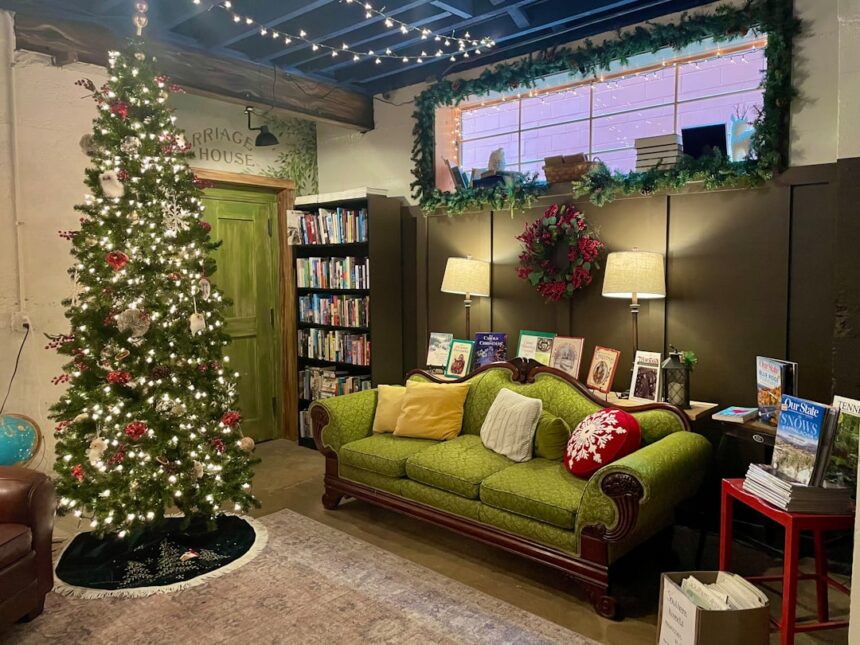
My life, until recently, was a carefully cataloged library of the ordinary. Days unfolded with predictable rhythm, each chapter a familiar sequence of work, domesticity, and the quiet hum of routine. The house, a sturdy Victorian inherited from my grandmother, was a silent witness to this structured existence. Its walls, steeped in history, seemed to hold their breath, guarding secrets I never suspected. Then, one damp Tuesday afternoon, while attempting to reorganise the vast, somewhat neglected collection of antique books in the study, I stumbled upon a hidden narrative.
My fascination with books began in childhood, a seedling curiosity nurtured by my grandmother’s overflowing shelves. Over the years, this passion blossomed into a significant and eclectic collection, a true reflection of my meandering intellectual journey. The study, therefore, was not merely a room; it was a sanctuary, a tangible manifestation of my inner life, where literary giants stood sentinel and forgotten authors offered whispered wisdom. The room itself, with its dark oak panelling and the scent of aged paper, had always possessed a certain gravity, a feeling of being weighted with stories untold.
The Unread Giants and the Weight of History
My bookshelves were a testament to ambition, both realized and abandoned. Rows of untouched classics, their spines gleaming with the promise of profound insights, stood alongside well-worn companions, dog-eared and annotated, their pages bearing the intimate scars of my engagement. The sheer volume was becoming a logistical challenge, a growing mountain of paper and ink that demanded a more structured approach. I’d put off this particular task for months, a procrastination born partly from the sheer scale of the undertaking and partly from a quiet reverence for the silent custodians of knowledge. It felt akin to reorganising a museum, each book a relic holding a piece of a bygone era.
The Peculiar Placement of the Hawthorne Series
There was one particular section of the study that always felt… off. It housed an extensive collection of Nathaniel Hawthorne, a novelist I admired but whose complete works I had never felt compelled to amass. Yet, there it was, a formidable row of leather-bound volumes, occupying a prominent position in the centre of the longest wall. Their uniform binding and precise alignment made them stand out, like a regiment of soldiers at attention, in an otherwise more organically arranged landscape of literature. This shelf, in particular, had always held my attention with a subtle, unidentifiable disquiet. It was a question mark etched into the visual tapestry of my study.
In exploring the intriguing concept of hidden rooms behind bookshelves, one might find it fascinating to read about the various architectural secrets and design innovations that have inspired such mysterious spaces throughout history. For a deeper dive into this captivating topic, check out the related article that discusses the allure and functionality of hidden rooms in homes. You can find it here: Hidden Rooms: The Allure of Concealed Spaces.
The Accidental Revelation: A Shifting Spine
The impetus to confront this bibliographical behemoth finally arrived with a persistent draft that seemed to emanate from the study’s main wall. I had, of course, attributed it to the age of the house, a common affliction of older properties. However, the draft felt more localized, more concentrated than a general atmospheric bleed-through. It was during my attempt to rearrange the Hawthorne collection, in a rather desperate effort to see if a different configuration might somehow “seal” the perceived opening, that the true nature of my house’s secret began to unravel.
The Unyielding Resistance of a Single Volume
I reached for the third volume of The Scarlet Letter, intending to shift it to the right to make space for a new acquisition I’d been meaning to shelve. To my surprise, it didn’t budge. It felt firmly wedged, almost fused with its neighbours. I applied a little more pressure, a gentle tug, but the book remained stubbornly anchored. This was not the usual snug fit of densely packed books; this was a resistance that felt deliberate, unnatural. It was like trying to pull a lone tooth from a perfectly formed set.
The Subtle Click and the Ghostly Shift
Puzzled, I tried a different tactic. Instead of pulling, I tried pushing. I applied even pressure to the spine, and to my astonishment, the book gave. It didn’t just move; it receded. A faint, almost imperceptible click echoed in the sudden silence of the room, a sound so subtle it could have been the house settling, or perhaps the phantom sigh of a forgotten secret. Then, the entire section of the bookshelf, the entire row of Hawthorne volumes, began to swing inward, a silent, graceful arc of aged wood and inscribed paper revealing not the expected plaster wall, but a dark, gaping maw.
Beyond the Bookshelf: The Unveiling of a Hidden Space
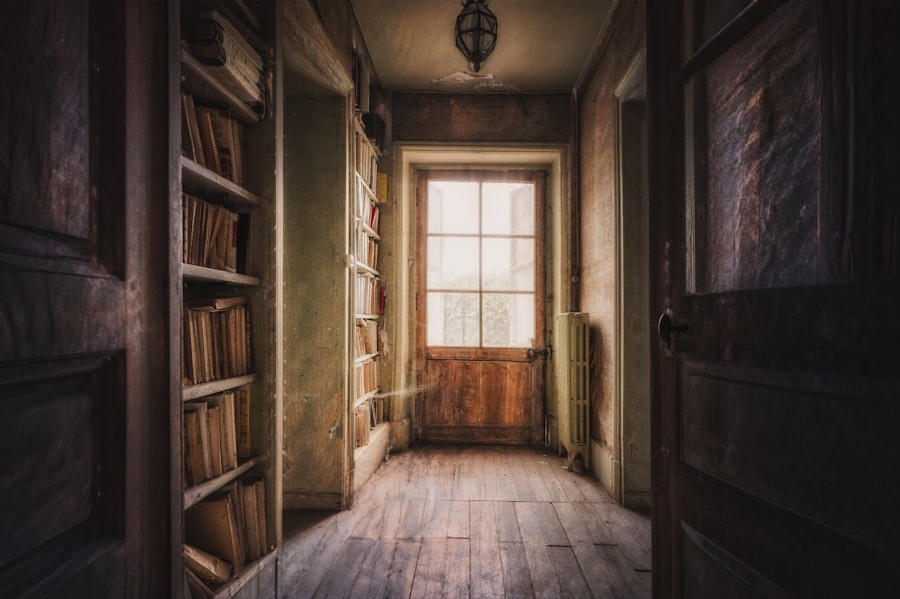
The immediate aftermath of the discovery was a curious blend of disbelief and a prickling sense of awe. The bookshelf, which had been an immutable fixture of my study for years, had transformed, not into a mere piece of furniture, but into a portal. The air that now seeped from the opening was different, cooler, carrying a faint, musty aroma that spoke of disuse and the passage of time. My heart, a drumbeat against my ribs, thrummed with a curiosity that bordered on trepidation.
The Darkness and the Lingering Scent of the Past
Standing on the threshold, I peered into the darkness. It was an impenetrable black, a void that swallowed the weak light spilling from the study. The musty scent was more pronounced now, a complex perfume of dust, old wood, and something else, something vaguely metallic, like forgotten coins. It was the smell of a place that had been sealed away, a time capsule preserved against the ravages of the outside world. My rational mind, a seasoned navigator of the familiar, struggled to process this anomaly.
The Weight of Anticipation: What Lies Within?
The temptation to step through the threshold was overwhelming, a siren song to my inquisitive nature. My mind raced with possibilities, each one more dramatic than the last. Was this a hidden safe? A smuggler’s cache? Or perhaps something far more personal, a forgotten sanctuary from a previous occupant? The uncertainty was a tight coil in my stomach, a physical manifestation of the unknown. I reached for my mobile phone, its flashlight a meager spear against the encroaching gloom, and took a tentative step forward.
Illuminating the Unknown: My First Exploration
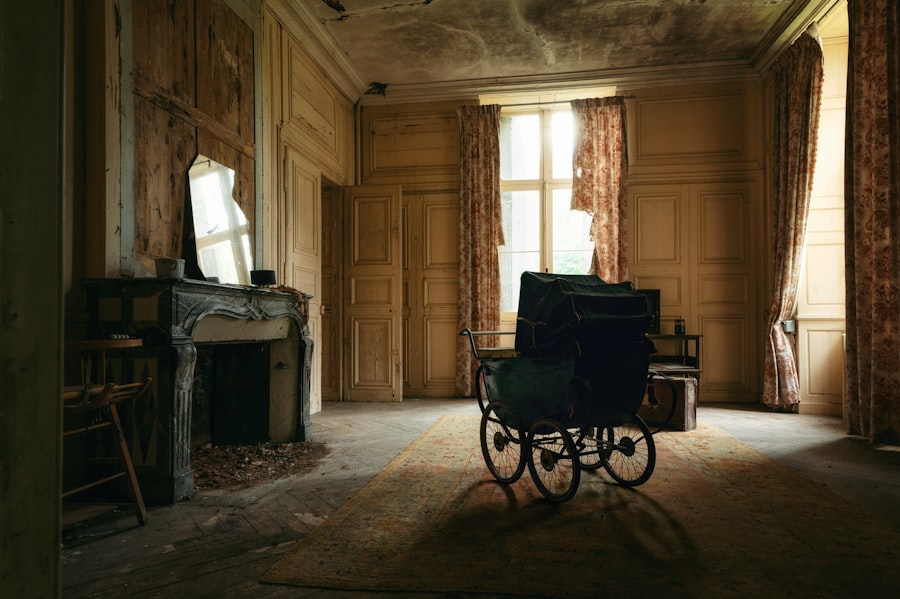
With a deep breath, I stepped into the space behind the bookshelf. The air was noticeably colder, the silence more profound, broken only by the crunch of dust under my feet. My phone’s flashlight beam, a fragile lifeline, cut through the blackness, revealing the skeletal outlines of the space. It was smaller than I initially imagined, more of a large closet or a confined room than a sprawling chamber. Yet, even in its modest dimensions, it held an air of mystery that dwarfed its physical size.
The Eerie Glow of Forgotten Objects
As my eyes adjusted and the flashlight beam swept across the surfaces, shapes began to emerge from the shadows. Dusty, draped forms suggested furniture, long since abandoned. The metallic scent I had detected earlier grew stronger, leading me towards a small, tarnished wooden chest nestled in the corner. Its lid was slightly ajar, offering a tantalizing glimpse of its contents. The air itself seemed to hum with unspoken stories, each particle of dust a silent witness to a history I was only beginning to uncover.
The Uncomfortable Silence and the Echoes of Absence
The silence in the room was almost oppressive, a stark contrast to the familiar sounds of my home. It was a silence that felt deliberate, engineered. It spoke of absence, of lives lived and then abruptly ceased. I felt like an intruder, a trespasser in a forgotten moment. The dust motes dancing in the flashlight beam seemed like sprites from another time, swirling around me as I disturbed their ancient slumber.
In many homes, the allure of hidden spaces sparks curiosity and imagination, much like the fascinating story of a hidden room behind a bookshelf. If you’re intrigued by such tales, you might enjoy exploring a related article that delves into the history and mystery of secret rooms in architecture. This piece not only uncovers the reasons behind their creation but also shares captivating anecdotes from those who have discovered these concealed spaces. To read more about this intriguing subject, check out the article here.
The Contents of the Vault: A Time Capsule of Objects
| Location | Size | Contents |
|---|---|---|
| Behind Bookshelf | 10ft x 10ft | Old books, antique furniture, secret documents |
| Entrance | Hidden door | Bookshelf swings open to reveal entrance |
| Discovery | Recent renovation | Uncovered during construction work |
My initial exploration yielded a fascinating, if somewhat disquieting, collection of objects. The room, it appeared, had not been a simple storage space but was intentionally curated, its contents deliberately preserved. The dust, a thick blanket over everything, served as a testament to how long these items had been untouched. The chest, the centerpiece of my discovery, proved to be the most revealing.
The Tarnished Chest: A Gateway to the Past
The wooden chest, as I had suspected, was locked. However, the latch, weakened by time and damp, yielded with a gentle pry of my pocketknife. Inside, nestled amongst yellowed tissue paper, lay a collection of items that spoke of a life lived decades ago. There were several journals, their leather covers cracked and brittle, alongside a small velvet pouch filled with what appeared to be old coins and a delicate silver locket. The locket itself was unadorned, its surface smooth and cool to the touch.
The Journals: Whispers from a Bygone Era
The journals were the most compelling discovery. Their pages, filled with elegant, spidery handwriting, offered a direct line to the past. The ink, though faded, was still legible, and the entries, dating back to the early 20th century, painted a vivid portrait of a life I knew nothing about. The author, a woman named Eleanor, chronicled her daily experiences, her thoughts, her aspirations, and her secrets. It was as if I had opened a window directly into her soul.
The Personal Effects: Echoes of a Private Life
Beyond the journals, I found a small collection of personal effects. A delicate lace handkerchief, its edges fraying; a dried flower, its petals paper-thin; and a sepia-toned photograph of a young woman, her gaze steady and direct, her features strikingly familiar. This woman, I soon realized, was my grandmother, much younger than I had ever known her. The realization sent a jolt through me; the secret room was not just a discovery, it was a personal revelation.
The Unanswered Questions: A Narrative Unfinished
The discovery of the secret room behind my bookshelf has, unsurprisingly, thrown a stone into the placid waters of my existence, sending ripples of inquiry in every direction. The initial euphoria of discovery has settled into a more profound sense of contemplation, a wrestling with the implications of what I have unearthed. This hidden space, once a silent keeper of secrets, has now become a catalyst for a deeper understanding of my own history.
The Identity of Eleanor: A Ghost in the Archives
One of the most pressing questions is the identity of Eleanor. While the journals paint a vivid picture of her life, her surname is absent, her connection to my family line remains a mystery. Was she a close friend of my grandmother? A distant relative? Or perhaps someone entirely unconnected, who somehow gained access to this hidden space? The lack of a surname is a frustrating lacuna, a missing piece of the puzzle that prevents me from fully contextualizing her story.
The Purpose of the Hidden Room: A Haven or a Hoard?
The purpose of the room itself remains open to interpretation. Was it a place of refuge, a quiet sanctuary where Eleanor could escape the pressures of her time? Or was it a repository for her most treasured possessions, a secret hoard entrusted to the walls of the house? The nature of the enclosed items – journals, personal trinkets, coins – suggests a degree of personal significance, rather than a purely utilitarian function. The careful curation hints at a deliberate act of preservation, a desire to safeguard these memories from the ravages of time.
My Grandmother’s Silence: A Conspiracy of Omission?
Perhaps the most poignant question is my grandmother’s apparent silence on the matter. Given the photograph and the personal nature of the items, it is highly probable that she was aware of the room and its contents, if not its creator. Her lack of any mention, her omission of this significant aspect of the house’s history from our conversations, is a puzzle in itself. Was it a conscious decision to protect a secret? Or a forgotten confidence, lost to the passage of time and memory? The house, it seems, was even more layered with unspoken narratives than I had ever imagined, and my grandmother, the architect of my childhood, held keys to its deeper stories that she never chose to share. The bookshelf, my once simple portal to literature, has become a portal to a far more intricate and personal narrative, one that I am now compelled to decipher.
FAQs
What is the hidden room behind a bookshelf story?
The hidden room behind a bookshelf story refers to the discovery of a secret room or space concealed behind a bookshelf. This concept is often associated with mystery, intrigue, and the potential for hidden treasures or secrets.
Are there real-life examples of hidden rooms behind bookshelves?
Yes, there have been numerous real-life examples of hidden rooms behind bookshelves. These hidden spaces have been found in historical buildings, private residences, and even public spaces. Some have contained valuable artifacts, while others have simply served as hidden passages or storage areas.
What are some common reasons for creating hidden rooms behind bookshelves?
Hidden rooms behind bookshelves have been created for various reasons, including security and privacy, as well as for the concealment of valuable items or sensitive information. In some cases, they may also serve as a form of architectural novelty or historical preservation.
How are hidden rooms behind bookshelves typically discovered?
Hidden rooms behind bookshelves are often discovered by accident during renovations, restoration work, or through the exploration of historical buildings. In some cases, clues or rumors about the existence of a hidden room may lead to intentional searches and discoveries.
What precautions should be taken when exploring or renovating spaces with potential hidden rooms behind bookshelves?
When exploring or renovating spaces with potential hidden rooms behind bookshelves, it is important to consider safety hazards, structural integrity, and the potential for encountering hazardous materials. Professional guidance and expertise may be necessary to ensure the proper handling of such discoveries.