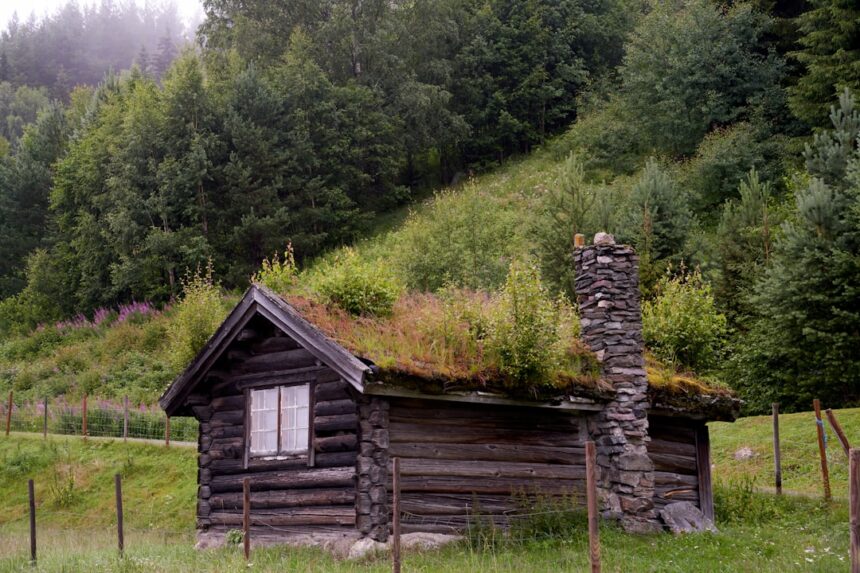
The scent of pine and damp earth is usually a balm to my soul, a familiar perfume that signals my return to the place I’ve always considered my own. But lately, the air feels thick with something else – tension, suspicion, and the acrid tang of legal battles. My mountain cabin, a rustic sanctuary I inherited from my grandfather, has become the epicenter of a dispute that’s threatening to unravel years of peace. This is my story, a chronicle of a property dispute that has turned a beloved haven into a battleground for ownership.
My grandfather, a man carved from the same stoic granite as the mountains he loved, built this cabin with his own hands. It wasn’t a grand affair, just a sturdy, honest structure nestled amongst towering pines, overlooking a valley that turned fiery gold with the setting sun. He poured his sweat and soul into it, and in turn, he poured his love for this place into me. Every summer of my childhood was spent here, exploring hidden trails, learning the names of wildflowers, and listening to his quiet wisdom by the crackling fire. When he passed, the cabin, and the land surrounding it, became mine. It was a profound responsibility, but one I embraced with a deep sense of honor. I continued the tradition, spending my own summers here, maintaining the rustic charm, and sharing its quiet beauty with friends and family. It was a place of continuity, a link to my past and a beacon for my future. Or so I believed.
The First Crack in the Foundation
The initial stirrings of trouble were subtle, almost ignorable. A surveyor’s marker, bold orange against the muted greens and browns of the forest floor, appeared near the western boundary of my property one spring. I remember hiking past it, a slight frown creasing my brow. It seemed out of place, an intrusion into the natural order of things. I dismissed it as a routine government survey, a minor inconvenience. Little did I know, that orange marker was the first sign of a storm gathering on my horizon, a storm that would eventually threaten to engulf everything I held dear. I contacted the local county office, inquiring about any planned surveys for my area. They knew nothing. This small anomaly, however, began to gnaw at the edges of my peace.
Whispers from Neighbors
Soon after, hushed conversations started at the general store, the only real hub of our small mountain community. Neighbors I’d known for years, people I’d shared porch-sitting and campfire stories with, began to avoid my gaze. Their smiles seemed strained, their greetings perfunctory. I overheard fragments of conversations, veiled references to “boundary lines” and “legal matters.” It was unsettling. I tried to engage them, to ask if everything was alright, but they would offer vague reassurances, their eyes darting away. The sense of unease deepened. It was as if a silent agreement had been reached amongst them, an unspoken pact to keep me in the dark while something was being orchestrated behind my back.
In a recent article discussing the complexities of property disputes in mountainous regions, the challenges faced by cabin owners in maintaining their rights and navigating local regulations are highlighted. This piece provides valuable insights into similar cases, shedding light on the legal intricacies involved in such disputes. For more information, you can read the full article here: Mountain Cabin Property Disputes: Understanding Your Rights.
The Unveiling of the Claim
The formal notification arrived on a crisp autumn morning, a thick envelope with official-looking seals. Inside was a document that felt like a physical blow: a legal claim asserting ownership over a significant portion of my land, including the cabin itself. The claimant was a name I barely recognized, a distant relative of my grandfather’s who had moved away decades ago and with whom there had been no contact. The document was a labyrinth of legal jargon, but its message was stark and unambiguous: they believed they had a rightful claim to the property, based on some obscure heirloom document they claimed to possess.
The Phantom Deed
The claimant’s argument, as presented in their legal filings, revolved around a purported “heirloom deed” that supposedly predated my grandfather’s ownership. This deed, they asserted, established a shared ownership with his siblings, a claim that had somehow been overlooked or deliberately ignored through the generations. They pointed to historical family records, old letters, and even a faded photograph that they claimed contained visual evidence of their ancestors’ presence and claim on the land. It was a narrative woven with threads of familial history, designed to evoke sympathy and a sense of injustice.
My Grandfather’s Documentation
I immediately set about gathering my own documentation, digging through my grandfather’s meticulously kept files. I found the original deed to the property, registered clearly in his name. There were tax records, utility bills, building permits – years and years of evidence that spoke to his sole ownership and continuous occupancy. My grandfather was a man of order and diligence; he wouldn’t have left such a significant matter unresolved. His records were not just papers; they were a testament to his life’s work and his undeniable connection to this land.
The Legal Labyrinth
The dispute quickly escalated from a simmering simmer to a full-blown legal inferno. I hired an attorney, a sharp woman with a reputation for tenacity. She assured me that the evidence was on my side, that my grandfather’s deed and continuous possession were strong. But the legal process, I quickly learned, is a beast of its own – slow, expensive, and emotionally draining. Every step felt like navigating a treacherous maze, with no guarantee of an easy exit.
Pre-Trial Maneuvers
The initial phase involved a barrage of legal filings, interrogatories, and depositions. I was subjected to hours of questioning, my memories scrutinized, my character dissected. The claimant’s legal team, it seemed, was dedicated to finding any sliver of weakness in my case, any inconsistency that could be exploited. They dug into my family history, searching for any past disputes or disagreements that could be twisted to support their narrative. It felt like an invasion of my most private spaces, my family’s legacy being put under a microscope for all the wrong reasons.
Expert Witnesses and Boundary Surveys
We brought in expert witnesses: a historian to trace the lineage of ownership, a surveyor to meticulously re-establish the property boundaries based on historical markers and original surveys, and an appraiser to document the cabin’s condition and value. The claimant did the same. The cost of these experts alone was staggering, a constant reminder of the financial strain this dispute was placing on me. The surveyors, in particular, spent weeks combing the land, a stark visual representation of the division being imposed upon my once-unified property.
The Emotional Toll
Beyond the legal and financial burdens, the dispute has taken a profound emotional toll. My sanctuary has become a source of anxiety and sleepless nights. The joy I once derived from the quiet solitude of the mountains has been overshadowed by a gnawing worry. The once comforting scent of pine now often carries a hint of dread.
Strain on Relationships
The dispute has also strained relationships. Friends, caught between loyalty and the desire to remain neutral, have offered their support in hushed tones, unsure of how to navigate the complex situation. Some have distanced themselves, perhaps fearing being drawn into the conflict. The community, once a place of easy camaraderie, now feels divided, with some neighbors quietly siding with the claimant, swayed by their familial ties or perhaps by misplaced sympathy.
Loss of Tranquility
The most heartbreaking aspect is the erosion of tranquility. I find myself constantly on edge, scrutinizing every rustle in the leaves, every unfamiliar vehicle passing by. The peaceful mornings are now filled with the sound of my own racing heart and the endless loop of legal arguments in my mind. The cabin, once a symbol of solace and continuity, now feels fragile, its future uncertain. I miss the days when my greatest concern was whether the deer would nibble on the garden or if the woodpile was sufficient for winter. Those simple worries have been replaced by a far more complex and disheartening reality.
In a recent development regarding the ongoing mountain cabin property dispute, a related article sheds light on the complexities of land ownership and the legal battles that often arise in such picturesque locations. The article discusses various cases where property lines have been contested, highlighting the emotional and financial toll on the families involved. For more insights into similar disputes and their resolutions, you can read the full story here.
The Path Forward
| Metrics | Data |
|---|---|
| Property Size | 10 acres |
| Number of Cabins | 3 |
| Dispute Duration | 5 years |
| Legal Costs | 100,000 |
| Resolution | Mediation |
The legal proceedings are far from over. There have been offers for settlement, compromises proposed from both sides, each carrying its own set of concessions that feel like relinquishing a piece of my birthright. I am weighing my options, consulting with my attorney, and trying to find a resolution that preserves the heart of what my grandfather left me, while also acknowledging the ongoing legal reality.
Seeking a Just Resolution
My paramount concern is to see justice served. I believe in the integrity of my grandfather’s legacy and the strength of the documentation that proves his sole ownership. I am not seeking to dispossess anyone unfairly, but I am also unwilling to surrender what has been rightfully passed down to me. I am hopeful that a fair and reasoned outcome can be achieved, one that respects the established lines of ownership.
Preserving the Legacy
Ultimately, this dispute is about more than just land and property lines. It’s about legacy, about the values instilled in me by my grandfather, about the importance of honoring one’s word and one’s history. I am determined to protect the memory of my grandfather and the integrity of this mountain haven he so lovingly created. The path ahead is uncertain, but my resolve remains firm. This cabin is more than just wood and stone; it is a repository of memories, a connection to my roots, and a testament to a life lived with purpose. I will fight to ensure that its story continues to be one of peace and belonging, not of protracted conflict and bitter loss.
FAQs
What is the mountain cabin property dispute story about?
The mountain cabin property dispute story revolves around a conflict between two parties over ownership or rights to a cabin located in a mountainous area.
What are the common reasons for mountain cabin property disputes?
Common reasons for mountain cabin property disputes include boundary disputes, disagreements over access rights, conflicting property surveys, and issues related to inheritance or ownership transfer.
How are mountain cabin property disputes typically resolved?
Mountain cabin property disputes are often resolved through legal means, such as mediation, arbitration, or litigation. In some cases, the parties involved may reach a settlement agreement outside of court.
What are some preventative measures to avoid mountain cabin property disputes?
To prevent mountain cabin property disputes, it is important to have clear and accurate property boundaries, obtain proper legal documentation for ownership and access rights, and communicate openly with neighboring property owners.
What are the potential consequences of unresolved mountain cabin property disputes?
Unresolved mountain cabin property disputes can lead to prolonged legal battles, financial strain, damage to relationships, and potential loss of property rights. It is important to address and resolve these disputes in a timely and fair manner.