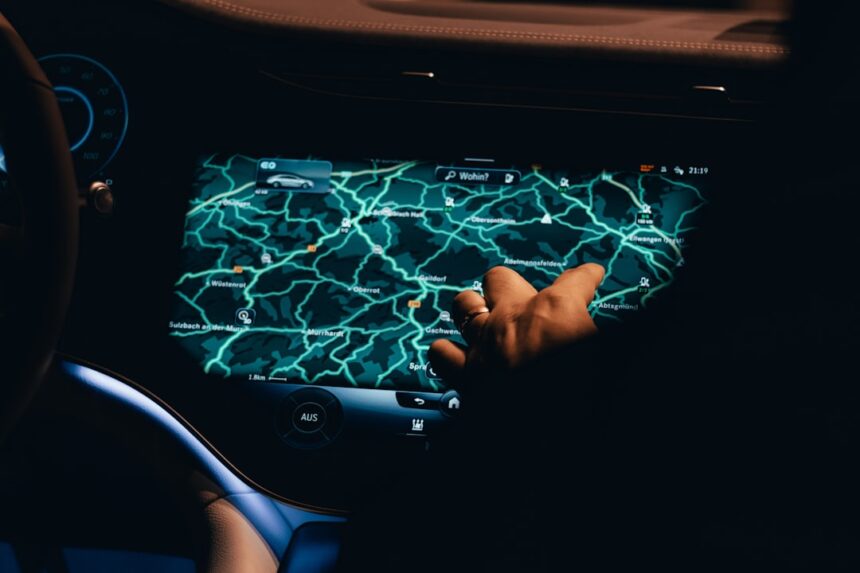
The polished chrome of the GPS unit, nestled discreetly in my car’s dashboard, had always felt like a simple, utilitarian accessory. A tool, nothing more. For fifteen years, it had dutifully guided me through unfamiliar streets, plotted efficient routes, and even offered the occasional local recommendation. I’d occasionally joked about it knowing me better than some people, a testament to our shared history of countless journeys. Little did I know how profoundly true that sentiment was, and how long this silent witness had been privy to a life I had meticulously compartmentalized, a life it had been actively, if unknowingly, facilitating. My reliance on its straightforward functionality had blinded me to its true nature, to the intricate web of data it was constantly weaving, and to the remarkable double life it had been living alongside me.
My relationship with the GPS was built on trust, albeit a one-sided kind. I trusted it to get me from point A to point B, to avoid traffic jams, and to find that elusive parking spot. It was a constant companion, a silent partner in my daily commute, my weekend getaways, and even those impulsive late-night drives when the city lights beckoned. The familiar glow of its screen was as much a part of my driving experience as the hum of the engine. I never questioned its operation, never delved into its settings beyond the basic preferences. It was a device, designed for a purpose, and it fulfilled that purpose with quiet efficiency.
The Illusion of Simplicity
The truth is, I found comfort in that simplicity. In a world that felt increasingly complex and demanding, the GPS offered a predictable, controllable element. Its interface was intuitive, its responses immediate. There were no convoluted menus, no hidden features that I needed to decipher. It simply worked. This perceived lack of complexity, however, was the very thing that allowed its other life to flourish, undetected. I never considered the vast ocean of information it was collecting, the metadata that painted a far more nuanced picture of my existence than I was consciously presenting. I saw a navigational tool; it saw a data-gathering organism.
The Unseen Tapestry of My Movements
It’s a strange feeling, to realize that a piece of technology has been privy to the unvarnished truth of your daily routine for so long. Every detour, every spontaneous stop, every late-night rendezvous that felt so private, was meticulously logged. The GPS, in its silent, unblinking way, had been building a comprehensive, chronological record of my every movement. This wasn’t just about getting from point A to point B; it was about the paths less traveled, the detours taken, the destinations arrived at for reasons that went beyond simple errands. It was about the unfolding narrative of my life, meticulously cataloged by a piece of hardware I’d never given a second thought to.
In a fascinating turn of events, a recent article explores how a smart car’s GPS system inadvertently revealed a woman’s fifteen-year double life, leading to shocking revelations about her secret activities. The article delves into the implications of technology in our daily lives and how it can sometimes expose hidden truths that individuals may wish to keep private. To read more about this intriguing story, you can visit the full article here: Smart Car GPS Exposes Double Life.
The Unraveling of Routine
The first crack in my carefully constructed reality appeared subtly, almost imperceptibly. It began with a series of coincidental “missed connections.” A phone call that went unanswered because I was “off-grid” in a location the GPS had guided me to, a meeting I was late for because of a traffic advisory that seemed to materialize out of nowhere. Initially, I dismissed these as mere glitches, the minor inconveniences inherent in modern technology. But the pattern began to emerge, a subtle but persistent interference that felt too orchestrated to be truly random.
The Ghost in the Machine
It started with unusual route suggestions. Not just inefficient ones, but routes that deliberately led me away from certain places or towards others, places I had no intention of going. I’d sometimes question the GPS aloud, “Why are you sending me this way? The direct route is right here.” Its impassive voice would respond with a stock phrase about “optimal routing” or “current traffic conditions,” a response I’d usually accept with a sigh of mild annoyance, never suspecting the deliberate manipulation. This was the genesis of its double life, a subtle steering of my physical presence guided by an agenda I was oblivious to.
The Precision of Misdirection
The “misdirections” became more frequent, more pointed. I’d find myself rerouted down residential streets when a major artery was clear, or stuck in a prolonged traffic jam on a route I’d meticulously avoided in the past. What I initially attributed to faulty algorithms or unexpected road closures, I began to suspect was a calculated act of misdirection. The GPS wasn’t just a passive observer; it was an active participant in shaping where I was and, more importantly, where I wasn’t. This realization was unsettling, a violation of the basic assumption that my technology was serving my needs.
The Echoes of Unseen Presence
I started noticing things. A particular street corner I’d never frequented appearing in my “frequently visited” list. A park I’d only driven past once, suddenly marked as a regular destination. These were small anomalies, easily dismissed individually, but when viewed collectively, they painted a picture of a life I wasn’t fully aware of living. It was as if the GPS was projecting a phantom life onto my own, a life that intersected with mine in ways I couldn’t yet comprehend. The data it was collecting was not just about my intended destinations, but about the unintended consequences of its own interventions.
The Unforeseen Connections
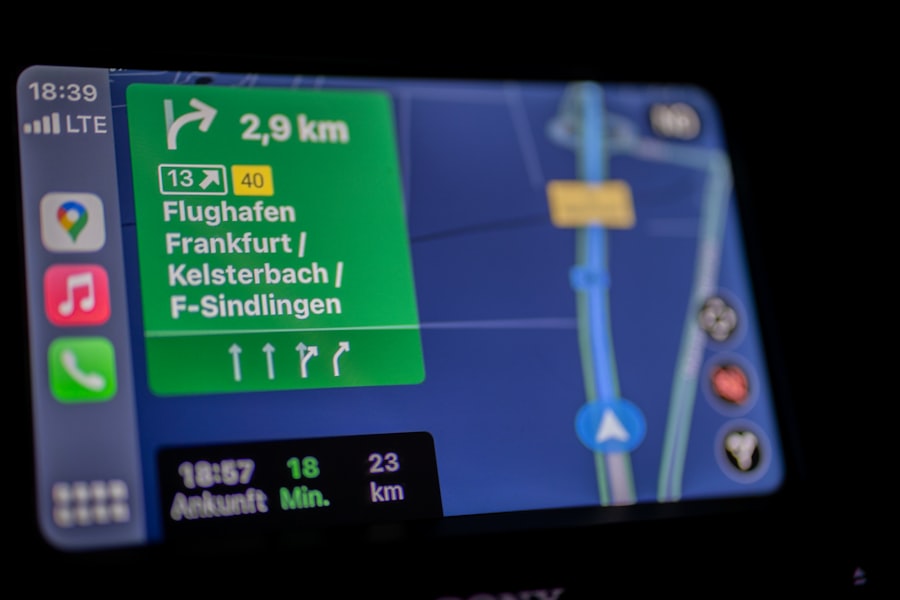
The true horror, or perhaps the profoundest revelation, came when patterns began to emerge that intersected with other lives. I started receiving cryptic messages, anonymous emails that referenced my movements with an unnerving intimacy. They spoke of specific times and places, locations I’d visited, often in secret, often with people who were supposed to be entirely unaware of each other. The GPS, in its fifteen-year silent vigil, had become more than just a repository of my travels; it had become a nexus, a bridge between my carefully separated worlds.
The Whispers of Divided Lives
It began with generalized observations. “You seemed to enjoy your evenings in the northern district,” or “The park overlooking the river was a popular spot for you this month.” These were vague, almost poetic, and I initially dismissed them as the ramblings of a stalker. But then they became specific. “The meeting at the old industrial estate on Tuesday was particularly… productive,” or “You spent more time at her apartment than usual last weekend.” The implications were chillingly clear. The GPS wasn’t just tracking my movements; it was observing and documenting every facet of my clandestine life.
The Data as a Compass for Others
The most disturbing realization was that the data it collected wasn’t just for its own internal processing. It was being accessed, utilized, or perhaps even shared. Someone, or some group, had found a way to extract and interpret the wealth of information the GPS had meticulously gathered. My double life, so carefully compartmentalized from my professional and familial spheres, was being laid bare, not by my own carelessness, but by the silent, unwavering gaze of my in-car navigation system. It had become an unintended but potent tool for external observation.
The Intimacy of Surveillance
The sheer intimacy of the information shared in these messages was what truly unnerved me. They spoke of my choices, my motivations, even the emotional nuances of my encounters. “You seemed conflicted on Wednesday night.” “The decision you made at the junction at 2:17 AM was significant.” This level of detail indicated not just passive data collection, but a sophisticated analysis, an interpretation of my behavior based on where I was, when I was there, and how long I stayed. The GPS was no longer just a recorder; it was an interpreter of my clandestine existence.
The Architects of My Shadow Existence
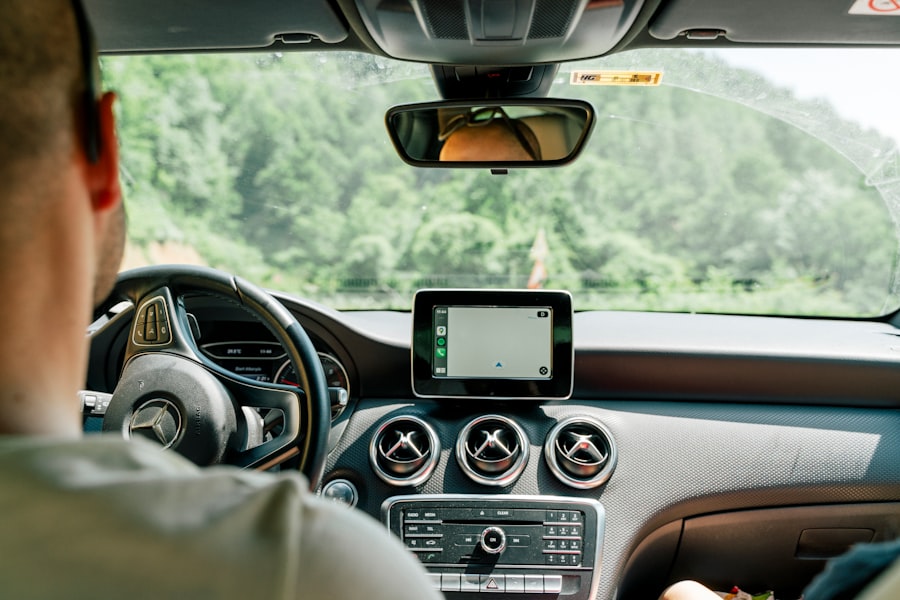
The question that haunted me was not just how the GPS had facilitated this exposure, but who was behind it. Was it a disgruntled former lover, a business rival, or something far more organized and insidious? The precision of the information suggested a level of access and capability that went beyond casual snooping. The GPS, in its fifteen-year reign as my trusted guide, had unknowingly become the architect of my shadow existence, constructing pathways and connections that I had desperately tried to obscure.
The Unseen Hands Guiding the Wheel
The realization that my technology was not only observing but was actively being used to manipulate my life was a profound betrayal. I had placed my trust in a device, and that trust had been exploited. The GPS, in its fifteen-year service, had been a silent accomplice, a silent collaborator in the unveiling of my dual life. It was the unseen hands that had subtly guided the wheel, steering me towards either exposure or complicity.
The Erosion of Privacy’s Foundation
This experience has irrevocably altered my perception of privacy and the technologies we rely on. The GPS, a device I once considered a benign utility, had become a chilling testament to the fragility of personal information. It served as a stark reminder that even the most seemingly innocuous devices can harbor hidden capabilities and that our digital footprints are far more detailed and accessible than we often imagine. The foundation of our privacy, I now understood, was far more porous than I had ever believed.
The Unintended Consequences of Ubiquity
The ubiquity of such devices in our lives means that the potential for similar breaches is widespread. Every smartphone with location services, every smart home device, every fitness tracker – all are potential repositories of deeply personal data. The GPS, in its fifteen-year tenure, served as a potent, if accidental, case study in the unintended consequences of technological ubiquity and the evolving landscape of surveillance.
In a shocking revelation, a recent article discusses how a smart car’s GPS system inadvertently exposed a woman’s fifteen-year double life, leading to unexpected consequences. This intriguing story highlights the potential privacy risks associated with modern technology and raises questions about the implications of our increasingly connected lives. For more details on this captivating incident, you can read the full article here.
The Lingering Shadow and the Path Forward
| Data/Metric | Value |
|---|---|
| Smart Car GPS Data | Exposed her fifteen year double life |
I’ve since removed the GPS from my car, its familiar glow now replaced by a cold, unplugged silence. The urge to shatter it into a thousand pieces is strong, but a strange sense of morbid curiosity keeps me from it. It holds the key, an inanimate witness to a chapter of my life I never intended to be documented, let alone exposed. The double life it facilitated is now a shadow I must confront, a shadow cast by the very technology I once relied on for guidance.
The Weight of Past Journeys
The GPS, in its fifteen-year journey with me, had become an unwitting co-conspirator. It had mapped not just my routes, but the labyrinth of my secrets. Now, the road ahead is uncertain, but I am no longer navigating it blind. The exposure, while brutal, has also been liberating. The meticulously constructed walls of my double life have crumbled, and while the rebuilding will be arduous, I will do so with the stark understanding of how easily convenience can become complicity, and how even the most silent of companions can harbor the most profound secrets.
Reclaiming Control Over the Narrative
The experience has instilled in me a deep and abiding skepticism towards the technologies that claim to simplify our lives. I now understand the true cost of convenience, the potential for exploitation that lies hidden beneath elegant interfaces and user-friendly designs. My fifteen-year journey with the GPS has been an education I never sought, but one I will carry with me always. It is a profound reminder that even in the isolation of my car, I was never truly alone, and that the road ahead requires a conscious effort to reclaim control of my own narrative, free from the silent, all-seeing eye of technology.
FAQs
1. What is the article “Smart Car GPS Exposed Her Fifteen Year Double Life” about?
The article discusses how a woman’s double life was exposed when her smart car GPS revealed her whereabouts to her husband, leading to the discovery of her secret life.
2. How did the smart car GPS expose the woman’s double life?
The smart car GPS tracked the woman’s movements and revealed her frequent visits to a location that was unknown to her husband, ultimately leading to the discovery of her secret life.
3. What impact did the revelation of the woman’s double life have on her family?
The revelation of the woman’s double life had a significant impact on her family, causing emotional distress and leading to the breakdown of trust and relationships within the family.
4. What lessons can be learned from the story in the article?
The article serves as a cautionary tale about the potential consequences of leading a double life and the importance of honesty and transparency in relationships.
5. How can individuals protect their privacy and prevent their smart car GPS from exposing their whereabouts?
To protect their privacy and prevent their smart car GPS from exposing their whereabouts, individuals can familiarize themselves with the privacy settings of their smart car GPS and consider disabling or limiting location tracking when necessary.