The advent of smart speakers has woven itself into the fabric of our daily lives, becoming an omnipresent ear within our homes. Once a novelty, devices like Amazon Echo and Google Home now orchestrate our music, manage our schedules, and answer our most fleeting queries. However, as these ubiquitous microphones capture fragments of our conversations, they also inadvertently create a digital archive. For those navigating the turbulent waters of divorce, these recordings can emerge as unexpected and potent evidence. I, myself, have witnessed and heard of cases where the seemingly innocuous hum of a smart speaker has become a crucial witness, illuminating truths and shaping outcomes in legal proceedings. This is not about demonizing technology, but about understanding its dual nature – a convenience that can, in the wrong circumstances, become a Pandora’s Box.
To navigate this new frontier, it’s imperative to approach the utilization of smart speaker recordings in divorce proceedings with a clear, objective understanding of the legal landscape, the practical challenges, and the ethical considerations involved. This discourse aims to provide you, the reader, with a factual roadmap, dissecting how these recordings can be leveraged, the hurdles you might encounter, and the crucial importance of approaching this with both diligence and discretion.
Smart speakers are designed to listen. Their primary function is to detect wake words, a signal that initiates recording and processing of subsequent commands. However, the precise nature and retention of these recordings are often less understood by the average user. The potential for these devices to capture conversations outside of direct commands is a significant point of contention and a key area of interest in divorce proceedings.
How Smart Speakers “Listen” and Record
- Wake Word Activation: The fundamental mechanism by which smart speakers operate involves constant passive listening for a specific wake word (e.g., “Alexa,” “Hey Google”). Once this word is detected, the device begins actively recording the subsequent audio.
- Temporary Buffering: Before a wake word is detected, most smart speakers maintain a short, temporary buffer of audio. This is primarily for the purpose of identifying the wake word accurately. The duration of this buffer varies by device and manufacturer, but it is generally not intended for long-term storage or retrieval outside of wake word activation.
- Cloud Storage and Processing: Once a wake word is heard and the device begins recording, the audio is typically transmitted to the manufacturer’s cloud servers for processing and execution of the command. This is where the “intelligence” of the system resides.
- Account-Specific Recordings: Recordings are usually associated with the user’s account and can often be accessed and reviewed through a dedicated app or web portal provided by the manufacturer. This is a critical avenue for obtaining potential evidence.
What is Recorded and When?
The question of “what” and “when” becomes paramount. It’s not as simple as the device recording every word spoken in its vicinity. The distinction between passive listening and active recording is crucial.
- Active Recording: This occurs when the wake word has been recognized, and the device is actively processing a command or engaging in a conversation initiated by a spoken request. These recordings are generally more readily accessible and clearly linked to a specific interaction.
- Accidental Activation: Misunderstandings of the wake word, ambient noise that mimics the wake word, or even nearby conversations can sometimes trigger accidental activation. These instances can capture snippets of conversations that were not intended to be recorded. The clarity and context of such recordings are often problematic and subject to challenge.
- Background Noise and Ambient Sounds: While not typically recorded as part of a command, the sensitive microphones can pick up ambient sounds. This could include arguments, discussions about finances, or even admissions made in passing. However, without clear audio evidence of wake word activation, the admissibility of such ambient recordings can be significantly questioned.
Manufacturer Policies on Data Retention and Access
Understanding how Amazon, Google, and other manufacturers handle user data is vital. These policies dictate what information is stored, for how long, and under what conditions it can be accessed.
- User-Defined Settings: Many platforms allow users to control their recording history, including options to review, delete, or disable voice recording altogether. This is a powerful tool for individuals seeking to manage their digital footprint.
- Legal Demands and Subpoenas: Manufacturers typically have established procedures for responding to legal requests for data. This often involves a formal subpoena or court order, ensuring that access is not granted lightly and adheres to privacy regulations.
- Data Privacy Agreements: By using smart speaker devices and their associated services, users implicitly agree to the manufacturer’s terms of service and privacy policies. These agreements outline the boundaries of data collection and usage.
In the context of divorce proceedings, the use of smart speaker recordings can be a contentious issue, as they may provide crucial evidence regarding communication and behavior between spouses. For those interested in understanding how to effectively utilize such recordings in court, a related article can be found at this link. This resource offers insights into the legal implications and best practices for presenting smart speaker data as evidence, ensuring that individuals are well-informed about their rights and responsibilities when it comes to digital recordings in divorce cases.
Unearthing the Truth: The Evidentiary Value of Recordings
When skillfully presented and legally obtained, smart speaker recordings can act as powerful digital witnesses, offering objective accounts of events and statements that might otherwise be lost to memory or contested through conflicting testimonies. Their ability to capture verbatim conversations can provide irrefutable proof or compelling corroboration for claims made in divorce proceedings.
Demonstrating Marital Misconduct or Adultery
Conversations captured by smart speakers can directly or indirectly reveal instances of marital misconduct, including infidelity. A casual remark, a discussion about secret meetings, or even the sounds of another person present during conversations when a spouse claims to be alone can all be brought to light.
- Confessions and Admissions: A spouse might inadvertently confess to an affair or admit to behaviors that constitute marital misconduct while interacting with the smart speaker or in its vicinity. These direct admissions can be extremely damaging to their position in the divorce.
- Discussions of Secret Rendezvous: Recordings might capture conversations detailing plans for secret meetings, including locations, times, and names of individuals involved, which can serve as strong evidence of adultery or other forms of misconduct.
- Statements Indicating Deception: Beyond direct admissions, recordings can reveal a pattern of deception. For example, a spouse might be overheard discussing how to mislead the other about their whereabouts or financial activities.
Illuminating Financial Disagreements and Asset Concealment
Financial disputes are a cornerstone of many divorces. Smart speaker recordings can provide invaluable insights into how assets were managed, hidden, or depleted during the marriage, often revealing a spouse’s true intentions and actions.
- Discussions About Hidden Assets: A spouse might be overheard discussing strategies for hiding money, transferring assets to third parties, or creating shell companies to obscure their true financial worth.
- Evidence of Unexplained Expenditures: Recordings could capture conversations where a spouse explains large, unexplained withdrawals from joint accounts or discusses lavish spending on activities or individuals unrelated to the marital unit.
- Admissions of Debt or Financial Distress: A spouse might inadvertently reveal their awareness of significant debts or financial difficulties that they had previously concealed from their partner.
- Verbal Agreements Regarding Assets: While not as strong as written agreements, discussions about the division or sale of assets during the marriage, even if informal, can provide context and intent that can be argued in court.
Corroborating Allegations of Abuse or Neglect
In cases involving domestic disputes, the impartial recording of a smart speaker can offer critical evidence to support allegations of abuse, neglect, or a hostile domestic environment.
- Capturing Verbal Abuse: A smart speaker might record instances of shouting, threats, or demeaning language directed at a spouse or children, providing a record of emotional or verbal abuse.
- Evidence of Threats or Intimidation: If a spouse makes threats of harm or attempts to intimidate the other, these statements, if captured, can be powerful evidence.
- Discussions of Parental Neglect: In custody disputes, recordings might reveal conversations where a parent demonstrates a lack of concern for a child’s well-being, discusses neglecting their responsibilities, or makes disparaging remarks about the other parent’s care.
Establishing Intent and State of Mind
Beyond specific actions, recordings can offer glimpses into a person’s intentions and emotional state, which can be critical in divorce proceedings, particularly concerning custody and spousal support.
- Expressions of Resentment or Dissatisfaction: While not direct evidence of fault for divorce itself, prolonged expressions of deep resentment or dissatisfaction with the marriage can provide context for the breakdown of the relationship.
- Statements Indicating a Lack of Commitment: A spouse might inadvertently express a clear lack of commitment to the marriage or a desire to end it, which can be used to demonstrate irreconcilable differences.
- Evidence of Alienation of Affection: In custody battles, recordings can sometimes reveal attempts by one parent to alienate the children’s affection for the other parent.
Navigating the Legal Labyrinth: Admissibility and Authentication
The mere existence of a recording does not automatically grant it entry into the courtroom. Like any piece of evidence, smart speaker recordings must meet stringent legal standards for admissibility and authentication. This is where the technical and legal aspects intertwine, often requiring expert assistance.
The Hearsay Rule and its Exceptions
Hearsay is an out-of-court statement offered in court to prove the truth of the matter asserted. Most smart speaker recordings, being out-of-court statements, fall under the hearsay rule. However, there are numerous exceptions that can allow such evidence to be admitted.
- Admissions by a Party-Opponent: Statements made by a party to the lawsuit (your spouse) are generally admissible as an exception to the hearsay rule. If your spouse made a damaging statement while interacting with the smart speaker, it can likely be admitted as their own admission.
- Present Sense Impression and Excited Utterance: While less common for typical smart speaker recordings, if a recording captures a statement made while the speaker was perceiving an event or condition, or made under the stress of excitement caused by a startling event, it might fall under these exceptions.
- Statements of Intent: As mentioned earlier, statements made by a party indicating their intent can sometimes be admissible to prove that intent.
Authentication: Proving the Recording is What it Claims to Be
Before a recording can be considered, you must prove that it is genuine and has not been tampered with. This involves demonstrating its origin and integrity.
- Chain of Custody: A clear and unbroken chain of custody must be established for the recording, from its creation (capture) to its presentation in court. This means meticulously documenting who accessed, copied, and stored the recording at each stage.
- Technical Authentication: This often involves demonstrating the technical reliability of the recording. This can include showing that the smart speaker device in question was functioning correctly, that the recording was made at the specified time, and that there are no signs of digital manipulation or editing.
- Witness Testimony: Testimony from the individual who discovered and secured the recording is crucial. They will explain how they obtained the recording, what they did with it, and why they believe it to be authentic.
Privacy Concerns and Illegally Obtained Evidence
The Fourth Amendment protects against unreasonable searches and seizures. The admissibility of recordings can be challenged if they are deemed to have been obtained illegally, infringing on an individual’s right to privacy.
- Consent to Record: This is a vital area. In many jurisdictions, it is illegal to record conversations without the consent of at least one party involved. If the recording was made by a third party without consent, or if one spouse secretly recorded the other without knowledge or consent in a jurisdiction that requires two-party consent, its admissibility can be severely compromised.
- Expectation of Privacy: The legal concept of an “expectation of privacy” comes into play. While conversations in one’s home are generally considered private, the presence of a recording device, even one intended for voice commands, can alter this expectation. However, this is a complex legal argument.
- Discovery Rules: Even if legally obtained, the opposing party has the right to discover the evidence against them. You will likely be required to provide the recordings and details of how they were obtained to the other side during the discovery phase of the divorce proceedings.
The Art of Extraction: Obtaining and Preserving Recordings
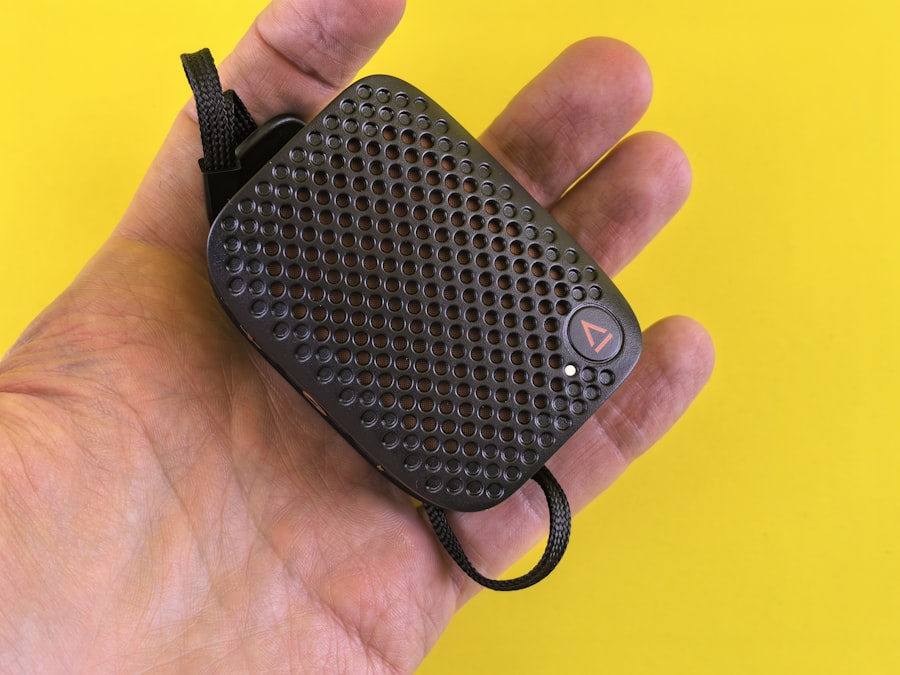
Acquiring smart speaker recordings requires a methodical approach, combining knowledge of device functionality with legal procedures. Simply having a hunch that your spouse said something incriminating is not enough; you need to be able to retrieve and preserve that evidence effectively.
Accessing Your Own Recording History
Most smart speaker platforms provide a means for users to access and review their own voice command history. This is the first and often easiest step in retrieving potential evidence.
- Amazon Echo (Alexa): Amazon typically allows users to review their Alexa voice history through the Alexa app or on the Amazon website. Recordings can be filtered by date and device.
- Google Home (Google Assistant): Google Assistant history can be accessed through the Google Home app or the user’s Google Account activity controls. This section allows for review and deletion of past interactions.
- Other Smart Speaker Brands: Similar functionalities are usually available for other smart speaker manufacturers, though the exact process may vary. Consulting the device’s user manual or the manufacturer’s website is recommended.
The Power of the Subpoena: Obtaining Recordings from the Other Party
If the incriminating recordings are on your spouse’s account, or if you suspect they have recordings you cannot access, a legal subpoena is usually necessary. This process involves your attorney requesting the court to compel the individual or the platform to provide the recordings.
- Working with Your Attorney: This is where legal counsel is indispensable. Your attorney will draft and serve the subpoena, ensuring it meets all legal requirements.
- Specificity of the Request: Subpoenas must be specific. You cannot simply ask for “all recordings.” You will need to identify the approximate dates, times, and even the specific devices or topics of conversation you are seeking. Vague requests are likely to be denied.
- Legal Basis for the Subpoena: The subpoena must demonstrate that the recordings are relevant to the divorce proceedings and that there is a legitimate legal basis for their retrieval.
Preserving the Integrity of the Evidence
Once recordings are obtained, their integrity is paramount. Any alteration or mish JoJo can render them useless.
- Digital Forensics: In complex cases, or if there are strong suspicions of tampering, engaging a digital forensics expert can be crucial. They can analyze the recordings for any signs of editing, manipulation, or deletion.
- Creating Secure Backups: Immediately after obtaining recordings, create multiple secure backups. Store these backups in separate, safe locations, both digitally and, if appropriate, on physical media.
- Documenting the Process: Maintain meticulous records of every step taken to obtain, store, and manage the recordings. This documentation is vital for establishing a clear chain of custody.
In today’s digital age, the use of smart speaker recordings has become increasingly relevant in legal proceedings, particularly in divorce court. These recordings can provide crucial evidence regarding conversations and interactions that may impact custody arrangements or asset division. For a deeper understanding of how these recordings can be utilized effectively, you may find it helpful to read a related article that discusses the implications and legal considerations of using such technology in court. You can access it by clicking on this link.
Ethical Considerations and Strategic Caution
| Aspect | Description | Considerations | Legal Implications |
|---|---|---|---|
| Type of Data | Audio recordings captured by smart speakers (e.g., Alexa, Google Home) | Includes voice commands, ambient conversations, and background noises | Must verify authenticity and relevance to case |
| Collection Method | Requesting data from smart speaker provider or extracting from device | May require subpoenas or consent from device owner | Privacy laws and data protection regulations apply |
| Admissibility | Use as evidence in court proceedings | Must comply with rules of evidence, including chain of custody and consent | Varies by jurisdiction; some courts may exclude recordings obtained without consent |
| Privacy Concerns | Potential invasion of privacy for parties or third parties | Consider whether recordings were made knowingly and legally | Unauthorized recordings may be inadmissible or lead to sanctions |
| Relevance | Recordings must be directly related to divorce issues (e.g., abuse, infidelity) | Irrelevant or prejudicial content may be excluded | Judge discretion on what is pertinent to case |
| Authentication | Proving the recording is genuine and unaltered | May require expert testimony or metadata analysis | Critical for acceptance as valid evidence |
| Impact on Case | Can provide objective evidence supporting claims | May influence custody, asset division, or alimony decisions | Effectiveness depends on quality and context of recordings |
While the potential to leverage smart speaker recordings in divorce proceedings is significant, it is imperative to proceed with a strong ethical compass and strategic caution. The pursuit of evidence must not cross lines that could compromise your case or your integrity.
The Double-Edged Sword: Potential Backfire
Just as recordings can incriminate your spouse, they can also reveal information that is detrimental to your own case. Be prepared for the possibility that aspects of your own conversations could be used against you.
- Unintended Admissions: You might have made statements that, while seemingly innocuous at the time, could be interpreted negatively by the court when viewed through the lens of divorce proceedings.
- Emotional Outbursts: In the heat of marital conflict, individuals might say things they regret. If these are captured, they can portray you negatively.
- Discussions of Personal Matters: Recordings might capture private conversations unrelated to the divorce but which could be brought up to discredit you or create unnecessary drama.
The Importance of Legal Guidance
Navigating the legal and ethical complexities of using smart speaker recordings without experienced legal counsel is akin to sailing treacherous waters without a compass.
- Understanding Jurisdiction-Specific Laws: Laws regarding electronic eavesdropping, privacy, and evidence vary significantly. Your attorney will understand the specific laws in your jurisdiction.
- Strategic Use of Evidence: An attorney will advise you on whether the potential benefits of using certain recordings outweigh the risks. They can help you strategize how best to present the evidence for maximum impact.
- Avoiding Missteps: Legal counsel can prevent you from making critical errors in obtaining, preserving, or presenting recordings that could lead to their exclusion or even disciplinary action against you.
Transparency and Honesty
While the law may permit certain types of evidence, ethical considerations should always guide your actions. Transparency with your legal team is crucial.
- Open Communication with Your Lawyer: Be completely honest with your attorney about all aspects of your situation, including any recordings you may have or suspect exist. Do not withhold information, even if it seems insignificant.
- Avoiding Deception: Do not attempt to mislead the court or the opposing party about the origin or content of recordings. Such deception can have severe repercussions for your case and your credibility.
- Focus on the Core Issues: Remember that using recordings should serve to illuminate the truth relevant to the divorce proceedings – issues of custody, finances, and marital misconduct. Avoid using them for petty revenge or to air unrelated grievances.
The rise of smart speakers has introduced a new dimension to evidence in divorce proceedings. These devices, capable of capturing fragments of our lives, can serve as both convenient assistants and unwitting witnesses. For those navigating the intricate path of divorce, understanding the capabilities, limitations, and legal implications of smart speaker recordings is no longer optional; it is a strategic necessity. By approaching this evolving landscape with informed diligence, strategic caution, and ethical consideration, you can empower yourself with the knowledge to navigate these digital echoes and ensure that the pursuit of truth is both effective and just.

SHOCKING: The Smart Speaker Caught Her Plan (And I Sold Everything)
FAQs
Can smart speaker recordings be used as evidence in divorce court?
Yes, smart speaker recordings can potentially be used as evidence in divorce court if they are relevant to the case and obtained legally. However, their admissibility depends on jurisdictional laws regarding privacy and evidence.
What legal considerations should be taken into account before using smart speaker recordings in court?
Before using smart speaker recordings in court, it is important to consider consent laws, privacy rights, and whether the recordings were obtained without violating any wiretapping or eavesdropping statutes. Consulting a legal professional is advisable.
How can smart speaker recordings impact custody or property disputes in divorce cases?
Smart speaker recordings may provide insights into conversations, behavior, or incidents relevant to custody or property disputes. They can potentially support claims about parenting abilities, living conditions, or financial matters if deemed admissible.
Are there any limitations to the reliability of smart speaker recordings as evidence?
Yes, smart speaker recordings may have limitations such as incomplete context, potential tampering, or technical issues affecting audio quality. Courts may scrutinize the authenticity and relevance of such recordings before accepting them as evidence.
What steps should be taken to preserve smart speaker recordings for use in divorce proceedings?
To preserve smart speaker recordings, ensure they are securely saved and backed up without alteration. It is also important to document how and when the recordings were obtained and to maintain a clear chain of custody to support their credibility in court.