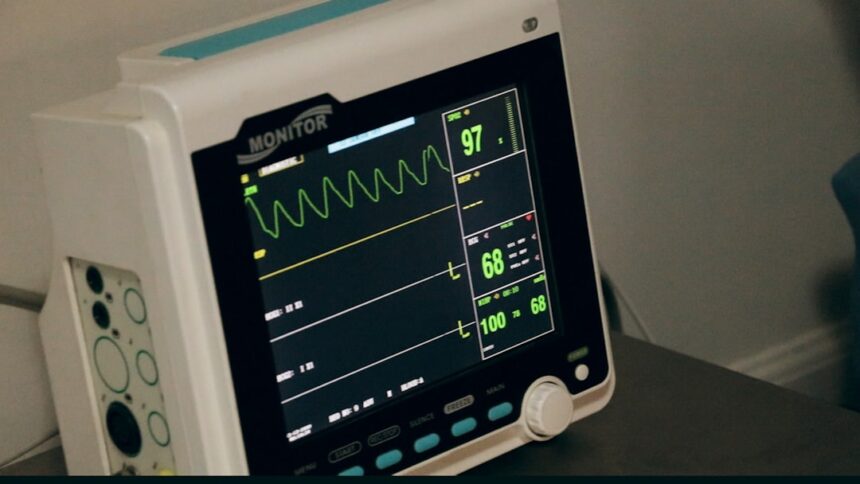
The chirping alarm dragged me from a restless sleep, the digital display glowing a stark 3:17 AM. My mind, however, was already a buzzing hive of anxieties, replaying fragments of court transcripts and the unsettling expression on the defendant’s face. My smartwatch, a ubiquitous piece of technology I usually barely noticed, simultaneously vibrated on my wrist, a gentle, persistent reminder of something far more tangible than my mental turmoil: my heart rate. It was a rhythm, a biological signature, that had recently become a focal point of my legal practice, and, I believe, a potential game changer for the justice system.
For years, legal proceedings have relied on a familiar suite of evidence: witness testimony, forensic reports, documentary proof, and even circumstantial inferences. These are the bedrock upon which judgments are built. But what if there’s another layer of evidence, one that speaks directly to intent, deception, or even distress, not through curated words or constructed narratives, but through the involuntary physiological responses of the human body? I’m talking about biometric heart rate data, and its integration into legal cases is no longer a speculative future; it’s a present reality I’m actively navigating.
The Unseen Witness: Understanding Biometric Heart Rate Data
My initial exposure to biometric heart rate data in a legal context was serendipitous, almost accidental. I was representing a client in a protracted contract dispute, a case where credibility was paramount. My client, a seasoned business professional, claimed to have been pressured into signing an unfavorable agreement under duress. The opposing counsel, predictably, painted a picture of a willing participant, highlighting the signed document as irrefutable proof. It was during a particularly tense deposition, where my client was being subjected to aggressive questioning, that I noticed the persistent, elevated heart rate displayed on his smartwatch, visible through the cuff of his shirt. It was a number, but it felt like a story.
Decoding the Physiology of Stress and Deception
The human heart is an incredibly sensitive instrument. Its rhythm, while generally regulated by the autonomic nervous system, can be profoundly influenced by a myriad of internal and external stimuli. Fear, stress, excitement, cognitive load, and even the act of deliberate deception – all these can trigger a cascade of physiological responses, with heart rate being one of the most readily measurable.
The Autonomic Nervous System’s Role
The autonomic nervous system (ANS) is the unconscious regulator of our bodily functions. It’s divided into the sympathetic nervous system, responsible for the “fight or flight” response, and the parasympathetic nervous system, which governs “rest and digest.” When a person experiences stress or anxiety – the kinds of emotions often present in legal scenarios like cross-examination or confession – the sympathetic nervous system kicks into high gear. This leads to the release of adrenaline and other hormones, causing the heart to beat faster and stronger, blood pressure to rise, and breathing to quicken. Conversely, a calm state allows the parasympathetic system to dominate, resulting in a slower heart rate.
Beyond Simple Elevation: Heart Rate Variability (HRV)
While a high heart rate can indicate stress, looking solely at that raw number offers an incomplete picture. More sophisticated analysis often involves Heart Rate Variability (HRV). HRV refers to the natural fluctuations in the time intervals between consecutive heartbeats. These variations are not random; they reflect the dynamic interplay between the sympathetic and parasympathetic nervous systems. A higher HRV generally indicates better cardiovascular health and adaptability, as well as a stronger parasympathetic influence, suggesting a state of calm and resilience. Conversely, a lower HRV can be indicative of stress, fatigue, or a heightened sympathetic response. In legal contexts, analyzing HRV patterns can provide crucial insights into a person’s baseline physiological state and deviations from it during specific events.
The Challenge of Establishing Causation
However, the inherent challenge in introducing biometric data lies in establishing a clear causal link between the observed physiological response and the alleged event. A spike in heart rate, for instance, could be due to a genuine fear of persecution, but it could also be attributable to a startled reaction to a loud noise in the courtroom, a pre-existing medical condition, or even a vigorous workout before court. This is where the scientific rigor and evidentiary standards become paramount.
In recent legal cases, the use of biometric heart rate data has emerged as a significant factor in determining the credibility of witness testimonies and the emotional state of individuals involved. An insightful article discussing this topic can be found at this link, which explores how such biometric evidence is being integrated into court proceedings and its implications for the future of legal standards. As technology continues to evolve, the intersection of biometric data and law raises important questions about privacy, consent, and the reliability of such evidence in judicial contexts.
Biometric Data as Corroborative Evidence
My early explorations were met with skepticism, a natural reaction to introducing something perceived as novel and potentially unreliable. However, I began to see its potential not as a standalone verdict-maker, but as a powerful corroborative tool. In the contract dispute case, my client’s smartwatch data, analyzed by a forensic physiologist, showed a consistent and significant elevation in heart rate during the critical moments of the deposition when he claimed to have been under duress. This elevation wasn’t a fleeting blip; it was a sustained pattern that contrasted sharply with his resting heart rate and his heart rate during periods of calm questioning.
The Case for Objective Physiological Indicators
Traditional evidence often hinges on subjective interpretation. A witness might misremember a detail, a jury might misinterpret a gesture, or a defendant might present a practiced facade of innocence. Biometric heart rate data, when collected and analyzed under controlled conditions, offers an objective physiological indicator that is far more difficult to consciously manipulate. It bypasses the spoken word and delves into the body’s involuntary reactions, providing a window into a person’s internal state.
Baseline Establishment: The Foundation of Analysis
Before any meaningful interpretation can occur, establishing a baseline is crucial. This involves collecting an individual’s heart rate data over an extended period, encompassing various activities and emotional states. This baseline serves as a benchmark against which deviations can be measured. For example, understanding a defendant’s typical heart rate during routine daily activities, during periods of reported stress (e.g., experiencing car trouble), and during calm, relaxed states provides the context for interpreting their heart rate in a specific legal event. Without this baseline, any observed deviation lacks comparative significance.
Contextualizing Deviations: Witness Testimony and Event Reconstruction
Once a baseline is established, the biometric data must be contextualized. This involves meticulously correlating the recorded heart rate with the known sequence of events. If heart rate data shows a significant spike during a specific part of a witness’s testimony or during a particular segment of a video recording, this spike needs to be explicitly linked to that moment. This often requires a detailed reconstruction of the timeline, cross-referencing the biometric logs with other forms of evidence such as audio-visual recordings, witness statements detailing the sequence of events, and even expert testimony on the physiological responses to certain stimuli.
The Admissibility Debate: Navigating Evidentiary Hurdles
The primary hurdle has always been admissibility. Courts are rightly cautious about admitting evidence that is not scientifically sound or could be misleading. My early attempts to introduce this data were often met with objections regarding its reliability, the qualifications of the analysts, and the potential for prejudice. However, as the technology has advanced and the scientific understanding of its applications has grown, the landscape is slowly shifting.
Expert Testimony: The Bridge to Understanding
To overcome these hurdles, the role of expert witnesses is indispensable. Forensic physiologists, bioengineers, and data scientists are crucial in explaining the intricacies of heart rate monitoring, the science behind physiological responses, and the methodologies used for data analysis. Their testimony helps the court understand not just the numbers, but the physiological processes they represent and the scientific validity of drawing conclusions from them.
Daubert and Frye Standards: Ensuring Scientific Reliability
In the United States, the admissibility of scientific evidence is often governed by standards like the Daubert standard or the Frye standard. These legal precedents require that scientific evidence be based on reliable principles and methods that have been tested, peer-reviewed, and accepted within the scientific community. Demonstrating that the biometric data collection devices are calibrated and accurate, that the analytical methods are sound, and that the conclusions drawn are supported by peer-reviewed research is essential for admissibility.
Applications Beyond the Courtroom: Law Enforcement and Investigations
The potential of biometric heart rate data extends far beyond the courtroom itself. I’ve seen its utility in the investigative phase, offering an investigative tool that can supplement traditional methods. Imagine a scenario where a suspect is being interviewed. While their verbal responses can be rehearsed, their physiological responses are less so. Elevated heart rate, combined with other physiological indicators that can be monitored, might suggest deception or a heightened level of psychological distress, prompting investigators to pursue particular lines of questioning or re-examine existing evidence.
Deception Detection and Stress Profiling
One of the most compelling, albeit controversial, applications is in the realm of deception detection. While polygraphs have been used for decades, their admissibility in many legal systems is limited due to concerns about their scientific validity. Biometric heart rate data, when analyzed in conjunction with other physiological signals like galvanic skin response and respiration, could offer a more nuanced and potentially more reliable approach to identifying physiological indicators associated with deception. It’s not about definitively saying someone is lying, but about identifying patterns of physiological arousal that warrant further scrutiny.
The Nuances of “Deception” Metrics
It’s crucial to understand that biometric data does not directly measure deception. Instead, it measures physiological arousal that can be associated with deception. A complex lie often requires significant cognitive effort and emotional regulation, which can manifest as increased heart rate, changes in HRV, and other physiological responses. However, these same responses can be triggered by anxiety, fear, anticipation, or even surprise. Therefore, interpreting such data requires careful consideration of the context and comparison with baseline levels.
Pre-trial Detention and Bail Hearings
In the context of bail hearings, where a judge assesses the flight risk and danger posed by a defendant, biometric data could potentially offer a more objective measure of a defendant’s psychological state. While this is still a nascent area, the idea is that a consistently elevated heart rate or erratic HRV patterns during discussions of potential flight or evasion might suggest a higher propensity for such actions. Conversely, calm and stable physiological readings could potentially bolster arguments for release. However, ethical considerations and the risk of misinterpretation are significant here.
Ethical Considerations and Privacy Concerns
As I delved deeper into this field, the ethical implications became impossible to ignore. The intimacy of biometric data, its direct link to our biological selves, raises profound questions about privacy, consent, and the potential for misuse. The idea of a person’s involuntary biological responses being weaponized in a legal battle is a sobering thought.
Consent and Data Collection: The Cornerstone of Ethical Use
The collection of any biometric data must be based on explicit, informed consent. This means clearly explaining what data is being collected, how it will be used, who will have access to it, and for how long it will be stored. In a legal context, particularly when dealing with individuals who may feel coerced, ensuring true voluntary consent is paramount. This is especially critical when considering the use of wearable devices that are not explicitly consented to for legal purposes but may carry such data.
The “Chilling Effect” of Constant Surveillance
There’s a genuine concern about a “chilling effect,” where individuals might refrain from expressing themselves freely or engaging in normal behavior due to the knowledge that their physiological responses are being monitored and potentially scrutinized in a legal setting. This could fundamentally alter the dynamics of human interaction and the pursuit of justice, shifting the focus from truth-finding to managing physiological outputs.
Bias and Discrimination: The Risk of Flawed Algorithms
Furthermore, the algorithms used to analyze biometric data are not immune to bias. If the datasets used to train these algorithms are not diverse and representative, the resulting analyses could disproportionately misinterpret the physiological responses of certain demographic groups, leading to discriminatory outcomes. This is a critical area that requires ongoing research and rigorous validation to prevent perpetuating existing societal inequities within the legal system.
In recent legal cases, the use of biometric heart rate data has emerged as a fascinating topic, particularly in how it can provide insights into a person’s emotional state during critical moments. A related article discusses the implications of this technology in courtrooms and how it may influence jury decisions. For more information on this subject, you can read the article here. This intersection of technology and law raises important questions about privacy and the reliability of biometric evidence in legal proceedings.
The Future Landscape: Integration and Evolution
I believe that the integration of biometric heart rate data into the legal landscape is not a matter of “if,” but “how” and “when.” The technology is here, the understanding is growing, and the potential benefits in terms of objectivity and corroboration are too significant to dismiss. My role, and the role of other legal professionals, is to ensure this integration is handled responsibly, ethically, and with a constant focus on fairness and due process.
Standardization and Regulation: Paving the Way for Reliable Use
For biometric data to become a truly reliable and accepted form of evidence, standardization in collection methods, data formats, and analytical techniques is essential. Regulatory frameworks need to be developed to govern its use, ensuring its admissibility is based on scientific rigor and that its interpretation is handled by qualified professionals. This will help to move away from ad-hoc applications and towards a more systematic and trustworthy approach.
The Ongoing Scientific Advancements
The field of biometric data analysis is constantly evolving. Advances in wearable technology are leading to more accurate and less intrusive data collection. Sophisticated machine learning algorithms are enabling more nuanced interpretations of complex physiological patterns. As this science progresses, so too will its potential applications in the legal domain. I am personally invested in staying abreast of these developments and advocating for their responsible incorporation.
A Tool, Not a Panacea: Maintaining a Holistic Approach
It is crucial to reiterate that biometric heart rate data is a tool, and like any tool, its effectiveness depends on how it is used. It should not be viewed as a panacea or a substitute for thorough investigation, robust legal arguments, and critical human judgment. The confluence of objective physiological data with traditional forms of evidence, interpreted within the broader context of the case, is where its true power lies. It offers a compelling new dimension to the pursuit of truth, a silent witness that can, when brought forward with integrity and scientific rigor, fundamentally change how we understand and administer justice. I continue to be fascinated by, and cautiously optimistic about, the evolving role of biometric heart rate data in my practice and in the legal system as a whole.
FAQs
What is biometric heart rate data?
Biometric heart rate data refers to the measurement and analysis of an individual’s heart rate using biometric sensors, such as fitness trackers or smartwatches. This data can provide insights into a person’s physical activity, stress levels, and overall health.
How is biometric heart rate data used in legal cases?
Biometric heart rate data can be used as evidence in legal cases to support or refute claims related to physical activity, stress, or health. For example, it can be used to verify an individual’s alibi, support a personal injury claim, or provide insight into a person’s emotional state during a specific event.
Is biometric heart rate data admissible in court?
The admissibility of biometric heart rate data in court varies by jurisdiction and case-specific circumstances. Courts may consider factors such as the reliability of the data, the qualifications of the individual interpreting the data, and the relevance of the data to the case at hand.
What are the potential benefits of using biometric heart rate data in legal cases?
Using biometric heart rate data in legal cases can provide objective, quantifiable evidence to support or challenge claims related to physical activity, stress, or health. This data can potentially offer a more accurate and detailed understanding of an individual’s physiological responses in specific situations.
What are the potential limitations of using biometric heart rate data in legal cases?
Limitations of using biometric heart rate data in legal cases may include concerns about data accuracy, privacy implications, and the need for expert interpretation. Additionally, the interpretation of biometric heart rate data may be subject to bias or misinterpretation if not carefully analyzed and presented in court.