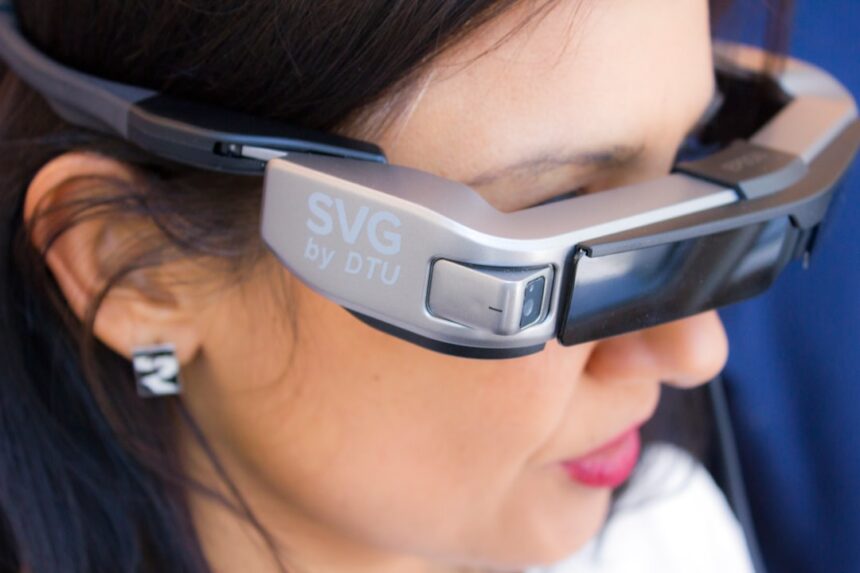
I’ve been wearing smart glasses for a while now, and the experience has fundamentally altered how I interact with the world. It’s not a replacement for my natural senses, but rather an augmentation, a new lens through which I can gather and process information. This isn’t about living in a fantasy; it’s about a richer, more informed engagement with the tangible reality around me.
My first foray into smart glasses was driven by a desire to simplify my commutes and explore unfamiliar territories with more confidence. The initial novelty of seeing directions overlaid on my actual view was surprisingly potent. It’s akin to having a personal cartographer charting your course directly onto the landscape before you, eliminating the need to constantly consult a separate device that pulls your attention away from your surroundings.
Real-Time Navigation Beyond the Screen
Visual Turn-by-Turn Directions
The most immediate benefit I experienced was in navigation. Instead of glancing down at a phone screen, I’m now presented with subtle, unobtrusive arrows and street names that appear in my peripheral vision. This allows me to maintain a constant awareness of my environment, a crucial safety feature when walking in busy urban areas or cycling. The arrows are not overwhelming; they are like gentle nudges, guiding me without demanding my full cognitive load. It’s the difference between reading a map and having the map become a part of the very fabric of your journey.
Points of Interest and Local Lore
Beyond just getting from point A to point B, the glasses can identify and highlight points of interest. As I walk through a historic district, information about buildings, statues, and notable events might pop up. This transforms a simple stroll into an interactive historical tour. It’s like the city itself is whispering its secrets to me, revealing layers of history I would have otherwise missed. I’ve discovered unassuming plaques that mark significant events and learned the stories behind architectural details that I’d previously overlooked.
Traffic and Transit Updates Seamlessly Integrated
For public transport users, the smart glasses offer a significant advantage. Real-time updates on bus and train arrivals, along with potential delays, are projected discreetly. This means no more fumbling for schedules or peering at station boards. The information is contextual; it appears when and where I need it, saving me from the frustration of missed connections. It’s like having a personal concierge for my commute, always keeping me one step ahead.
Smart glasses have gained significant attention for their potential in various applications, particularly in point-of-view (POV) recordings that enhance storytelling and immersive experiences. For a deeper understanding of this technology and its implications, you can read a related article that explores the advancements and challenges of smart glasses in capturing real-time experiences. Check it out here: Smart Glasses and POV Recordings.
The Extended Textbook: Learning in the Flow of Life
My personal interest in learning and information acquisition has been dramatically amplified by smart glasses. The ability to access and process data without interrupting my immersion in an activity has opened up new avenues for knowledge. It’s like turning every moment into a potential lecture, but one that doesn’t pull me out of the experience.
On-Demand Information Retrieval
Instantaneous Fact-Checking
Have you ever been in a conversation and wished you could instantly verify a piece of information? With smart glasses, this is now a reality. A quick glance or a discreet voice command can bring up search results, definitions, or biographical details. This can be a powerful tool for intellectual curiosity, allowing me to delve deeper into topics as they arise naturally. It’s like having an encyclopaedia accessible with the blink of an eye, but far more than just static text – it can often bring up relevant images or short video clips.
Language Translation in Real-Time
For those who travel or interact with people from diverse linguistic backgrounds, real-time translation is a game-changer. As someone speaks a foreign language, subtitles can appear directly in my field of vision. This breaks down communication barriers in a way that was previously only possible with dedicated translation devices or apps that required significant attention. It’s like having a universal translator from science fiction, making global interactions more fluid and accessible.
Visual Learning Enhanced by Context
When I encounter something visually intriguing, whether it’s a plant, an animal, or a piece of machinery, the glasses can often identify it for me. This provides immediate contextual information, such as scientific names, common uses, or historical significance. It’s like having a knowledgeable guide by my side, ready to explain the intricacies of the world around me, transforming passive observation into active learning.
The Enhanced Workspace: Productivity Beyond the Desk
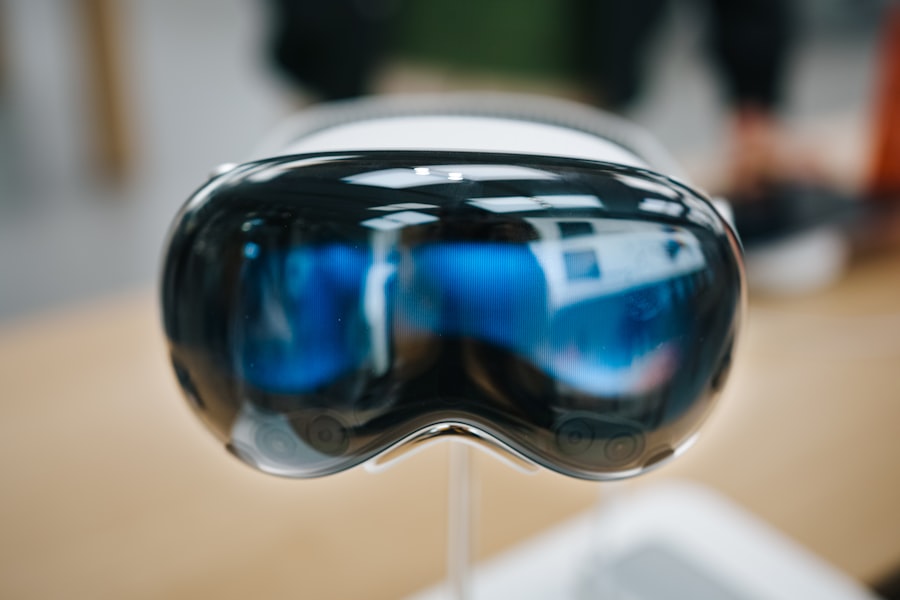
The professional applications of smart glasses are perhaps the most transformative. By bringing digital information into my physical workspace, I’ve found my efficiency and focus have improved significantly. It’s about reducing the friction between the digital and the physical, making technology a seamless extension of my capabilities.
Hands-Free Information Access for Professionals
Remote Assistance and Collaboration
This is a monumental shift for fields that require hands-on work. Imagine a technician troubleshooting complex machinery. With smart glasses, they can access diagrams, manuals, or even receive real-time guidance from a remote expert who can see what they see. This dramatically reduces downtime and improves accuracy. It’s like having a seasoned mentor looking over your shoulder, offering support without being physically present.
Streamlined Workflow and Task Management
For many of my tasks, having information relevant to the current activity displayed directly in my view is incredibly beneficial. If I’m working on a project, checklists, deadlines, or relevant files can be presented without me needing to switch screens. This constant, context-aware access minimizes distractions and helps maintain focus. It’s like having my to-do list and all the necessary resources projected onto the canvas of my work.
Data Visualization in a Three-Dimensional Space
Certain professions can benefit immensely from 3D data visualization. Engineers, architects, and designers can overlay digital models onto physical spaces, allowing for a more intuitive understanding of scale, proportion, and integration. This interactive approach to data is like stepping inside a blueprint, experiencing it not as a flat representation, but as a tangible object taking shape.
The Augmented Museum: Experiencing Culture with Added Depth

Visiting museums and cultural sites used to involve a lot of reading small plaques and trying to reconcile that information with the objects before me. Smart glasses have elevated this experience, turning it into a far more engaging and educational endeavor. It’s like going from reading the footnotes to having the author come out and explain the text in person.
Immersive Historical Reenactments
Some cultural institutions are beginning to experiment with AR overlays that can bring historical scenes to life. Imagine standing in front of an ancient ruin and seeing a holographic projection of what it might have looked like in its prime, or witnessing a reenactment of a significant event unfold before your eyes. This transforms passive observation into active participation. It’s like stepping through a portal to another time.
Interactive Artifact Exploration
When viewing an artifact, the smart glasses can provide additional information beyond what’s presented on a static label. This might include 3D models of the object from different angles, details about its creation, or comparative examples from other collections. It’s like having a curator dedicated to each exhibit, providing a personalized and in-depth exploration.
Multilingual Information and Contextual Guides
Even without specific AR content, the glasses can provide multilingual audio guides and textual annotations that appear contextually as I approach exhibits. This ensures that language is no longer a barrier to appreciating cultural heritage. It’s like having a personalised guide who speaks every language you need, always there to enrich your understanding.
Smart glasses have gained significant attention for their ability to capture point-of-view recordings, offering users a unique perspective on their experiences. For those interested in exploring this technology further, a related article discusses the implications and potential applications of smart glasses in various fields. You can read more about it in this insightful piece on the impact of wearable technology by visiting this link.
The Evolving Social Landscape: Connecting and Communicating in New Ways
| Metric | Description | Typical Value | Unit |
|---|---|---|---|
| Video Resolution | Maximum recording resolution of smart glasses POV camera | 1920 x 1080 | pixels |
| Frame Rate | Number of frames recorded per second | 30 | fps |
| Field of View (FOV) | Angle of view captured by the camera | 90 | degrees |
| Battery Life (Recording) | Duration of continuous video recording on a full charge | 2 | hours |
| Storage Capacity | Internal or expandable memory for video storage | 32 | GB |
| Video Format | File format used for recorded videos | MP4 (H.264) | — |
| Weight | Weight of the smart glasses device | 50 | grams |
| Connectivity | Wireless connection options for data transfer | Wi-Fi, Bluetooth | — |
While some might see smart glasses as isolating devices, I’ve found them to be surprisingly conducive to certain forms of social interaction and connection, albeit in ways that are still very much in development. It’s about adding layers of digital context to our physical interactions.
Enhanced Communication with Contextual Information
Discreet Information Sharing in Group Settings
During a meeting, for instance, I might receive discreet notifications or personal reminders that don’t require me to pull out my phone and disrupt the flow of conversation. This allows me to stay engaged with the group while still managing other essential information. It’s like having a mental notepad that only I can see, accessible without breaking eye contact.
Shared AR Experiences and Gaming
The potential for shared augmented reality experiences is intriguing. Imagine multiplayer games where digital elements are overlaid onto the real world, with participants interacting with each other and the virtual environment simultaneously. This could lead to new forms of entertainment and collaborative play. It’s like bringing a digital playground into our shared physical space.
Social Cues and Recognition Assistance (Developing)
While still in its nascent stages and raising privacy concerns, there is a theoretical potential for smart glasses to assist with social cues, such as recognizing individuals and recalling names or past interactions. This could be particularly beneficial for those who struggle with social memory. However, the ethical implications of such technology are significant and require careful consideration. It’s a double-edged sword, offering potential assistance but demanding strict adherence to privacy principles.
In conclusion, my journey with smart glasses has been one of continuous discovery. They haven’t replaced my eyes or my brain, but rather have offered me a new way to integrate the digital and the physical, to learn more effectively, and to engage with the world in a more informed and dynamic manner. The technology is still evolving, but the foundation it offers for a more augmented existence is undeniably compelling. It’s like learning to see with an extra sense, one that provides valuable context and connectivity in an ever-increasingly complex world.
FAQs
What are smart glasses with POV recording capabilities?
Smart glasses with POV (point-of-view) recording capabilities are wearable devices equipped with built-in cameras that capture video and images from the user’s perspective, allowing hands-free recording of activities as seen through their eyes.
How do smart glasses record POV videos?
These smart glasses use integrated miniature cameras positioned near the lenses to capture video footage from the wearer’s viewpoint. The recorded content is typically stored on internal memory or transmitted wirelessly to a connected device for storage and viewing.
What are common uses for smart glasses POV recordings?
Smart glasses POV recordings are commonly used in sports and outdoor activities, professional training, security and law enforcement, hands-free documentation, and content creation such as vlogging or tutorials.
Are there privacy concerns associated with smart glasses POV recordings?
Yes, privacy concerns exist because smart glasses can record people and environments discreetly. Users should be aware of local laws regarding consent and recording in public or private spaces to avoid legal issues.
What are the technical limitations of smart glasses POV recording?
Technical limitations may include battery life constraints, limited storage capacity, video resolution and frame rate restrictions, potential discomfort from wearing the device for extended periods, and challenges with low-light recording conditions.