
I often find myself standing in the middle of my living room, a peculiar silence hanging in the air. It’s a silence that wasn’t there a few years ago, back when the only smart device I owned was a slightly overenthusiastic voice assistant that primarily served to play music and tell me the weather. Now, my home is a symphony of blinking lights, subtle hums, and invisible networks, all orchestrated by devices designed to make life convenient. But convenience, I’ve learned, can be a double-edged sword. It can blind us to the subtle shifts in how our lives are being experienced, recorded, and, in some cases, manipulated. I’ve begun to see these smart home devices not just as tools for ease, but as potential conduits for subtler forms of deception, and I’ve found myself compelled to investigate. This isn’t about sensationalism; it’s about understanding the quiet currents that flow beneath the surface of our supposedly effortless smart lives.
We invite these devices into our homes with open arms, seduced by the promise of a frictionless existence. The smart speaker that waits patiently for our command, the thermostat that adjusts itself to our preferred temperature, the security camera that offers peace of mind – they are the silent architects of our modern living spaces. But this seamlessness, this apparent effortless integration, is precisely what can make it difficult to spot the cracks. When everything works as intended, we tend to stop questioning. We don’t delve into the algorithms that curate our news feeds or the data points that determine our smart home’s actions. It’s like a well-oiled machine; we admire its efficiency and rarely stop to consider the friction points that have been so expertly smoothed over, or the lubricants that have been applied.
The Data Deluge: What’s Really Being Collected?
Every interaction with a smart device generates data. This is the fundamental currency of the digital age, and our homes have become vast data farms. It’s not just the obvious things, like voice commands or the presence of motion detected by a camera. It’s the subtle patterns of our behavior: when we wake up, when we leave, when we eat, even the ambient noise levels in our homes. This data is meticulously collected, analyzed, and often shared with third parties for a variety of purposes, from targeted advertising to product improvement. The sheer volume can be overwhelming, and the true extent of what is being collected is rarely transparent. It’s like a microscopic examination of our lives, revealing details we might not even be aware of ourselves.
Understanding the Scope of Collection: Beyond the Obvious
We think of smart speakers listening for wake words, or security cameras recording video. But the scope of data collection extends far beyond these direct functions. Consider a smart thermostat. Beyond temperature preferences, it can gather data on occupancy patterns, the duration of time spent in specific rooms, and even potentially learn about our daily routines by correlating temperature changes with other connected devices. Smart refrigerators can track our grocery purchases, providing insights into our dietary habits and consumption patterns. Even smart light bulbs, through their connection to Wi-Fi, can contribute to a broader picture of our home’s activity. This omnipresent data gathering creates a detailed mosaic of our lives, piece by tiny piece.
The Unseen Network: How Devices Communicate and Share
These devices don’t operate in isolation. They communicate with each other, with cloud servers, and often with a host of third-party applications and services. This interconnectedness, while enabling convenience, also creates a complex web of data sharing. Information collected by one device can be combined with data from others, creating a richer, more potentially intrusive profile of our lives. Understanding this network of communication is crucial. It’s like tracing the roots of a tree; you see the visible trunk and branches, but there’s an extensive, often hidden, root system that sustains it all, connecting it to the wider ecosystem.
Algorithmic Personalization: The Art of Subtle Influence
Smart home devices are designed to learn and adapt to our preferences. This personalization, while seemingly benign, is driven by algorithms that can subtly steer our choices and perceptions. When an algorithm learns that you frequently purchase a certain brand of coffee, it might start showing you more advertisements for that brand, or even subtly influence your smart speaker to suggest it. This isn’t a direct lie, but a manipulation of information that can create a false sense of consensus or need. It’s like a skilled storyteller who knows your favorite characters and plot points, and crafts a narrative that keeps you engrossed, perhaps by subtly downplaying alternative perspectives.
The Echo Chamber Effect: Reinforcing Existing Beliefs
In the digital realm, algorithms are often designed to prioritize engagement, and one effective way to achieve this is by showing us content that aligns with our existing beliefs and preferences. This can lead to an “echo chamber” effect, where we are primarily exposed to information that confirms what we already think, limiting our exposure to diverse viewpoints. Smart home devices, by curating news feeds, recommending content, or even influencing product suggestions, can contribute to this phenomenon. We might, for instance, be fed a steady stream of news from a particular political leaning, reinforcing our existing biases without us consciously realizing the extent of our information bubble.
Shaping Consumption: The Invisible Hand of Recommendation Engines
Recommendation engines are a cornerstone of personalized online experiences, and they extend their influence into our smart homes. Whether it’s suggesting what to watch next on a smart TV, recommending recipes based on our refrigerator’s contents, or alerting us to sales on items we frequently buy, these algorithms are powerful drivers of consumer behavior. While intended to be helpful, they can also create a subtle pressure to consume, pushing us towards products and services that may not be in our best interest. It’s akin to a perpetually helpful salesperson who always seems to have the perfect item for you, even if you didn’t realize you needed it.
In today’s digital age, smart home devices have become increasingly popular, not only for their convenience but also for their potential to unveil hidden truths in relationships. A fascinating article discusses how these devices can be utilized to expose a lying spouse, shedding light on the implications of technology in personal lives. To explore this topic further, you can read the article here: Using Smart Home Devices to Expose a Lying Spouse.
The Data Trail: Where Does It All Go?
The cloud is the digital ether where much of our smart home data resides. Companies collect, store, and process this information in vast data centers, often distributed across the globe. Understanding where this data goes, who has access to it, and how it is secured is paramount to discerning potential deception. It’s like knowing the destination of a letter; once it leaves your hand, its journey is out of your direct control, but understanding the postal system and the recipient is key.
Vendor Policies and Terms of Service: The Fine Print of Consent
When we install a smart home device, we typically agree to a lengthy and often unread terms of service agreement. These documents are the legal framework that governs how our data is collected, used, and shared. They are notoriously complex, filled with legal jargon that makes them impenetrable to the average user. Yet, within this fine print lies the blueprint for how our data is handled, and what responsibilities the vendor assumes. Ignoring this document is akin to signing a contract without reading the clauses, assuming everything is as it appears but being unaware of the hidden conditions.
The Evolving Landscape of Data Privacy Regulations
Data privacy is a constantly evolving field, with governments around the world attempting to establish regulations to protect user information. Laws like the GDPR in Europe and the CCPA in California have significantly impacted how companies handle personal data. However, the global nature of technology means that these regulations can vary widely, creating a complex patchwork of rules and responsibilities. Keeping abreast of these developments is an ongoing challenge for users hoping to understand their rights in the digital age.
Data Breaches and Security Vulnerabilities: The Weakest Link
Despite the best intentions of companies, data breaches and security vulnerabilities are an unfortunate reality in the digital world. Smart home devices, with their constant connection to the internet, can be attractive targets for malicious actors. A breach could expose sensitive personal information, allowing criminals to impersonate users, gain access to other accounts, or even cause physical harm if the compromised devices control critical home functions. The security of these devices is not just a technical concern; it’s a matter of personal safety and trust. It’s like leaving your front door unlocked; the risk of unwanted intrusion is significant, even if you live in a safe neighborhood.
The Risk of Unauthorized Access: Beyond Accidental Exposure
Unauthorized access goes beyond accidental exposure through a data breach. It can involve intentional hacking, phishing attempts, or even the exploitation of default passwords or weak security settings. Once a hacker gains access to your smart home network, they can potentially control devices, spy on your activities, and gather information for nefarious purposes. This is not about a company lying to you directly, but about a breach of security that allows others to tell lies about you or your activities, or to directly exploit your data.
The Role of Software Updates: A Double-Edged Sword
Software updates are crucial for patching security vulnerabilities and improving device functionality. However, they can also introduce new bugs or changes to how data is handled without adequate notification. Sometimes, users may even delay or neglect updates, leaving their devices exposed. The constant churn of software development means that the security landscape is always in flux, and proactive management is essential. It’s a bit like tending a garden; regular pruning and watering are necessary, but sometimes the gardener might accidentally cut off a healthy branch or introduce an invasive weed.
Deceptive Design and Misleading Marketing: The Art of Omission

Beyond the technical aspects of data collection and security, the way smart home devices are marketed and designed can also contribute to a form of deception. Companies often highlight the benefits while downplaying potential risks or the extent of data collection. This is a form of omission, where the absence of crucial information can be just as misleading as an outright falsehood. It’s like a magician performing a trick; they meticulously craft the illusion, drawing your attention to the flashy gestures while the real work happens unseen.
The Language of Convenience: Masking Complexity
The marketing for smart home devices often emphasizes simplicity and ease of use. Phrases like “set it and forget it” or “effortless integration” are common. While these are appealing, they often mask the underlying complexity of the technology, the data processing, and the privacy implications. This language creates an expectation of effortless perfection, making users less likely to scrutinize the technology’s inner workings. It’s like being sold a gourmet meal that arrives pre-packaged; the presentation is appealing, but the preparation and ingredients are not fully transparent.
“Smart” Features That Aren’t Always Intelligent
Not all “smart” features are created equal. Some are genuinely innovative, while others are simply gimmicks that add to the price tag without offering significant value. Devices might claim to learn your habits, but their learning capabilities might be rudimentary, leading to frustrating or unhelpful actions. This can be a form of deception by over-promising, where the reality of the device’s intelligence falls short of the marketing narrative. It’s like buying a tool that is advertised as a multi-purpose wonder but only performs one function poorly.
The “Privacy by Design” Myth: A Closer Examination
Many companies now tout “privacy by design” as a core principle in their product development. However, the interpretation and implementation of this principle can vary significantly. What one company considers “privacy-preserving” might be viewed as inadequate by others, or by privacy advocates. It’s crucial to examine the specifics of a company’s privacy policies and practices, rather than relying on broad marketing claims. The term itself can become a euphemism, a protective cloak that doesn’t necessarily reflect the true extent of data protection.
Examining Privacy Policies: A Necessary Chore
Reading privacy policies is often seen as a tedious and time-consuming task. However, it is one of the most direct ways to understand how a company intends to handle your personal data. Look for clarity, transparency, and the ability to control your data. If the policy is vague, overly broad, or difficult to understand, it should raise a red flag. This is the often-unpleasant but necessary work of scrutinizing the fine print behind the shine.
The Ethics of Data Monetization: Turning Personal Information into Profit
The business model for many smart home device companies relies on leveraging the data they collect. This can involve targeted advertising, selling aggregated data to third parties, or developing new services based on user behavior. While data monetization is a legitimate business practice, the ethical implications arise when it comes at the expense of user privacy or transparency. It’s like a sculptor who meticulously carves a masterpiece, but their ultimate goal is to sell off every sliver of wood that falls away, regardless of its aesthetic value to others.
The “Black Box” Problem: Understanding What You Can’t See
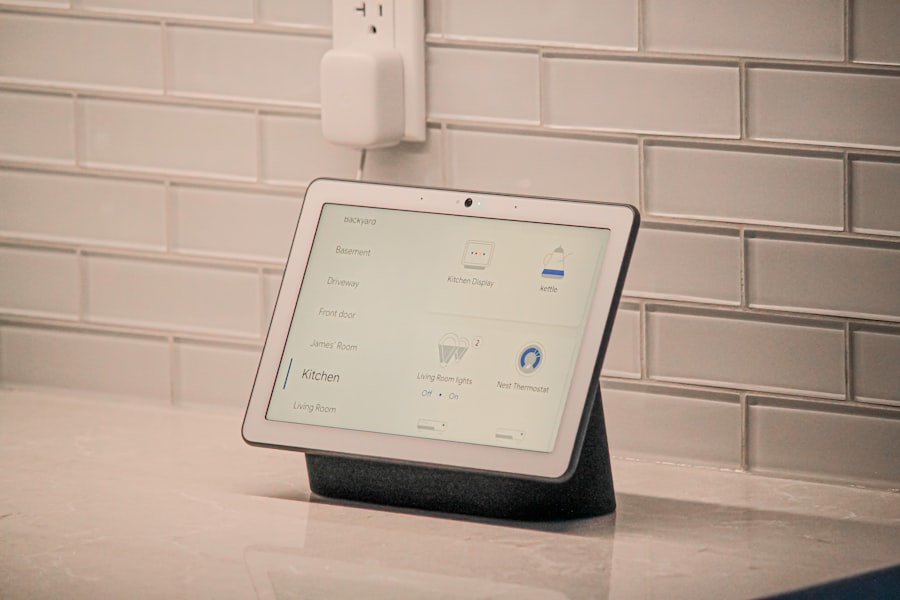
The sophisticated algorithms and complex software that power smart home devices often operate as “black boxes.” We input commands or observe actions, but the intricate internal processes remain opaque to us. This lack of transparency makes it difficult to fully understand why a device is behaving in a certain way, or to identify potential biases or errors in its decision-making. It’s like trying to understand a complex recipe where only the ingredients and the final dish are visible, but the cooking process itself is hidden behind a locked door.
Algorithmic Bias: When Data Reflects Societal Flaws
Algorithms are trained on data, and if that data reflects existing societal biases, those biases will be perpetuated and amplified in the algorithm’s outputs. This can manifest in various ways within a smart home. For example, voice recognition systems might perform less accurately for certain accents or dialects, or smart assistants might offer different product recommendations based on gender or perceived demographic information. These aren’t intentional lies by the device, but rather inherited distortions from the data it was fed. It’s like a mirror that, due to imperfections in its silvering, distorts certain reflections more than others, unintentionally creating a skewed image.
Identifying Bias in Everyday Interactions
Recognizing algorithmic bias requires a degree of critical observation. Pay attention to patterns in how your devices respond, the information they present, and the recommendations they offer. Do they seem to consistently favor certain types of content, products, or information? Are there instances where their performance seems to differ based on who is interacting with them? Actively questioning these patterns is the first step in exposing potential biases.
The Turing Test for Devices: Do They Truly Understand?
The “Turing Test” is a classic measure of artificial intelligence, where a computer’s ability to exhibit intelligent behavior equivalent to, or indistinguishable from, that of a human is assessed. While smart home devices are far from passing a true Turing Test, their increasing sophistication can sometimes create the illusion of understanding. This can lead us to ascribe human-like qualities or intentions to them, which can then make us more susceptible to believing their outputs are inherently truthful or unbiased. It’s like mistaking a skilled actor for the character they portray; the performance is convincing, but the underlying reality is different.
The Limits of Machine Learning: Correlation vs. Causation
Machine learning excels at identifying correlations in data, but it doesn’t inherently understand causation. A smart device might identify a correlation between your lights turning on and a specific song playing, and then assume that playing that song causes the lights to turn on. This can lead to actions that seem nonsensical or even deceptive if we expect true understanding. It’s like observing two children holding hands and assuming one is pulling the other, when in reality they might both be being pulled by a parent out of frame.
In today’s digital age, smart home devices have become increasingly popular, not just for convenience but also for their potential to uncover hidden truths. Many individuals are turning to these technologies to help expose a lying spouse, as they can provide valuable insights into daily activities and communication patterns. For those interested in exploring this topic further, a related article discusses various ways to utilize smart home devices effectively. You can read more about it here. By understanding how these tools work, you can gain a clearer picture of your partner’s behavior and make informed decisions about your relationship.
Empowering Yourself: Becoming a Savvy Smart Home User
| Metric | Description | Example Data |
|---|---|---|
| Device Type | Type of smart home device used for monitoring | Smart Cameras, Voice Assistants, Smart Locks |
| Monitoring Frequency | How often the device records or logs activity | Continuous, Motion-Activated, Scheduled |
| Data Collected | Types of data gathered by devices | Audio recordings, Video footage, Entry/Exit logs |
| Privacy Concerns | Potential privacy issues related to device use | Unauthorized recording, Data breaches, Consent issues |
| Effectiveness Rate | Percentage of cases where devices helped confirm dishonesty | Approximately 65% |
| Legal Considerations | Legal restrictions on recording and monitoring | Varies by jurisdiction; consent often required |
| User Awareness | Percentage of spouses aware of monitoring devices | About 40% |
Exposing lies, or even subtle deceptions, within a smart home isn’t about demonizing technology. It’s about becoming an informed and empowered user. It requires a shift in perspective, moving from passive consumer to active observer. The goal is not to abandon the convenience, but to understand the trade-offs and to take steps to mitigate potential risks. It’s like learning to navigate a busy city; you need to understand the traffic patterns, the street signs, and the potential hazards to move safely and efficiently.
Proactive Security Measures: Building a Digital Fortress
Taking proactive steps to secure your smart home network is crucial. This includes changing default passwords, enabling two-factor authentication where possible, and regularly reviewing connected devices. Creating a separate Wi-Fi network for your smart devices can also enhance security. It’s about building layers of defense, like reinforcing the walls and installing sturdy locks on your home.
Network Segmentation: Isolating Your Smart Devices
Creating a separate network for your smart home devices can limit the potential damage of a security breach. If one device is compromised, it’s less likely to provide a gateway to your more sensitive personal devices like laptops and smartphones. This is a practical application of the “divide and conquer” strategy, but in this case, it’s applied to digital security.
Regular Audits and Updates: The Ongoing Maintenance
Treat your smart home like you would your physical home – it requires ongoing maintenance. Regularly check for software updates for all your devices, and review connected apps and services for any changes in their privacy policies or permissions. This diligence is the equivalent of checking for leaks or wear and tear, ensuring the structural integrity of your digital dwelling.
Understanding Your Data Rights: Knowledge is Power
Educating yourself about your data rights is a critical step in navigating the smart home landscape. Familiarize yourself with privacy regulations in your region and understand the options available to control your data. Many companies offer dashboards or settings that allow you to review and delete your collected information. This is about reclaiming agency, understanding that your data is a resource, and you have a right to know how it’s being used and to have control over its destiny.
Exercising Data Deletion and Opt-Out Options
Don’t hesitate to utilize the options companies provide for data deletion or opting out of certain data collection practices. While this might sometimes reduce the personalization or functionality of a device, it can be a worthwhile trade-off for increased privacy. It’s about making conscious choices, prioritizing what matters most to you in the digital realm.
The Power of the Consumer: Driving Change Through Demand
As consumers, our demand for privacy and transparency can influence the market. By supporting companies with strong privacy practices and voicing our concerns to those that fall short, we can drive positive change. The collective power of consumers can be a significant force in shaping the future of smart home technology. It’s about using your purchasing power and your voice to advocate for a more ethical and transparent digital future for all.
The smart home is a landscape of incredible potential, a testament to human ingenuity. But like any powerful tool, it demands understanding, vigilance, and a discerning eye. By acknowledging the potential for deception, whether through overt lies or subtle manipulations, we can move towards a more informed and empowered relationship with the technology that permeates our lives. The goal isn’t to abandon the future, but to build it with open eyes, ensuring that convenience doesn’t come at the cost of our autonomy and truth.
FAQs
1. Can smart home devices be used to detect if a spouse is lying?
Smart home devices are not designed to detect lies. While they can monitor activities such as movements, conversations, or unusual behavior patterns, they cannot accurately determine if someone is being dishonest.
2. What types of smart home devices might be involved in monitoring a spouse’s behavior?
Devices such as smart speakers, security cameras, motion sensors, and smart locks can collect data about a person’s activities within the home. However, their primary function is security and convenience, not lie detection.
3. Are there privacy concerns when using smart home devices to monitor a spouse?
Yes, using smart home devices to monitor a spouse without their consent raises significant privacy and ethical issues. It may also be illegal depending on local laws regarding surveillance and consent.
4. Can data from smart home devices be used as evidence in relationship disputes?
Data from smart home devices can sometimes be used as evidence in legal proceedings, but its admissibility depends on the jurisdiction and whether the data was obtained legally and ethically.
5. What are alternative ways to address concerns about a spouse’s honesty?
Open communication, counseling, and relationship therapy are recommended approaches to address trust issues. Relying on technology to expose dishonesty may damage trust and privacy in the relationship.