
The glint of metal under the forensic lamp, the faint smudge on a discarded coffee cup, the almost invisible trace left on a windowpane – these may seem insignificant to the untrained eye, but to me, they are often the very bedrock of truth in a legal battle. I am a forensic fingerprint examiner, and I’ve spent years deciphering the unique topography of human digits. The world of forensic fingerprints, far from being the dramatic, instantaneous revelation often portrayed in popular media, is a meticulous, methodical process. Yet, when presented in a courtroom, these impressions become powerful oracles, capable of pinning down guilt or, just as importantly, clearing the innocent. This isn’t about magic; it’s about science, detail, and the unwavering principle that each of us leaves an indelible mark.
At the heart of forensic fingerprint analysis lies the fundamental scientific principle of uniqueness. You see, the patterns on our fingertips, the palms of our hands, and even the soles of our feet – collectively known as friction ridge skin – are not random. They are formed during fetal development, influenced by a complex interplay of genetics and environmental factors in the womb. This intricate process results in patterns that are so specific that no two individuals, not even identical twins, share the exact same configuration of ridges and minutiae. Think of it like a labyrinth etched into your skin, with every twist, turn, and dead end a unique identifier.
The Triad of Fingerprint Principles
This uniqueness is not an isolated phenomenon. It is supported by a long-standing scientific understanding built upon three core principles:
Uniqueness, Always Unique
As I mentioned, this is the cornerstone. The dermatoglyphic patterns, formed in utero, are remarkably consistent throughout a person’s life. Unless the skin is significantly damaged, the core structure of the fingerprint remains unchanged. This is not to say that fingerprints don’t change in a superficial way. Scars, for instance, can alter the immediate appearance, but the underlying ridge structure usually persists.
Persistence, Unwavering Through Time
The patterns don’t fade or disappear with age or exposure. This persistence is crucial for forensic investigations. A fingerprint left at a crime scene years ago retains the same fundamental characteristics as a fresh impression. This allows us to bridge the gap between an event and its perpetrator, even if significant time has elapsed. Imagine a riverbed; while the water level might fluctuate, the essential shape of the channel remains.
Classification, A System of Order
While every print is unique, there are broad similarities that allow for classification. This is where systems like the Henry Classification System come into play. These systems group fingerprints into general categories, which historically aided in manual searching of large fingerprint databases. While modern digital systems have largely automated this process, the underlying principles of classification remain relevant for understanding the organizational structure of fingerprint data.
In a recent legal showdown, the reliability of forensic fingerprint analysis has come under scrutiny, raising questions about its admissibility in court. An insightful article discussing the implications of this debate can be found at this link. The article explores various cases where fingerprint evidence played a crucial role, highlighting both its strengths and potential weaknesses in the judicial process. As the legal community grapples with these challenges, understanding the nuances of forensic fingerprinting becomes increasingly important for ensuring justice.
Unlocking the Secrets: The Process of Fingerprint Examination
My work begins long before a jury hears about a crucial fingerprint. It starts with careful collection and meticulous comparison. The process is a choreographed dance between science and human observation, where even the slightest deviation can be the key to unlocking a case.
The Art and Science of Latent Print Development
The fingerprints we most often see in movies are latent prints – invisible to the naked eye and left behind by the transfer of oils and perspiration from the skin. Their detection is an art form in itself.
Chemical Reagents: Revealing the Invisible
Various chemical methods are employed to make these latent prints visible. For non-porous surfaces like glass or metal, powders such as black powder or magnetic powder are used. These adhere to the moisture and oils in the print, creating a contrast that allows for visualization and photography. On porous surfaces, like paper or cardboard, chemicals like ninhydrin or DFO (1,8-diazafluoren-9-one) are used. Ninhydrin reacts with amino acids present in the print, producing a purple color. DFO, a highly sensitive fluorescent reagent, reacts with amino acids to create a fluorescent print that can be visualized under specific light sources. Each chemical has its strengths and weaknesses, and the choice depends on the surface type and the environmental conditions.
Physical Methods: Light and Heat
Sometimes, physical methods can be employed. Cyanoacrylate fuming, commonly known as superglue fuming, is a technique used for non-porous surfaces. The object is placed in a chamber with superglue, which vaporizes and polymerizes on the latent print, creating a white, hard ridge pattern. Specialized lighting techniques, such as alternate light sources (ALS) with various filters, can also enhance the visibility of developed prints by making them fluoresce or stand out against the background.
The Analytical Phase: From Impression to Identification
Once a latent print has been developed and lifted, it undergoes a rigorous analytical process. This is where the real detective work begins.
The ACE-V Methodology: A Rigorous Framework
The universally accepted methodology for fingerprint comparison is ACE-V, which stands for Analysis, Comparison, Evaluation, and Verification. This structured approach ensures objectivity and accuracy in the identification process.
Analysis: Deconstructing the Impression
In the analysis phase, I examine the latent print to determine if it possesses sufficient quality and quantity of detail for comparison. This involves assessing the clarity of the ridge detail, the presence of ridge characteristics (minutiae), and the overall pattern type. If the print is smudged, partial, or lacks sufficient detail, it may be deemed unsuitable for comparison, an outcome that is as important as a positive identification.
Comparison: Seeking Similarities and Differences
This is the heart of the process. I meticulously compare the latent print with known inked impressions (exemplars) of individuals who are suspected of being involved in the crime. This comparison is not a superficial glance; it involves examining the spatial relationships of ridge characteristics, such as bifurcations (where a ridge splits into two), ridge endings (where a ridge terminates), and dots. I am looking for a concordant (matching) set of these features in the same relative position and orientation.
Evaluation: The Decision Point
Based on the analysis and comparison, I form a conclusion:
- Identification: Sufficient quality and quantity of corresponding ridge characteristics are present to conclude that the latent print originated from the same source as the known exemplar.
- Exclusion: Sufficient corresponding ridge characteristics are present to conclude that the latent print did not originate from the same source as the known exemplar.
- Inconclusive: The quality or quantity of ridge characteristics is insufficient to make a definitive identification or exclusion. This can occur when the latent print is too smudged, distorted, or has very few discernible minutiae.
Verification: The Double-Check
In cases of identification, a second qualified examiner independently conducts the ACE-V process. This is a critical step, acting as a safeguard against error. Only when both examiners reach the same conclusion is the identification officially reported. The verification stage is like having a trusted colleague review your work; it adds a layer of confidence and removes the possibility of subjective bias becoming entrenched.
The Courtroom Unveiled: Fingerprints as Legal Evidence
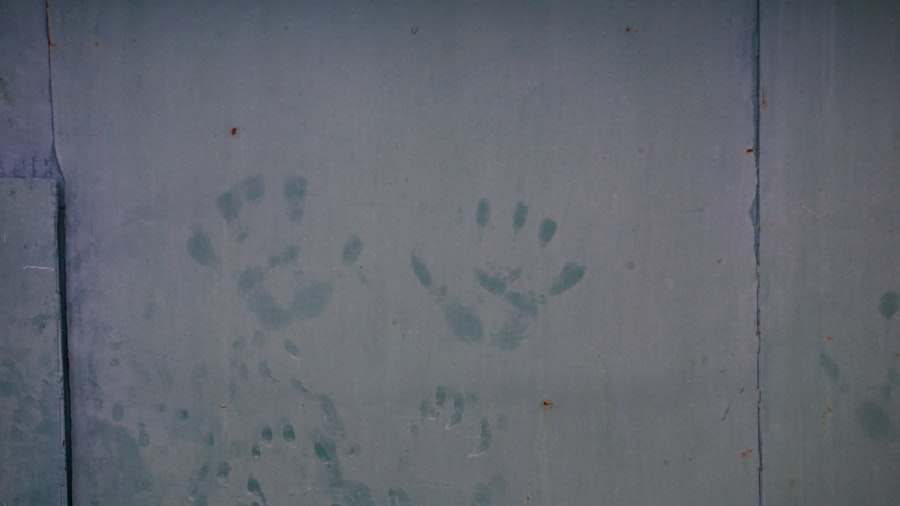
The journey of a fingerprint from the crime scene to the courtroom is a transformation from a trace of evidence to a powerful narrative. It’s where the unseen becomes seen and the ambiguous becomes definitive, or at least, highly instructive.
Presenting Expert Testimony: The Fingerprint Examiner as Witness
When a case goes to trial, my role shifts from the laboratory to the witness stand. This is where I translate the scientific findings into language that a judge and jury can understand.
Explaining the Science to Laypersons
I strive to demystify the process, using analogies and clear explanations to convey the significance of the evidence. I might compare the unique arrangement of minutiae to the specific combination of vowels and consonants in a unique word, or the precise layout of a city’s streets. The goal is to educate without overwhelming, to build confidence in the scientific underpinnings of my conclusions.
The Weight of the Evidence: Beyond Reasonable Doubt
When an identification is made, the presented fingerprint evidence can be a crucial piece of the puzzle for the prosecution, often helping to establish guilt beyond a reasonable doubt. Conversely, an exclusion can be equally vital, clearing a suspect and redirecting the investigation. The impact on a legal showdown can be immense; a single fingerprint can be the thread that unravels a complex case, or the shield that protects an innocent reputation.
Challenges and Considerations: Navigating the Nuances
While powerful, fingerprint evidence is not infallible. There are inherent challenges and considerations that I, as an examiner, must always be mindful of.
The “Black Art” vs. Scientific Rigor
Historically, fingerprint identification was sometimes referred to as a “black art” due to the reliance on the examiner’s experience. However, through the establishment of standardized methodologies like ACE-V and ongoing research into the science of friction ridge analysis, the field has moved towards greater scientific rigor. The goal is to move away from subjective pronouncements and towards objective, verifiable conclusions.
The Issue of Human Error
Despite robust protocols, human error can still occur. This is why verification is so crucial. Examiners are highly trained professionals, but they are also human. Vigilance and adherence to strict protocols are paramount to minimize the risk of misidentification. The legal system itself is designed with checks and balances to account for potential human error in any field of evidence.
The Limitations of Latent Prints
It’s important to acknowledge that not all latent prints are of sufficient quality for identification. Smudged prints, prints deposited on uneven surfaces, or prints that have been degraded by environmental factors can make definitive conclusions impossible. In such cases, I report an inconclusive result, which is a scientifically valid and honest assessment.
Emerging Technologies and the Future of Fingerprint Forensics

The field of forensic fingerprint analysis is not static. It is a dynamic discipline, constantly evolving with advancements in technology that promise to enhance accuracy, efficiency, and our understanding of friction ridge detail.
Digital Databases and Algorithmic Sleuthing
The advent of digital fingerprint databases has revolutionized fingerprint searching. Systems like the FBI’s Next Generation Identification (NGI) system allow for rapid searching of millions of fingerprints, a process that was once painstakingly manual. Algorithms are becoming increasingly sophisticated in their ability to locate and match fingerprints, though human verification remains essential for final identification.
The Role of Artificial Intelligence
Artificial intelligence (AI) is beginning to play a more prominent role in image processing and pattern recognition within forensic science. While AI cannot currently make definitive identifications on its own, it can assist examiners by rapidly pre-screening large datasets and highlighting potential matches for further human review. This can significantly expedite the search process.
Advanced Imaging Techniques: Seeing What Was Once Invisible
New imaging techniques are constantly being developed to detect and enhance latent prints, especially those that are faint or on challenging surfaces.
Multispectral Imaging and Beyond
Multispectral imaging systems can capture images of developed prints across multiple wavelengths of light, revealing subtle details that might be missed with traditional lighting. Research is ongoing into even more advanced techniques that can potentially detect prints with even less visible ridge detail.
The Potential for 3D Fingerprinting
While still largely in the research phase, the concept of 3D fingerprinting, which captures the topographical features of the skin rather than just a 2D impression, holds promise for future advancements. This could potentially capture more robust and unique information, making identifications even more reliable.
In a recent legal showdown, the reliability of forensic fingerprint analysis took center stage, raising questions about its admissibility in court. This debate echoes the findings presented in a related article, which explores the evolving standards of forensic evidence and its impact on judicial outcomes. For those interested in delving deeper into this critical issue, the article can be found here: forensic fingerprint analysis. As the legal system grapples with the implications of such evidence, the need for rigorous scientific validation becomes increasingly apparent.
The Moral Compass: Fingerprints and Justice
| Metric | Description | Typical Value/Range | Relevance in Legal Showdown |
|---|---|---|---|
| Fingerprint Match Accuracy | Probability that two fingerprints come from the same individual | 99.9%+ | High accuracy strengthens evidence credibility |
| Number of Minutiae Points Compared | Distinctive features used to compare fingerprints | 12-16 points | More points increase reliability of match |
| False Positive Rate | Chance of incorrectly matching fingerprints | Less than 0.01% | Low rate reduces wrongful conviction risk |
| Fingerprint Collection Method | Technique used to obtain prints (e.g., dusting, lifting) | Varies by case | Proper method ensures print integrity |
| Time Since Print Deposition | Elapsed time between print left and collection | Hours to days | Older prints may degrade, affecting analysis |
| Expert Testimony Presence | Whether a fingerprint expert testifies in court | Yes/No | Expert testimony can clarify evidence validity |
| Chain of Custody Integrity | Documentation of evidence handling | Complete/Incomplete | Ensures evidence has not been tampered with |
Ultimately, my work as a forensic fingerprint examiner is about serving justice. The evidence I meticulously analyze is not merely a scientific curiosity; it is a vital component in the pursuit of truth and fairness.
The Oath of Objectivity: Unwavering Integrity
In the legal arena, impartiality is not just a good practice; it is a fundamental requirement. My oath as an examiner is to report my findings objectively, regardless of how they might impact the prosecution or defense. The goal is to present the scientific facts, allowing the legal process to unfold based on that foundation.
The Responsibility of the Examiner
The responsibility that comes with making a definitive fingerprint identification is immense. A positive identification can lead to a conviction, and conversely, an exclusion can mean the difference between freedom and wrongful imprisonment. This weight of responsibility fuels my commitment to accuracy and vigilance in every analysis I undertake.
Beyond the Lab: The Societal Impact of Fingerprint Evidence
The impact of forensic fingerprint evidence extends far beyond the courtroom. It plays a crucial role in law enforcement’s ability to solve crimes, identify victims, and prevent future offenses.
Deterrence and Prevention
The knowledge that fingerprints can be collected and used as evidence can act as a deterrent to criminal activity. Knowing that an indelible mark can be left behind makes potential offenders more cautious.
The Power of Exoneration
Perhaps as equally important as identifying the guilty is the ability of fingerprint evidence to exonerate the innocent. In cases where someone has been wrongly accused, a clear fingerprint exclusion can be the key to overturning a false accusation and restoring their good name. This is a powerful reminder of the justice that this science can serve.
In conclusion, the journey of forensic fingerprint evidence from a faint trace to a pivotal piece of legal proof is a testament to scientific precision and unwavering dedication. Each ridge, each pore, each minutia is a silent witness, waiting to tell its story. It is my privilege to be the one who listens, and to present that story with clarity and scientific integrity, so that justice may find its rightful path.
FAQs
What is forensic fingerprint analysis?
Forensic fingerprint analysis is the process of examining and comparing fingerprint patterns found at a crime scene with those of suspects or databases to identify individuals involved in criminal activities.
How reliable is fingerprint evidence in legal cases?
Fingerprint evidence is generally considered highly reliable due to the uniqueness of each individual’s fingerprints. However, its accuracy depends on the quality of the prints collected and the expertise of the forensic examiners.
What role do forensic fingerprints play in a legal showdown?
In a legal showdown, forensic fingerprints can serve as critical evidence to link a suspect to a crime scene or exclude individuals, thereby influencing the outcome of trials and verdicts.
Can fingerprint evidence be challenged in court?
Yes, fingerprint evidence can be challenged based on factors such as the method of collection, potential contamination, examiner bias, or the interpretation of the prints, which may affect its admissibility or weight.
What advancements have improved forensic fingerprint techniques?
Advancements such as digital imaging, automated fingerprint identification systems (AFIS), and enhanced chemical methods for developing latent prints have significantly improved the accuracy and efficiency of forensic fingerprint analysis.