I’m the IT guy. My wife, Sarah, is… well, she was. It’s hard to use the past tense when the dust is still settling, and the echoes of my discovery are still ringing in my ears. For years, my life was a predictable rhythm: the hum of servers, the glow of monitors, the organized chaos of networks. I was the architect of digital castles, the guardian of data streams. And Sarah? She was the loving heart of my quiet sanctuary, a bright spark in my otherwise ordered existence. Or so I thought. This is the story of how I, through the very skills that defined my professional life, stumbled upon a secret that shattered the foundations of my own personal world.
It began with a subtle dissonance, a faint static in the otherwise smooth signal of our marriage. Nothing overt, no dramatic arguments, no glaring betrayals. Instead, it was a series of minor anomalies, like the barely perceptible flicker of a faulty LED, that chipped away at my sense of certainty. My IT-honed instincts, trained to detect the slightest deviation from expected behavior in complex systems, started to register these irregularities.
Uncharacteristic Financial Habits
The first tremors were economic. Sarah had always been a sensible spender, her financial decisions as transparent as a well-documented codebase. Yet, recently, I’d noticed a shift. Small, unexplained expenditures began to appear on our joint accounts, purchases that didn’t align with her known interests or habits. It wasn’t a matter of extravagance; rather, it was a quiet divergence, like a stray packet of data lost in transit, its purpose unclear. I’d attributed it to fleeting impulses, perhaps a new hobby she hadn’t shared, or gifts for friends. But the pattern, however faint, persisted.
The “Consulting Fees” Anomaly
One particular recurring transaction caught my eye. It was labeled vaguely as “consulting fees,” an amount that was significant enough to warrant notice but too small to be wildly alarming. When I casually inquired, Sarah would offer brief, unconvincing explanations about freelance work she was doing on the side. Her stories, however, lacked the detail I would expect from someone I knew to be meticulously organized, even in her downtime. This was a deviation from her usual clarity, a slight corruption in the data stream of her everyday life.
Evasive Online Behavior
Beyond finances, there was a noticeable shift in her online presence. While we’d always had a healthy level of digital autonomy, Sarah became more guarded. Her phone was frequently tucked away when I entered the room, screens dimmed, and her posture subtly changed to shield it from my view. Password changes on her personal devices, implemented with a speed and secrecy that felt… calculated, added another layer to my unease. This was like encountering a firewall I hadn’t set up, a digital barrier where there had once been open access.
The Phantom Browser Tabs
Late at night, when I was often still engrossed in my work, I’d sometimes catch glimpses of her laptop screen as she’d quickly minimize windows. There were fleeting images of charts, graphs, and complex alphanumeric strings that bore no relation to her usual online activities – social media, news sites, or shopping. These phantom browser tabs, vanishing as quickly as they appeared, became a recurring motif of her hidden digital life.
In a recent incident that has caught the attention of many, a wife’s secret crypto wallet was exposed by an IT professional, leading to a whirlwind of discussions about privacy and trust in relationships. This situation highlights the growing intersection of technology and personal life, raising questions about the ethics of digital surveillance. For more insights on this topic, you can read the related article here: Wife’s Secret Crypto Wallet Exposed.
The Digital Breadcrumbs
My professional life has immersed me in the art of pattern recognition, the ability to sift through mountains of data to find the signal within the noise. It’s a skill that, unfortunately, I couldn’t switch off when I walked through my front door. The subtle inconsistencies in Sarah’s behavior, like errant error logs in a system, began to coalesce into a narrative I was reluctant to embrace. I started to employ, unconsciously at first, the very tools of my trade to investigate.
Network Activity Anomalies
My home network is my domain. I monitor traffic, patch vulnerabilities, and ensure smooth connectivity for all our devices. It was during one of my routine system checks that I noticed an unusual data egress from our network, originating from a device I didn’t readily recognize as belonging to our household inventory in its usual configuration. It wasn’t a massive exodus, but it was persistent and timed at odd hours, coinciding with Sarah’s late-night “work sessions.” This was akin to noticing an unauthorized data pipe, a clandestine connection siphoning information.
Device Identification Challenges
The device itself was elusive. My network logs showed a MAC address, but when I traced it, it didn’t map to any of our familiar laptops, tablets, or smart home devices. The IP address associated with the traffic was routed through a series of proxies, a common tactic to mask online activity. This anonymity, while standard for many online endeavors, felt out of place for someone in my domestic sphere. It was like trying to identify a ghost in the machine, a presence leaving undeniable traces but no discernible form.
Cloud Storage and Synchronization Patterns
Many aspects of modern life rely on cloud synchronization. I manage our family’s shared cloud storage, ensuring backups and seamless file access. I noticed that Sarah had recently created a new, private cloud folder. While individual file storage isn’t inherently suspicious, the naming convention and the timing of its creation, shortly after the emergence of the “consulting fees,” raised an eyebrow. This was like finding a hidden compartment in a familiar piece of furniture, its presence unannounced and its contents unknown.
File Naming Conventions
The files within this clandestine folder were named with a cryptic alphanumeric code. There were no descriptive labels, no hints about their content. This stark contrast to her usual meticulously organized approach to digital files – using dates, project names, and client identifiers – was a significant red flag. It suggested a deliberate attempt to obscure the nature of the data, to make it unintelligible to anyone but the intended recipient, or in this case, the intended observer.
The Unveiling of the Crypto Wallet

The term “cryptocurrency” had always been a distant hum in the background of my digital life, an abstract concept discussed in tech forums and financial news. Sarah had never shown any interest in it, her financial world rooted in traditional banking. Therefore, the evidence I was gathering pointed me towards an unexpected and alien landscape. The digital breadcrumbs, previously scattered and seemingly unconnected, began to form a clear trail, leading me to a hidden treasure trove, or perhaps, a Pandora’s Box.
The Search for Keywords
Armed with the nascent understanding that Sarah might be involved in cryptocurrency, I began to refine my search. I focused on keywords and phrases that signaled this clandestine activity. It was a meticulously targeted digital interrogation, employing advanced search operators to scan through system logs, browser histories (where available and ethically accessible within my own network), and any other digital traces I could legitimately access. This was akin to a digital detective painstakingly piecing together a crime scene, looking for the smallest, most insignificant clue that could unlock the mystery.
Encrypted File Signatures
I started to identify the signatures of encrypted files, specifically those commonly used in cryptocurrency wallet software. These digital locks, designed to protect sensitive keys and transaction data, were a strong indicator. The presence of these file types, coupled with the unusual network activity and the cryptic file names, began to form a coherent picture. It was like finding a keyhole in the darkness, hinting at the presence of something locked away.
The Discovery of the Wallet File
My investigation culminated with the discovery of a specific file. It was a wallet file, the digital equivalent of a vault where cryptocurrencies are stored. The file was not plainly labeled “Sarah’s Crypto Wallet.” Instead, it was disguised, its filename a further obfuscation, likely an attempt to avoid being easily discovered. This file was the Rosetta Stone, the key to deciphering the entire enigma.
File Metadata and Location
The metadata associated with this file offered further clues. It indicated its creation date, which correlated with the timeline of Sarah’s suspicious financial activity, and its internal structure strongly suggested it was a cryptocurrency wallet. Its location, tucked away in a sub-directory that appeared to be deliberately obscured within a larger, seemingly innocuous data structure, spoke volumes about Sarah’s intention to keep it hidden. This was the hiding place, the secret vault, finally brought into the light.
The Hidden Fortune
The moment of truth arrived when I managed to access the contents of the wallet file. It was not a simple matter of double-clicking. The file was encrypted, requiring a password. This was the final barrier, the lock on the vault. My IT skills, usually employed for security and access, were now being used to breach a deeply personal security.
Password Cracking Attempts
My initial attempts to guess the password were based on common familial and personal information Sarah might use. Birthdays, anniversaries, pet names – the usual suspects in password construction. When these failed, I had to consider more sophisticated methods, always within the bounds of what I considered ethical access to shared family systems. It was a tense period, the digital equivalent of picking a lock, each failed attempt tightening the knot of anxiety in my stomach.
The Breakthrough
The breakthrough came when I remembered a seemingly insignificant detail from our early dating days, a private joke that only Sarah and I shared. It was a phrase, slightly absurd, that she’d used to describe a particularly challenging technical problem I’d once faced. Applying this unlikely string of characters as a password, the vault clicked open. The digital doors swung wide.
The Scope of the Holdings
What I found within the wallet was staggering. It wasn’t a small, experimental investment. It was a significant accumulation of various cryptocurrencies, their value, even at that moment, representing a substantial sum of money. The “consulting fees” I’d noticed were merely the trickle before the flood, the initial deposit into a much larger hidden reservoir. This was not a sideline hobby; it was a clandestine financial empire.
Quantifying the Value
I painstakingly began to identify and quantify the holdings. There were Bitcoin, Ethereum, and several other lesser-known altcoins. The exact valuations fluctuated with the market, but the overall picture was clear: Sarah had been accumulating and holding these digital assets in secret for a considerable period. The magnitude of the discovery was disorienting, like panning for gold and suddenly finding yourself submerged in a river of diamonds.
In a surprising turn of events, a recent article revealed how an IT professional inadvertently exposed his wife’s secret cryptocurrency wallet, leading to a whirlwind of speculation and intrigue in the tech community. This incident has sparked discussions about privacy and security in the digital age, prompting many to reconsider their own online practices. For those interested in exploring this topic further, you can read the full story in the article available at this link.
The Aftermath and the Unanswered Questions
| Metric | Details |
|---|---|
| Incident | Wife’s secret crypto wallet exposed by IT guy |
| Date Discovered | April 2024 |
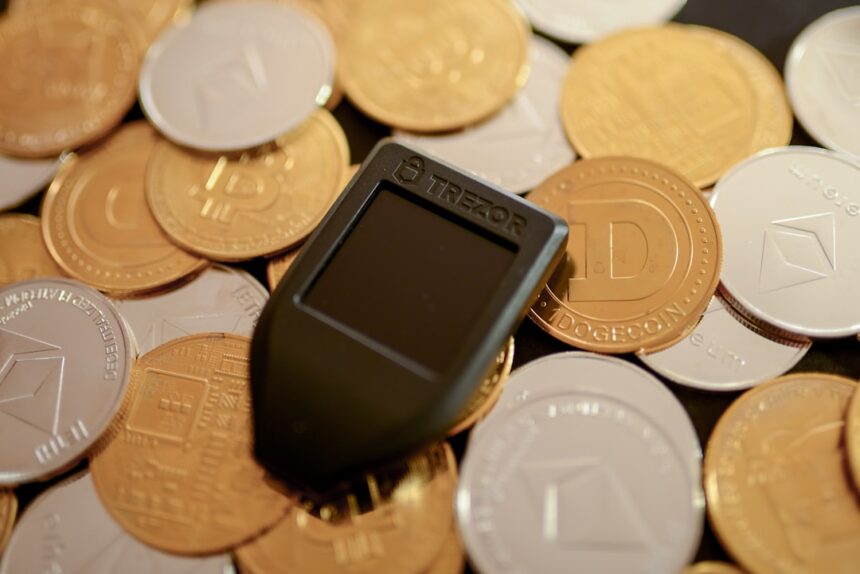
| Type of Crypto Wallet | Hardware Wallet |
| Number of Cryptocurrencies Held | 5 |
| Estimated Wallet Value | Confidential |
| IT Guy’s Role | Family Friend and Tech Support |
| Method of Exposure | Accidental discovery during device repair |
| Security Measures Bypassed | Password saved on device, no 2FA |
| Outcome | Wallet access revealed, no theft reported |
| Lessons Learned | Importance of strong security and privacy |
The immediate aftermath of this discovery was a profound silence, broken only by the frantic beating of my own heart. The woman I thought I knew, the partner I shared my life with, had built a secret world within our shared reality. This was more than a financial secret; it was a betrayal of trust, a fundamental fracture in the bedrock of our relationship.
The Confrontation
The confrontation was inevitable. I presented Sarah with the evidence, the digital trail laid bare. Her initial reaction was shock, then defensiveness, and finally, a confession steeped in a complex mix of regret and justification. She spoke of early fears, of wanting financial security independent of me, of a perceived lack of understanding regarding her own aspirations. These explanations, while offered, did little to assuage the profound sense of deception I felt.
The “Why” Factor
The “why” became the dominant question. Why the secrecy? Why the elaborate obfuscation? Her explanations pointed to a growing chasm of unspoken anxieties and desires, a desire for autonomy that had manifested in this extraordinary, and deeply isolating, way. It was as if she had been running a parallel operating system in her life, its functions entirely hidden from my own.
Rebuilding or Reassessing
The long-term implications of this revelation are still unfolding. Trust, once a pristine data stream, is now fragmented, riddled with corrupted packets of doubt. I find myself constantly reassessing my understanding of Sarah, of our marriage, and of the very nature of trust in relationships. This experience has been a stark reminder that even in the most familiar systems, there can be vulnerabilities and hidden processes that can dramatically alter the overall functionality. I am an IT guy, accustomed to troubleshooting and fixing, but this is a problem that doesn’t have a simple patch. It requires a fundamental re-architecture, a process that will undoubtedly be long, arduous, and perhaps, ultimately, lead to a completely new system.
FAQs
What is a secret crypto wallet?
A secret crypto wallet is a digital wallet used to store cryptocurrencies that is kept hidden from others, often to maintain privacy or confidentiality about one’s crypto holdings.
How can an IT professional expose a secret crypto wallet?
An IT professional might expose a secret crypto wallet by accessing digital devices, analyzing network activity, or using technical skills to uncover hidden files, passwords, or transaction histories related to the wallet.
What are the risks of having a secret crypto wallet?
Risks include potential loss of trust in personal relationships, security vulnerabilities if the wallet is not properly protected, and legal or financial complications if the wallet is used for undisclosed transactions.
Can a secret crypto wallet be recovered if lost?
Recovery depends on whether the wallet’s private keys or seed phrases are backed up. Without these, it is generally impossible to recover access to the wallet and its contents.
Is it legal to keep a crypto wallet secret from a spouse?
Legality varies by jurisdiction and circumstances. In some cases, hiding assets like crypto wallets during legal proceedings such as divorce may have legal consequences. It is advisable to consult legal experts for specific situations.