
I used to think confidence was something you were born with, a genetic lottery where some people just got the good genes. And as for being shocked? Well, that seemed more a reaction to external stimuli, a reflex rather than a skill. I was wrong on both counts. Over time, through observation, experimentation, and frankly, a good deal of awkwardness, I’ve come to understand that both confidence and shocked facial expressions are, to a significant degree, art forms. They are skills that can be honed, mastered, and deployed with purpose. This isn’t about performative fakery; it’s about internal states manifesting in tangible, controllable ways that can profoundly impact perception and interaction.
Before I even thought about projecting confidence or feigning shock, I had to dissect the physical components. Our faces are incredibly complex, a network of muscles governed by subconscious and conscious control. Grasping this basic anatomy is the first step to gaining conscious command over them.
The Brow: A Universal Indicator
The brow is a primary influencer of emotion. A raised brow can signal surprise, curiosity, or even apprehension. Lowered brows, conversely, often indicate anger, concentration, or suspicion.
The Astonished Brow: A Full Ascent
When I first tried to look shocked, my instinct was to furrow my brow in confusion. What I learned is that genuine shock often involves an unfurrowing and a raising of the entire brow. The eyebrows arch upwards, creating a widening of the eyes. This isn’t a gentle lift; it’s a distinct, almost sudden upward movement. I practiced this in the mirror, focusing on isolating the muscles that control the frontalis muscle. It felt unnatural at first, like trying to wiggle my ears. But with repetition, I found I could achieve a convincing arch.
The Skeptical Brow: A Subtle Dip
Confidence, on the other hand, often involves a more subtle nuance. The skeptical eyebrow, a slight dip in the center with the outer edges remaining relatively neutral, can convey a thoughtful, perhaps even discerning, stance. This isn’t about doubt, but about measured consideration. It’s the look that says, “I’m listening, but not necessarily agreeing yet.” Mastering this involves controlling the corrugator supercilii muscles, which are responsible for that downward pull between the brows.
The Eyes: Windows to Controllable Expression
The eyes are often called the windows to the soul, and for good reason. They convey a wealth of information, and their manipulation is crucial for both confidence and shock.
The Widening Effect of Surprise
Shock, in its most overt form, involves dilation of the pupils and a widening of the eyes. While pupil dilation is beyond conscious control, the appearance of widened eyes can be achieved through muscle engagement. I discovered that extending the upper eyelid slightly, while maintaining a relaxed lower lid, creates a more open, surprised gaze. This is distinct from simply blinking. It’s about what the Egyptians called the uraeus – the cobra’s flare. The key is to avoid scrunching the surrounding muscles, which can telegraph a forced expression.
The Steady Gaze of Confidence
Confidence, in contrast, often manifests as a steady, unwavering gaze. This doesn’t mean staring someone down aggressively. It means maintaining eye contact without darting away, conveying attentiveness and self-assurance. I practiced holding my gaze in the mirror for extended periods, focusing on a point slightly above my eye level to avoid appearing confrontational. The goal is to convey that I am present, engaged, and comfortable with the interaction.
The Mouth: Subtlety and Impact
The mouth plays a significant role, from a slight upturn of the lips to a gaping maw. Its role in conveying these expressions is often more about what isn’t doing as much as what it is doing.
The Vacant Agapē of Shock
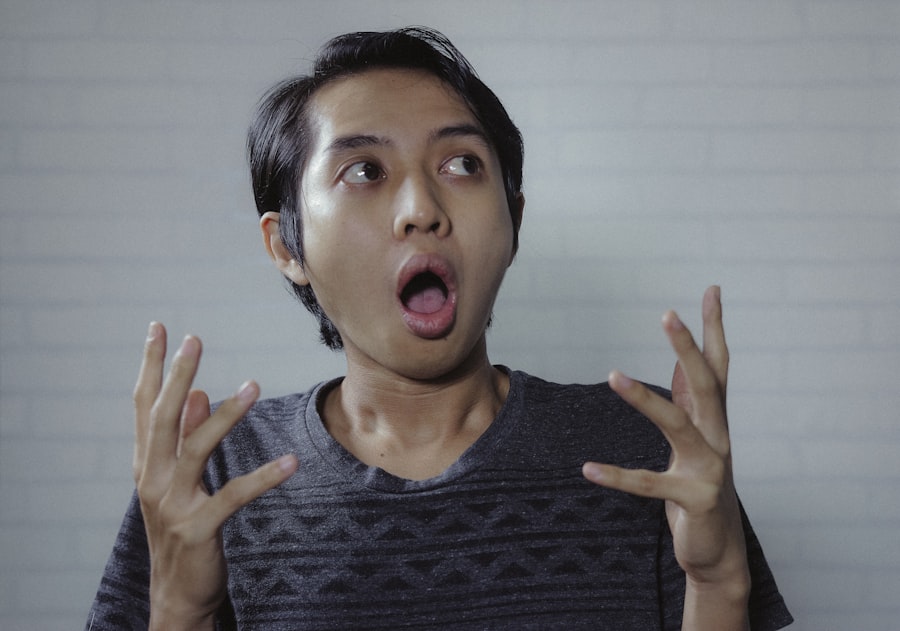
A truly shocked expression can involve a slightly parted mouth, almost a silent “oh.” This is often referred to as an agapē smile, but without the positive connotation of joy. It’s a mouth that has simply dropped open, a physical manifestation of being momentarily speechless. The key is to keep the lips relaxed, not pulled back in a grimace. I found that practicing a relaxed jaw drop while exaggerating the brow and eye movement helped marry the elements effectively. It’s an almost passive reaction, but the lack of active muscular engagement is crucial.
The Controlled Smile of Authority
Confidence doesn’t always require a smile. In fact, a forced smile can undermine it. However, a subtle, knowing smile can be incredibly effective. It’s a small upturn of the lips that suggests amusement, understanding, or a quiet sense of superiority. This isn’t a grin; it’s a nuanced gesture. I learned to activate the zygomaticus major muscles just enough to create a slight lift, rather than a full smile. It’s about control and knowing when to deploy it.
In exploring the nuances of human emotions, a fascinating article discusses the impact of focused facial expressions on perceptions of confidence and shock. The piece delves into how specific facial cues can influence social interactions and the interpretations of one’s emotional state. For a deeper understanding of this topic, you can read the article here: Focused Facial Expressions of Confidence and Shock.
Cultivating the Inner State of Confidence
No amount of practiced muscle movement will convincingly convey confidence if the internal state isn’t there. The physical is a manifestation, not a cause, of true confidence. I had to work on my internal landscape.
The Power of Preparation
A significant portion of my own self-assurance in any given situation stems from knowing I’ve done my homework. When I’m prepared for a meeting, a presentation, or even a difficult conversation, I walk in with a fundamental belief in my ability to handle it. This preparation isn’t just about accumulating facts; it’s about anticipating potential challenges and developing strategies to address them.
Research and Rehearsal
I learned early on that diving deep into a topic before engaging with others builds a reservoir of knowledge that acts as a buffer against uncertainty. This applies to professional settings, social interactions, and even creative endeavors. Rehearsing my points, whether mentally or aloud, reinforces my understanding and allows me to articulate my thoughts more fluidly.
Mental Rehearsal of Success
Beyond factual preparation, I began to engage in mental rehearsal of positive outcomes. This isn’t wishful thinking; it’s visualizing myself navigating the situation with poise and achieving a desired result. This practice helps to shift my subconscious towards a more empowered mindset.
Embracing Imperfection and Learning from Mistakes
A truly confident person isn’t someone who never makes mistakes; they are someone who doesn’t let mistakes define them. I used to fear failure, and that fear was a constant drain on my self-assurance.
Reframing Errors as Feedback
The shift came when I started viewing mistakes not as indictments of my worth, but as valuable data points. Each misstep is an opportunity to learn and adjust my approach. This perspective significantly reduces the anxiety associated with potential errors.
The Growth Mindset in Action
Adopting a growth mindset – the belief that my abilities can be developed through dedication and hard work – was transformative. It allowed me to see challenges as opportunities for growth rather than insurmountable obstacles. This internal resilience is a cornerstone of genuine confidence.
Body Language as an External Anchor
While the inner state is paramount, outward body language can also serve as an anchor, reinforcing and sustaining confidence.
Posture and Presence
Standing tall, with my shoulders back and my head held high, physically communicates a sense of self-possession. This isn’t about arrogance; it’s about occupying my space with an unhesitating presence. I experimented with different stances, finding what felt both comfortable and commanding.
Controlled Movements
Excessive fidgeting or nervous gestures can betray a lack of inner calm. I worked on consciously minimizing these, opting for more deliberate and purposeful movements. Even the way I hold my hands can convey a sense of groundedness.
Mastering the Nuances of Shock: Beyond the Gasp

Shock is often portrayed as a momentary, involuntary reaction. However, there are many shades of shock, and learning to subtly deploy them can be exceptionally effective.
The Element of Surprise: Timing and Context
The most impactful expressions of shock are those that are unexpected and appropriate to the situation. A shocked look when it’s unwarranted can seem bizarre or even disingenuous.
The Calculated Pause
Before reacting with shock, a slight, almost imperceptible pause can amplify the effect. It’s as if the mind is momentarily catching up to what the eyes are seeing. This pause creates a brief moment of dramatic tension.
Adapting to the Situation
The intensity of the shocked expression should always be calibrated to the context. A minor surprise warrants a subtle widening of the eyes, while a truly seismic event calls for a more dramatic, open-mouthed reaction. I learned to observe the reactions of others and use them as a gauge.
The Spectrum of Astonishment: From Mild Surprise to Utter Disbelief
Not all shock is created equal. Understanding the different levels allows for more precise expression.
The “Oh, Really?” Moment
This is a mild form of shock, often laced with a hint of curiosity or skepticism. It can be conveyed with a slight raising of the eyebrows, a subtle widening of the eyes, and perhaps a faint tilt of the head. This is less about being stunned and more about being intrigued.
The “I Can’t Believe My Eyes” Gape
This is the more classic shocked expression, involving a more pronounced widening of the eyes, a noticeable arch of the brow, and a parted mouth. The key here is to avoid looking comical; the expression should convey genuine astonishment.
The “Speechless Wonder”
This is arguably the most profound form of shock, where the individual is so overwhelmed they are rendered momentarily speechless. The eyes are wide, the mouth is open, but there’s an almost serene stillness about the face, as if the mind is grappling with something profound. I found this expression often involves a softening of the facial muscles, a release of tension that paradoxically conveys a powerful emotional state.
The Role of Microexpressions in Shock
Even in the most overt expressions of shock, fleeting microexpressions can betray underlying emotions. Learning to recognize and control these can refine the overall effect.
The Initial Flicker
Often, before the full shocked expression registers, there’s a rapid flicker of surprise, fear, or even confusion. This microexpression is involuntary, but being aware of its existence can help in presenting a more unified and convincing presentation of shock.
Suppressed Incredulity
Sometimes, the shock is so profound that there’s an attempt to suppress it. This can manifest as a tightening around the eyes or a slight clenching of the jaw, even as the mouth falls open. Recognizing these subtle tells can inform how to present a more controlled yet still visibly impacted reaction.
Integrating Confidence and Shock: The Art of Contrasting Expressions
The real mastery lies in learning to integrate these seemingly opposing expressions. This isn’t about flipping a switch; it’s about understanding how one can inform and enhance the other.
Confidence as a Backdrop for Surprise
A confident individual can often absorb and process surprising information more effectively. Their baseline of self-assurance allows them to react to shock without losing their composure entirely.
The “Collected Surprise”
This is where the individual registers shock, but their underlying confidence prevents them from appearing flustered. They might widen their eyes, but their posture remains stable, and their gaze, though momentarily surprised, remains focused. I often see this in leaders who are presented with unexpected news. They acknowledge the surprise, but their fundamental solidity remains.
The “Curious Shock”
When confidence meets surprise, it can breed a sense of intellectual curiosity. The individual is surprised, but their confidence in their ability to understand or address the situation leads to a look of intrigued astonishment. This is where a raised eyebrow might meet a slightly widened eye, a subtle dance between being taken aback and wanting to explore further.
Shock as a Catalyst for Reasserting Confidence
Conversely, a moment of shock can sometimes be used to highlight subsequent confidence. A brief, controlled show of surprise can make the return to a composed demeanor even more impactful.
The “Recovered Surprise”
This is where someone displays a clear moment of shock, but then quickly regains their composure, perhaps with a knowing smile or a decisive nod. The initial shock serves to emphasize the strength of their recovery and their underlying resilience. It’s a strategic vulnerability.
The “Surprised but Unwavering”
In high-stakes situations, one might experience a genuine shock, but their training or innate resolve means they don’t falter. Their expression of shock might be fleeting, almost a flicker, before their confident demeanor reasserts itself. This conveys immense inner strength – the ability to be impacted momentarily but not overcome.
Recent studies have highlighted the impact of focused facial expressions on our perceptions of confidence and shock, revealing how subtle changes in our expressions can significantly influence social interactions. For a deeper understanding of this fascinating topic, you can explore a related article that delves into the psychology behind these expressions and their effects on communication. This insightful piece can be found here, where you will discover more about the nuances of nonverbal cues and their implications in various contexts.
Practical Application and Practice Techniques
| Facial Expression | Confidence Level | Shock Level |
|---|---|---|
| Focused | High | Low |
Like any art form, mastering these facial expressions requires deliberate practice and application in real-world scenarios.
Mirror Work: The Foundation of Self-Observation
My practice began in front of a mirror. It’s non-judgmental and allows for immediate feedback.
Isolating Muscle Groups
I would spend time focusing on individual muscle groups, learning to contract and relax them independently. This is like an actor learning to control their vocal cords. By isolating these movements, I gained finer control over the resulting expressions.
Combining Expressions
Once I had a grasp on individual movements, I began combining them. I would try to transition smoothly from a confident posture to a surprised expression, and then back again. The key is to avoid jerky, unnatural transitions.
Role-Playing and Scenario Practice
The mirror is a controlled environment, but real-world application is where the true learning occurs.
Practicing with Friends or Colleagues
I found that asking trusted friends or colleagues to gauge my expressions in various scenarios was invaluable. Their candid feedback helped me identify when my expressions were convincing and when they appeared artificial.
Analyzing Media and Performance
I became a keen observer of how actors and public figures utilize facial expressions. I’d pause scenes in movies or rewatch interviews, analyzing their brow movements, eye engagement, and mouth nuances. This provided a wealth of examples, both positive and negative.
Digital Recording for Objective Assessment
Seeing myself on video can be far more revealing than looking in a mirror.
Recording Practice Sessions
I began recording my practice sessions, both in front of the mirror and during role-playing. This allowed me to objectively assess my technique, identify awkward habits, and track my progress over time.
Analyzing Transitions and Authenticity
When reviewing recordings, I focused on the naturalness of my transitions between expressions. I also looked for any tell-tale signs of forced emotion or insincerity. The goal is to make the expression feel like an organic response, even if it’s being consciously controlled.
Mastering confidence and shocked facial expressions isn’t about becoming a master manipulator or a glib actor. It’s about gaining a deeper understanding of the intricate connection between our internal states and our physical manifestations. It’s about cultivating a more potent form of self-expression, one that allows for greater clarity in communication, enhanced presence in interactions, and a more nuanced understanding of the human face as a canvas of emotion and intent. It’s a continuous process, a journey of refinement, but one that, in my experience, is immeasurably rewarding.
FAQs
What are focused facial expressions of confidence and shock?
Focused facial expressions of confidence and shock are specific facial movements and gestures that convey a strong sense of self-assurance or surprise. These expressions can include a raised eyebrow, a wide-eyed look, a firm jawline, and a straight posture for confidence, while a dropped jaw, widened eyes, and a tense expression can convey shock.
How can focused facial expressions of confidence and shock be identified?
Focused facial expressions of confidence and shock can be identified through the specific muscle movements and changes in facial features. For example, a confident expression may involve a slight smile, raised chin, and direct eye contact, while a shocked expression may involve widened eyes, dropped jaw, and a tense or startled look.
What is the significance of focused facial expressions of confidence and shock?
Focused facial expressions of confidence and shock play a crucial role in nonverbal communication, as they can convey strong emotions and attitudes without the need for words. These expressions can influence how others perceive and respond to an individual, and can also impact social interactions and relationships.
Can focused facial expressions of confidence and shock be controlled or manipulated?
Yes, to some extent, focused facial expressions of confidence and shock can be controlled or manipulated through conscious effort and practice. Individuals can learn to adjust their facial expressions to convey confidence or shock in different situations, but genuine emotions may still be difficult to completely conceal.
How do focused facial expressions of confidence and shock impact interpersonal communication?
Focused facial expressions of confidence and shock can significantly impact interpersonal communication by influencing how others interpret and respond to an individual’s emotions and attitudes. These expressions can affect the overall dynamics of a conversation, as well as the perception of the individual’s credibility and trustworthiness.