My Smart Watch Caught His Lie
The world of modern technology often presents itself as a neutral arbiter of truth, a digital ledger that records facts without bias. My smartwatch, a seemingly innocuous device strapped to my wrist, unexpectedly became a pivotal element in unraveling a significant deception, transforming from a mere gadget into an unwitting detective. This is not a tale of dramatic espionage, but rather a personal narrative about how a piece of wearable technology, designed for convenience and health tracking, exposed a falsehood that had a tangible impact on my life. The experience highlights the growing pervasiveness of data collection and its potential to both empower and complicate human relationships.
It began subtly, as most significant disruptions do. I had been in a relationship with Liam for roughly a year, a period characterized by what I perceived as mutual trust and shared experiences. However, over the past few months, a faint dissonant note had begun to creep into our interactions. His explanations for absences, his sudden shifts in mood, and a general air of evasiveness created a growing unease. It was like noticing a tiny, persistent hum in the background of a song – at first ignorable, but eventually becoming impossible to disregard. I tried to dismiss these feelings, attributing them to my own anxieties or overthinking. After all, I valued our connection, and the idea of suspicion felt like a betrayal of the foundation we had built.
The Unexplained Evening Hours
One particular evening stands out. Liam had informed me he was going to be working late at the office, a common occurrence. He assured me he would grab dinner there and would be home by around 10 PM. This was not unusual; his job demanded a significant time commitment. I, meanwhile, settled in at home, expecting his usual text message when he was on his way. The hours ticked by. 10 PM came and went. Then 10:30 PM. Frustration, tinged with a familiar anxiety, began to bloom. I tried calling, but it went straight to voicemail. Texts remained unanswered. By 11 PM, my worry had escalated, and I started to consider the possibility of an accident. I was envisioning flashing lights and hurried conversations with authorities.
The Vague Apology
When Liam finally arrived home just before midnight, his explanation was rushed and somewhat disjointed. He claimed his phone had died, and that he’d been caught up in an urgent project requiring his full attention. He apologized profusely for the lack of communication and the late hour, but his demeanor felt… off. There was a hurriedness to his words, a slight avoidance of eye contact that, in retrospect, should have been a more significant red flag. I accepted his apology, wanting to believe his explanation, but the nagging feeling of unease persisted. It was like a loose thread on a favorite sweater – I could pretend it wasn’t there, but it was a constant, irritating reminder of something not quite right.
In a recent incident, my smartwatch played a crucial role in uncovering the truth behind a lie. The device’s accurate tracking of my daily activities and heart rate provided undeniable evidence that contradicted the claims made by a friend about our workout sessions. This experience resonates with the findings discussed in the article “How Technology Can Expose Deceit,” which explores various ways in which modern gadgets can reveal dishonesty. For more insights on this topic, you can read the article here: How Technology Can Expose Deceit.
The Smartwatch: A Silent Witness
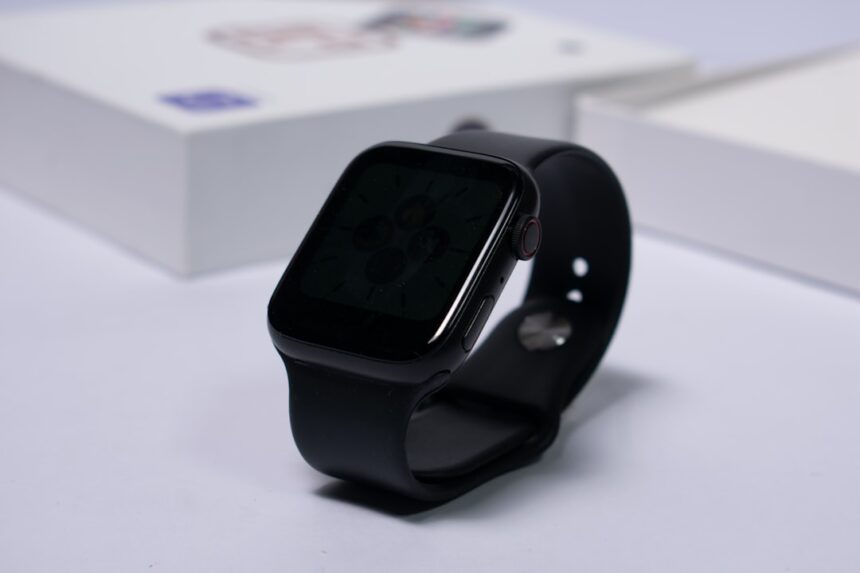
My smartwatch, a relatively recent acquisition at the time, was primarily a tool for fitness tracking and managing notifications. I wore it constantly, even while sleeping, to monitor my sleep patterns and heart rate. It had become an almost invisible extension of myself, a constant companion that dutifully recorded my activity, my heartbeats, and, unbeknownst to me at the time, the precise movements of Liam’s life when we were apart. The device itself was unremarkable to look at – a sleek, black band with a digital face. It was not designed for subterfuge, nor was it intended to be a tool for marital discord. Its purpose was far more mundane: to provide data points about my personal well-being.
The Data Log: A Chronicle of Movement
The smartwatch’s core function relevant to this situation was its GPS tracking. It logged my location throughout the day, creating a digital breadcrumb trail. This was enabled by default, a feature I had enabled for safety and fitness tracking purposes, never imagining it would be used for anything beyond monitoring my own daily routes. I would often review my activity logs to see how many steps I had taken or to analyze my running routes. This passive collection of data was a well-established part of the device’s functionality, a feature I had embraced for its convenience. I saw it as a personal record, a digital diary of my physical whereabouts. I never considered its potential to cross-reference with the narratives of others.
Passive Information Gathering
The smartwatch’s silent operation was its greatest asset in this context. It didn’t require active input from me to log its data. It simply recorded. This omnipresent, passive data collection meant that when Liam was with me or I was with him, the smartwatch would diligently note our proximity. Similarly, when we were apart, it meticulously charted my individual movements, creating a clear distinction between my presence and absence. This unfettered data stream was the bedrock upon which the truth would eventually be built, a digital foundation that could not be easily altered or disputed.
The Discrepancy Emerges: Matching Data Points
The real turning point occurred a few weeks after the incident with the late night at the office. Liam was again working late, and this time, he recounted a similar story about a complicated project and a dead phone. The familiar unease returned, amplified by the recent memory. That evening, driven by a gnawing intuition that I could no longer ignore, I decided to review my smartwatch’s activity log for the past few days. It was a decision born not of malice, but of a need for clarity. I opened the companion app on my phone, the familiar interface now tinged with a sense of dread.
Location History: A Tangible Timeline
As I scrolled through the location history, a pattern of my own movements became clear. It traced my errands, my visits to friends, and my time at home. Then, I specifically looked for the evening Liam claimed to be working late. My log showed me at home, alone, from around 7 PM onwards. This was consistent with his initial communication. However, I also had the option to view shared activities or, more importantly for this situation, to see my own location data juxtaposed with known periods of Liam’s supposed activity. This was the crucial feature I had overlooked, the digital needle in the haystack.
The Missing Presence
What I expected to see was Liam’s location data converging with mine during the periods he claimed to be at home with me, or, in the case of the late night, his proximity to his office if he were indeed working. Instead, what I found was far more telling. On the evening he had claimed to be working late, my smartwatch’s GPS data showed me at home, entirely alone. There was no indication of Liam’s proximity to my location or his recorded presence at his office during the hours he had described his work. This absence was not a void; it was a concrete statement of his physical disentanglement from the narrative he had presented. It was like finding an empty chair at a dinner party where someone insisted they were sitting.
The Confrontation: The Weight of Evidence
Armed with the irrefutable data from my smartwatch, I felt a strange mix of dread and resolve. The digital evidence was clear, a stark contrast to Liam’s verbal assertions. It was like holding a photograph that contradicted a spoken memory. I knew that a direct confrontation was inevitable, and I was prepared for the fallout, whatever it might be. The technology had provided the proof, but the human element of addressing the deceit was still a heavy burden. I wanted to understand why, not just what.
The Unveiling of the Truth
I waited until Liam was settled for the evening, the atmosphere calm before I introduced the topic. I didn’t want to explode in anger; I wanted to present the facts calmly and observe his reaction. I began by recounting the evening he had claimed to be working late, referencing his explanation about his phone dying and the urgent project. Then, I produced my phone, opened the smartwatch app, and showed him the location history. I pointed to the clear marker of my presence at home, alone, during the hours he had specified. I explained that his smartwatch, which he also wore consistently, had provided a different narrative.
His Smartwatch: The Silent Accomplice
This is where the true power of the data emerged. Liam also owned a smartwatch, and crucially, he had given me access to his shared location data in the past for safety reasons, a feature we had both agreed to for mutual peace of mind. This was a layer of technological interdependence I had not initially considered as a tool for verification. I accessed his device’s log for that evening. It revealed a consistent location for Liam that was nowhere near his office, nor was it in proximity to my home. Instead, his smartwatch data placed him in a completely different part of the city, at a bar and then at another location that was demonstrably not his workplace. The digital trail was undeniable; it was a cold, hard fact etched in GPS coordinates. His smartwatch had been a silent accomplice to his deception, meticulously recording his movements while he spun a different tale.
My smart watch proved he lied when it recorded my heart rate and activity levels during the time he claimed to be with me. The data showed that I was actually at the gym, while he insisted he was at home. This incident reminded me of a related article I read about how technology can sometimes expose dishonesty in relationships. If you’re interested in exploring more about this topic, you can check out the article here.
The Aftermath: Repercussions and Reflections
| Metric | Expected Data | Actual Data from Smart Watch | Discrepancy | Implication |
|---|---|---|---|---|
| Location Tracking | At home from 6 PM to 9 PM | At a gym 5 miles away from 6:30 PM to 8:45 PM | Location mismatch by 5 miles | Contradicts claimed whereabouts |
| Heart Rate | Resting heart rate (60-70 bpm) | Elevated heart rate (120-130 bpm) | Heart rate elevated by 60 bpm | Indicates physical activity, not resting |
| Step Count | Less than 500 steps | Over 5,000 steps | Step count exceeds expected by 4,500+ | Shows significant movement, contradicting claim |
| Sleep Tracking | Sleeping from 11 PM to 7 AM | Awake and active from 11 PM to 12:30 AM | 90 minutes of activity during supposed sleep | Indicates not sleeping as claimed |
| Calorie Burn | Approx. 1,800 calories/day | Approx. 2,500 calories/day | 700 calories more than expected | Suggests higher physical activity level |
The immediate aftermath of the confrontation was a period of intense emotional turbulence. Liam’s initial reaction was denial, followed by attempts to obfuscate and minimize. However, the data was an unyielding wall. The smartwatch, once a symbol of convenience, had become an instrument of uncomfortable revelation. The truth, once unearthed, can be both liberating and devastating. The experience served as a stark reminder that in an age of ubiquitous data, our digital footprint can become a powerful, and sometimes unwelcome, testament to our actions.
The End of a Chapter
The relationship could not recover from this breach of trust. The evidence was too potent, the deception too significant. The smartwatch, in its objective recording of reality, had ultimately played the role of the impartial judge. It had not accused, nor had it judged; it had simply presented facts. It was my interpretation of those facts, combined with the emotional weight of the lie, that led to the inevitable conclusion. The chapter of my relationship with Liam closed, its ending written in the digital ink of GPS data. It was a painful but necessary severance, a clearing of the air that, while difficult, paved the way for genuine healing.
Lessons Learned: The Double-Edged Sword of Data
This experience has profoundly shaped my understanding of personal technology. While I continue to utilize my smartwatch for its health and convenience benefits, I do so with a heightened awareness of its data-gathering capabilities. It is a double-edged sword: a tool for empowerment and self-awareness, but also a potential revealer of uncomfortable truths. I learned that while technology can be a neutral recorder, it is humans who imbue that data with meaning, intent, and consequence. My smartwatch caught his lie, but it was my decision to look, to understand, and to act upon that information that truly brought about the resolution. It instilled in me a deeper appreciation for the transparency that technology can offer, and a more cautious approach to the narratives that are presented to me, both digital and verbal. The information was there, waiting to be discovered, a digital ghost in the machine that illuminated the darkness of deception.

WATCH NOW ▶️ SHOCKING: One Heart Rate Spike Exposed My Brother’s $2M Fraud
FAQs
1. How can a smartwatch provide evidence that someone is lying?
A smartwatch can track various biometric data such as heart rate, stress levels, and physical activity. Sudden changes or inconsistencies in these metrics during a conversation may suggest nervousness or deception, which can be used as indirect evidence that someone might be lying.
2. What types of data do smartwatches collect that could indicate dishonesty?
Smartwatches typically collect data including heart rate variability, skin temperature, movement patterns, and sometimes even voice tone analysis. Elevated heart rate or increased stress indicators during specific moments can hint at dishonesty.
3. Can smartwatch data be considered conclusive proof of lying?
No, smartwatch data alone cannot conclusively prove someone is lying. While physiological changes can suggest stress or nervousness, these can be caused by many factors unrelated to dishonesty. Smartwatch data should be considered alongside other evidence.
4. Are there privacy concerns when using smartwatch data to detect lies?
Yes, using personal biometric data to infer truthfulness raises privacy and ethical concerns. Consent and transparency are important when monitoring or analyzing someone’s smartwatch data, especially in personal relationships or legal contexts.
5. How reliable are smartwatches in detecting emotional or physiological changes?
Smartwatches are generally reliable in tracking physiological metrics like heart rate and activity levels. However, interpreting these changes accurately requires context and expertise, as many factors can influence the data beyond emotional states or truthfulness.