The crisp white invitations, embossed with a delicate silver filigree, had hinted at a union of elegance and sophistication. They announced the upcoming marriage of Isobel, a brilliant theoretical physicist specializing in quantum optics, and Marcus, a rising star in civil litigation. On paper, it was a match that spoke of harmonious intersections – the ordered beauty of scientific principles meeting the structured labyrinth of the legal world. Little did anyone realize, the wedding, intended as a testament to their shared future, would become a stark arena where the deterministic certainties of optics collided head-on with the fluid, often unpredictable, currents of law.
This narrative, as you will discover, is not one of fairy tales and happily ever afters, at least not in the conventional sense. It’s a story about how differing worldviews, deeply ingrained through years of professional dedication, can manifest in the most unexpected and, frankly, dramatic ways. It’s about the inherent disconnect between the search for objective, verifiable truth and the creation of plausible narratives that sway human judgment. And it’s about me, observing it all, a photographer whose lens was supposed to capture serene moments but instead found itself documenting a brewing storm.
The initial phases of wedding planning typically involve coordinating venue bookings, guest lists, and floral arrangements. However, for Isobel and Marcus, even these seemingly mundane tasks became points of friction, revealing the fundamental chasm between their professional orientations.
The Venue: Precision vs. Persuasion
The choice of venue was an early indicator. Isobel, accustomed to the controlled environments of laboratories, envisioned a location that offered precision and minimal variables. She favored scientific museums or observatories, places where the natural order of the universe was on display and where every element could be meticulously accounted for.
She proposed the annual Starlight Gala, held at the renowned Griffith Observatory. “Imagine, Marcus,” she’d said, her eyes alight, “our vows exchanged under a canopy of real stars, the celestial sphere itself bearing witness. The light pollution, the atmospheric refraction – these are quantifiable elements we can even incorporate into the ceremony’s ambiance, perhaps with a specially designed laser projection.”
Marcus, on the other hand, saw the venue as a stage. His mind immediately went to the grand ballrooms often featured in courtroom dramas, places that exuded gravitas and offered ample space for dramatic entrances and emotional pronouncements. His proposal was the historic Biltmore Hotel. “Think of the acoustics, Izzy,” he’d argued, gesturing expansively. “The sheer presence of the space. We need a venue that commands respect, that whispers permanence and authority. And besides,” he added with a wry smile, “the bar service is impeccable; crucial for appeasing extended family with differing opinions.”
The ensuing discussions were less about aesthetic preference and more about operational philosophy. Isobel’s approach was empirical: “If the lighting is inconsistent, if there’s a risk of unexpected weather affecting the outdoor reception, then the event’s integrity is compromised. We need to mitigate these risks through careful selection of a controlled environment.” Marcus’s counterpoint was rooted in advocacy: “The ‘risk’ is subjective, darling. The Biltmore offers a narrative of established grandeur. We can persuade our guests that this is the perfect setting, regardless of a few ‘unforeseen’ atmospheric phenomena.”
The Guest List: Data Points vs. Defense Witnesses
The guest list, usually a task of familial negotiation, became another battleground. Isobel treated it like a dataset, meticulously categorizing attendees by relationship proximity and potential impact on the event’s overall equilibrium. She prioritized a smaller, more intimate gathering of close friends and family, those who understood the nuances of her work and shared her scientific sensibilities. She was particularly keen on inviting fellow researchers, whose presence would, in her mind, lend an intellectual rigor to the occasion.
Marcus, however, viewed the guest list through the lens of his profession. He saw it as comprised of potential allies, key stakeholders, and, in some cases, individuals who might need to be “managed” or “appeased.” He believed in maximizing attendance, viewing each guest as a potential witness to their commitment, a validator of their union. He was actively recruiting distant relatives he hadn’t seen in years and colleagues whose social capital he deemed beneficial.
“We need Professor Albright there, Izzy,” he’d insisted, referencing a prominent legal scholar. “His endorsement carries weight. And my Uncle Barry, he’s a bit of a loose cannon, but he’s got a knack for bringing people together.”
Isobel’s response was characteristically precise: “Uncle Barry’s ‘knack’ often involves disruptive anecdotes and a tendency to over-consume champagne. From an optics perspective, he introduces a significant source of unpredictable light scattering into the otherwise ordered narrative of the reception.”
Marcus chuckled, unfazed. “And Professor Albright’s ‘endorsement’ is more valuable than Uncle Barry’s potential to derail the toast. It’s about strategic allocation of influence, Izzy. Think of it as jury selection – you want the right kind of people there to shape the perception.”
In the ongoing saga of optics versus law in wedding drama, a fascinating article explores the intricate balance between public perception and legal realities. This piece delves into how couples navigate the complexities of their relationships under the scrutiny of societal expectations, often leading to conflicts that challenge both their personal values and legal obligations. For a deeper understanding of this compelling issue, you can read more in the article found at this link.
The Wedding Ceremony: Light and Shadow
The ceremony itself was where the theoretical divergences began to manifest in tangible, observable ways. The planning became a delicate dance between Isobel’s desire for scientific accuracy and Marcus’s inclination towards dramatic impact.
The Vows: Verifiable Truth vs. Artful Interpretation
The wording of their vows became a significant point of contention. Isobel poured over thesauri, seeking words that were precise, unambiguous, and reflected the immutable nature of their planned commitment. She was concerned with the etymology of each word, its precise denotation, and its absence of polysemy.
She presented him with a draft that read: “I commit to you, a constant in my life, a fixed point around which my future will orbit, my fidelity a predictable wave function, my love a quantifiable energy exchange.”
Marcus, predictably, found this entirely too clinical. He envisioned vows that spoke to soaring emotion, to grand declarations and promises that, while perhaps not scientifically verifiable, carried the weight of deeply felt sentiment.
“‘Quantifiable energy exchange’?” he’d exclaimed, running a hand through his hair. “Izzy, this sounds like a physics lecture. I want to pledge my undying devotion, my fortress of love, the very beating of my heart as testament!”
His own drafted vows were a cascade of metaphors: “My love for you is an unassailable fortress, my commitment a beacon that will never dim, my devotion akin to the unwavering flow of a mighty river, carving its path through the bedrock of time.”
The compromise, after several heated discussions where Isobel tried to explain the concept of Schrödinger’s cat to a legal mind fascinated by the idea of a cat being both alive and dead, was a blend. They agreed to retain some of Isobel’s grounding phrases, but interspersed them with Marcus’s more evocative declarations. The inclusion of the word “forever” was a particular sticking point, with Isobel arguing for a more nuanced phrasing like “for the foreseeable duration of our intertwined existence,” while Marcus championed its absolute, unyielding power. Ultimately, the wedding officiant, a retired judge with a surprisingly good grasp of rhetorical flourish, managed to strike a delicate balance, acknowledging the sentiment while subtly steering clear of absolute temporal claims.
The Processional: Refraction and Resonance
The music for the processional was another area where their differing artistic sensibilities clashed. Isobel desired music that mirrored the precision of light waves – perhaps a minimalist, mathematically structured piece that offered a sense of ordered progression. She found a complex fugue by Bach, which she argued possessed a crystalline perfection of form.
Marcus, however, craved something that evoked emotion, something with a powerful crescendo that would amplify the dramatic tension of Isobel’s entrance. He championed a sweeping orchestral arrangement from a classic film score, renowned for its ability to elicit a visceral response.
“That Bach piece,” he’d said, his brow furrowed, “it’s like watching light bend through a prism. Technically fascinating, yes. But it lacks oomph! We need something that makes the guests feel the moment, that resonates in their very souls.”
Isobel countered, “Resonance is a fascinating phenomenon, Marcus, but it often implies a sympathetic vibration, a susceptibility to external forces. I prefer a composition that stands on its own structural integrity, where the individual notes contribute to a larger, preordained harmony. The Bach fugue is a perfect example of this elegant, self-contained system.”
The logistical challenge of coordinating live musicians who could execute both styles flawlessly added another layer of complexity. The final decision, as it often does in such complex negotiations, involved a compromise: the ceremony began with a subtly structured instrumental piece that Isobel found acceptable, but it built to a more emotionally charged crescendo as she reached the altar, a concession to Marcus’s desire for theatrical impact. The choice of processional music became a microcosm of their relationship: a constant negotiation between absolute clarity and persuasive art.
The Speeches: Evidence and Eloquence
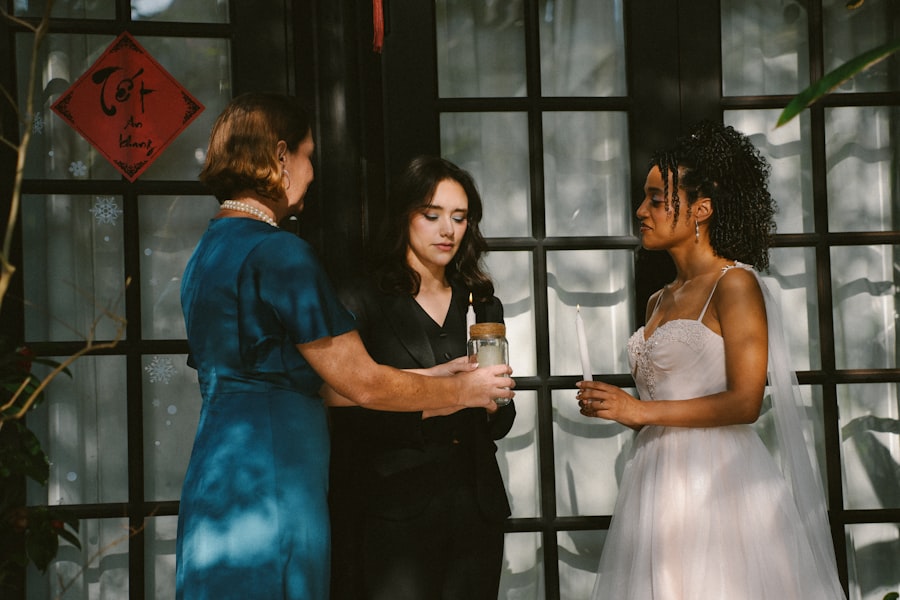
The wedding reception, a space designed for celebration, inadvertently became a platform for their deeply ingrained professional instincts to surface once more, particularly during the traditional wedding speeches.
The Best Man’s Address: Expert Testimony vs. Character Witness
The Best Man, a childhood friend of Marcus, was tasked with delivering a speech that would entertain and honor the groom. Marcus, however, had approached his friend with specific instructions, treating the speech less as a lighthearted roast and more as a carefully constructed argument.
He provided his friend with a series of anecdotes, carefully selected to highlight Marcus’s positive attributes: his unwavering loyalty, his sharp intellect, his success in his legal career. He even suggested a structure that mirrored a legal brief: an opening statement, the presentation of ‘evidence’ (the anecdotes), and a concluding plea for the couple’s happiness.
“Remember,” Marcus had instructed his friend, “focus on my resilience. How I fought for what I believed in. The time I landed that pro bono case, the one everyone thought was unwinnable? That’s the kind of tenacity people need to hear.”
Isobel, observing this, found it amusingly predictable. She imagined Marcus presenting a PowerPoint presentation to his best man, complete with exhibits. She, in contrast, had politely requested her Maid of Honor to simply speak from the heart, sharing genuine memories and observations about Isobel’s personality and her love for Marcus. Her Maid of Honor, a gentle soul who worked in early childhood education, was given no specific talking points beyond “share a warm memory.”
The Best Man’s speech, when delivered, was indeed effective, albeit with a slight undertone of legal advocacy. He painted Marcus as a man who, like a seasoned litigator, always found a way to win, both in the courtroom and in life. He presented a compelling case for Marcus’s worthiness as a partner, using anecdotes as his supporting evidence. Isobel found herself analyzing the rhetorical devices employed, recognizing the persuasive techniques at play. She appreciated the skill, but it still felt like a performance, a carefully curated narrative rather than a spontaneous outpouring of affection.
The Father of the Bride’s Toast: Scientific Rigor vs. Sentimental Legacy
Isobel’s father, a distinguished physicist himself, approached his toast with a different kind of rigor. He saw it as an opportunity to impart wisdom, to offer a scientifically grounded perspective on the enduring nature of relationships.
He began by discussing the principles of entropy and the second law of thermodynamics, arguing that relationships, like all complex systems, require continuous energy input to maintain order and prevent decay. He spoke of shared goals as “vectors aligning towards a common destination” and love as a “stable, self-sustaining energy field, capable of overcoming external perturbations.”
He concluded by wishing the couple a life of “optimal energy exchange and minimal systemic degradation.”
The guests, many of whom were not immersed in the world of physics, exchanged bemused glances. While the sentiment was undoubtedly loving, the delivery was undeniably technical. Marcus, ever the pragmatist, sidled up to Isobel during the toast and whispered, “He’s basically saying ‘don’t screw it up,’ right?”
Isobel, though intellectually appreciating her father’s analogy, felt a pang of wistfulness for a more conventionally sentimental toast. She had braced herself for a touching anecdote about her childhood, a fatherly blessing tinged with emotion. Instead, she received a lecture on the fundamental laws governing the universe, applied to the sanctity of marriage. It was a testament to her father’s worldview, his inability to separate the abstract from the personal, just as Marcus often couldn’t separate a courtroom strategy from everyday life.
The Wedding Photos: Framing Truth and Perception
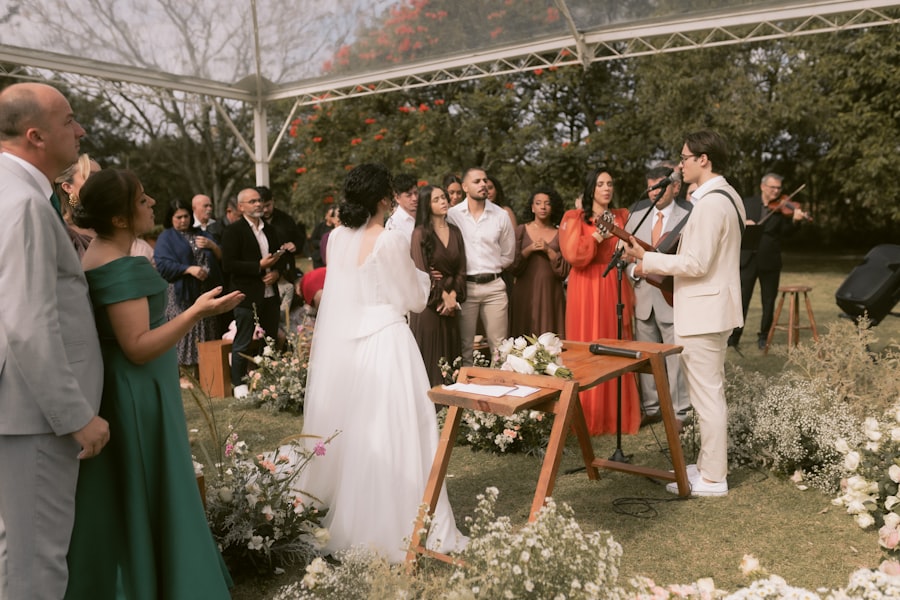
As the designated photographer, I was privy to these subtle clashes of perspective. My role was to capture the essence of the day, but the “essence” itself seemed to be interpreted differently by the couple.
The Posed Portraits: Symmetry vs. Dynamic Composition
The posed portraits presented a recurring dilemma. Isobel favored perfectly symmetrical arrangements, compositions that reflected the ideal geometry she encountered in her research. She’d suggest precise spacing between individuals, exact angles of heads, and a uniform lighting scheme that minimized any perceived distortions.
“The golden ratio, Marcus,” she’d say, pointing to a potential arrangement. “It’s the most aesthetically pleasing proportion, a universally recognized principle of beauty. Let’s position us in accordance with it. And ensure the background elements are not visually competing.”
Marcus, conversely, was drawn to more dynamic compositions, shots that conveyed movement, emotion, and the anticipation of action. He’d encourage candid moments, spontaneous interactions, and settings that felt dramatic and grand, even if they lacked perfect symmetry.
“Let’s get one with you laughing organically, Izzy,” he’d urge. “The wind in your hair, the sunlight catching your eyes. That’s a powerful image, a moment captured in time that speaks volumes.”
I found myself constantly negotiating between Isobel’s desire for architectural precision and Marcus’s craving for narrative dynamism. I’d explain how aperture and depth of field could create a cinematic blur, softening harsh lines and adding an ethereal quality, a concept that Isobel appreciated for its control over visual information, and Marcus embraced for its ability to highlight the main subjects.
The Candid Shots: Spontaneity vs. Narrative Control
The candid shots, the moments ‘caught’ between the structured parts of the day, proved even more revealing. Isobel, while appreciative of genuine emotion, seemed to instinctively analyze the scene, as if to identify the underlying forces at play. She’d often be seen observing interactions with a slight tilt of her head, her gaze analytical.
Marcus, on the other hand, was a master of performance even in unguarded moments. He’d engage guests with effusive greetings, his laughter boisterous, his gestures expansive. He seemed to be perpetually aware of the ‘audience,’ even if that audience was just me and my camera.
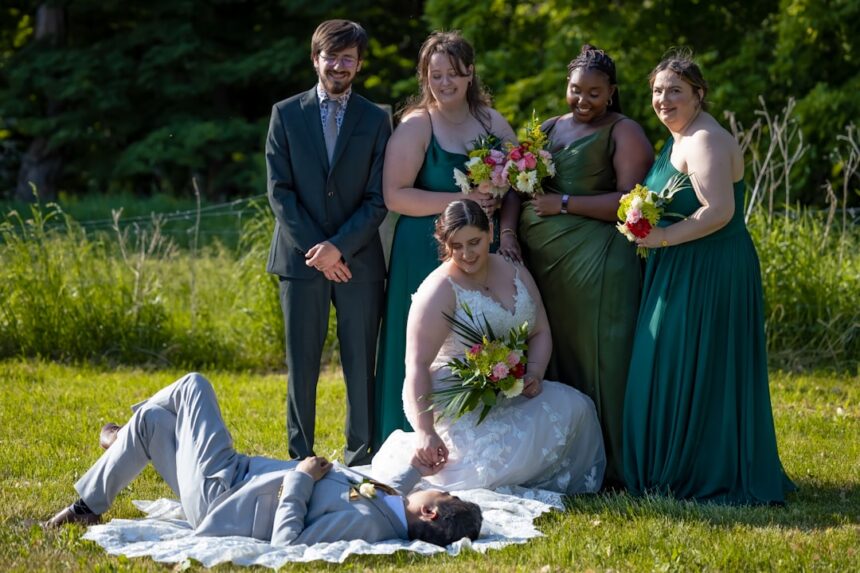
I remember a particular moment, just after the bouquet toss. Isobel, having caught the bouquet, held it with a look of quiet contemplation, as if she were dissecting its botanical structure. Marcus, meanwhile, had pulled her into a dramatic dip, his face beaming with theatrical triumph. My lens captured both these moments, a visual juxtaposition of scientific curiosity and performative joy. It was a perfect metaphor for their union.
In the ongoing debate surrounding the intersection of optics and law, a recent article delves into the complexities of wedding drama that often arises when personal relationships intertwine with professional obligations. This exploration highlights how the principles of optics can sometimes clash with legal expectations, leading to unexpected consequences for those involved. For a deeper understanding of this intriguing topic, you can read more in the article found here.
The Honeymoon: Data Analysis vs. Legal Discovery
| Aspect | Optics | Law | Wedding Drama |
|---|---|---|---|
| Genre | Political Thriller | Legal Drama | Romantic Drama |
| Primary Focus | Media and Public Perception | Legal Battles and Courtroom | Relationship Conflicts and Emotions |
| Typical Setting | Government Offices, Press Conferences | Courtrooms, Law Firms | Wedding Venues, Family Homes |
| Common Themes | Image Management, Scandal | Justice, Ethics, Legal Strategy | Love, Betrayal, Family Drama |
| Audience Appeal | Fans of Political Intrigue | Fans of Legal Procedural | Fans of Romantic and Family Drama |
| Typical Conflict | Manipulation of Public Opinion | Legal Disputes and Trials | Wedding Disruptions and Relationship Issues |
| Example Shows/Movies | “Scandal”, “House of Cards” | “Suits”, “The Good Wife” | “Bride Wars”, “Four Weddings and a Funeral” |
The honeymoon, the period of supposed blissful respite, became another unexpected proving ground for their contrasting approaches to processing information and planning future endeavors.
The Itinerary: Predictive Models vs. Contingency Planning
As the wedding approached its conclusion, the discussion shifted to the honeymoon. Isobel, ever the planner, had meticulously crafted an itinerary, down to the minute. It was a Gantt chart of relaxation, meticulously detailing each excursion, meal, and downtime. She had researched potential weather patterns, local events, and even anticipated potential logistical challenges, creating contingency plans for each.
“I’ve factored in a 15% buffer for unforeseen delays,” she explained, pointing to a spreadsheet. “And I’ve identified three alternative routes to the volcanic hot springs, should access be restricted. We will maximize our enjoyment by optimizing our schedule, minimizing wasted time.”
Marcus, predictably, scoffed at the rigidity. He advocated for a more fluid approach, one that allowed for spontaneity and the discovery of unexpected opportunities. He envisioned leisurely mornings, impulsive detours, and a general embrace of the unknown.
“Izzy, darling, this isn’t a court case where every minute needs to be accounted for. It’s relaxation. We need to let things happen. What if we stumble upon a charming, secluded beach that wasn’t on your spreadsheet? Are we just going to drive past?”
The resulting honeymoon was a fascinating exercise in compromise. They adhered to Isobel’s structured framework for much of the trip, ensuring they experienced the intended highlights. However, there were indeed unplanned detours, impulsive decisions, and moments where Marcus’s desire for improvisation led them down unmapped paths, adding an element of delightful chaos to Isobel’s ordered world.
The Souvenir Acquisition: Empirical Value vs. Symbolic Representation
The acquisition of souvenirs also highlighted their differences. Isobel approached souvenir shopping as an opportunity to gather empirically valuable artifacts that held a specific, demonstrable purpose or historical significance. She sought out local crafts with a clear artisanal provenance, scientific curiosities, or items that could be used for illustrative purposes in her research.
Marcus, on the other hand, saw souvenirs as tangible embodiments of memories and emotions. He was drawn to quirky trinkets, kitschy memorabilia, and anything that evoked the feeling of the place, regardless of its intrinsic value or practical application.
“Look at this little carved wooden parrot, Izzy!” he’d exclaim, holding up a brightly painted, slightly garish item. “It’s ridiculous, yes, but whenever I see it, I’ll remember that hilarious evening we spent listening to the local calypso band.”
Isobel, while acknowledging the sentiment, would counter with, “But what is its quantifiable value? What is its material composition? Is it an indicator of local craftsmanship, or simply mass-produced ornamentation?”
The final collection of souvenirs was a testament to their compromise. Isobel acquired a beautifully illustrated botanical guide to the region, a scientifically accurate representation of its flora. Marcus, nestled beside it in their luggage, was a collection of brightly colored magnets, a novelty tequila bottle, and that regrettable wooden parrot. Each item, in its own way, represented a truth – one quantifiable, the other emotional – that they each held dear.
The wedding, at its heart, was not just a celebration of love, but a poignant illustration of how two highly intelligent and dedicated individuals, shaped by vastly different disciplines, navigate the world. The drama, as it unfolded, was not malicious, but a natural consequence of their inherent worldviews. Isobel sought the immutable laws, the predictable outcomes. Marcus thrived on argument, on narrative, on the art of persuasion. The optics of their union, viewed through my lens, revealed a complex interplay of light and shadow, a beautiful, sometimes challenging, dance between the absolute and the aspirational. And as a chronicler of these moments, I can attest that even in the most structured of unions, the unexpected always finds a way to refract.
FAQs
What is the main conflict in the “Optics vs Law” wedding drama?
The main conflict revolves around the tension between maintaining a positive public image (“optics”) and adhering strictly to legal or procedural rules (“law”) during a wedding event, leading to disputes and misunderstandings.
Who are the key parties involved in the “Optics vs Law” wedding drama?
Typically, the key parties include the wedding couple, their families, legal authorities or officials, and sometimes media or public relations representatives who influence the event’s perception.
How does “optics” influence wedding ceremonies in legal contexts?
“Optics” refers to how the event is perceived by the public or attendees, which can pressure participants to prioritize appearances or social expectations, sometimes at odds with legal requirements or formal procedures.
What legal issues commonly arise in wedding dramas like “Optics vs Law”?
Common legal issues include disputes over marriage licenses, adherence to local marriage laws, contractual disagreements with vendors, or conflicts arising from cultural or religious practices that may not align with legal standards.
How can couples avoid conflicts between optics and law in their wedding planning?
Couples can avoid conflicts by thoroughly understanding local marriage laws, consulting legal experts, communicating clearly with all parties involved, and balancing the desire for a visually appealing event with compliance to legal requirements.