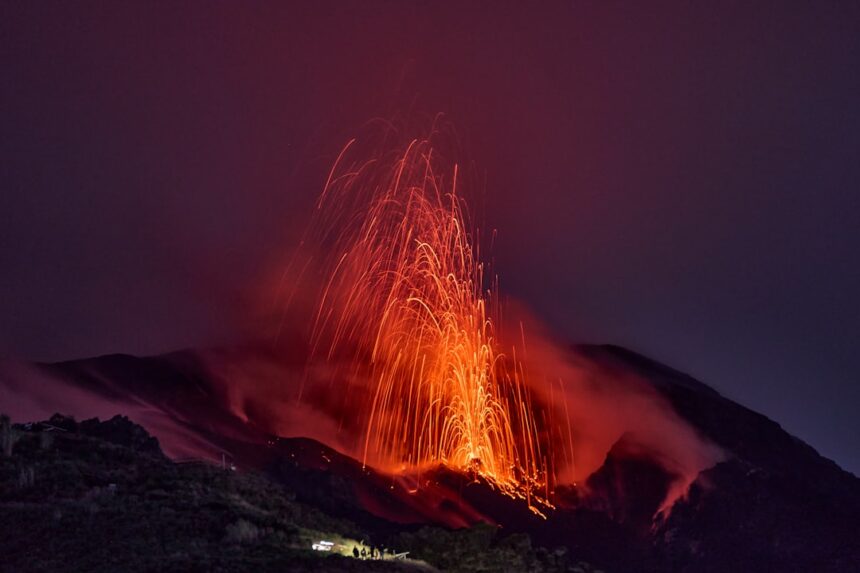
I have always been fascinated by the Earth’s inner workings, particularly the dynamic processes that shape our planet over geological timescales. My research often pulls me into the realm of paleomagnetism, a discipline that allows me to peek into the Earth’s past magnetic fields. It’s like finding fossilized compass needles, each tiny magnetic signature in ancient rocks pointing to a different era. These records are not just curiosities; they are crucial instruments in unraveling some of the most enigmatic chapters in Earth’s history, particularly those etched in lava flows. When I examine these volcanic remnants, I am not merely looking at rock; I am decoding a complex message, a time capsule preserving not only the direction of the Earth’s magnetic field at the moment of solidification but also insights into the very mechanics of eruption and cooling.
Magnetic Minerals as Tiny Compasses
To understand how paleomagnetic records unravel lava flow mysteries, you and I must first grasp the fundamental principle at play. When molten rock, or magma, erupts onto the Earth’s surface as lava, it contains a variety of magnetic minerals. As this superheated material cools, these minerals solidify. Above a critical temperature known as the Curie temperature, these minerals lose their magnetic properties. However, as the lava continues to cool below this threshold, the tiny magnetic domains within these minerals orient themselves along the direction of the Earth’s ambient magnetic field. Imagine millions of microscopic compass needles, all perfectly aligning themselves with the Earth’s magnetic north. Once the lava solidifies completely, this magnetic orientation becomes locked in, a permanent record of the Earth’s magnetic field at that precise moment. It’s a geological snapshot, preserved for millions of years.
Thermoremanent Magnetization: The Imprinted Signature
This process of acquiring permanent magnetization during cooling is called thermoremanent magnetization (TRM). It’s a remarkably robust form of magnetization, resistant to most subsequent geological processes unless the rock is heated again above its Curie temperature. This stability is what makes TRM such a valuable tool for paleomagnetists like me. I can extract a small cylindrical core from a lava flow, bring it back to my laboratory, and precisely measure the direction and intensity of this ancient magnetic field. The beauty of this is that each lava flow acts as an independent recorder. If you have a sequence of lava flows, you have a series of discrete magnetic records, each representing a different moment in time. This stratigraphic approach is critical for building a chronological framework.
Paleomagnetic records of lava flows provide crucial insights into the Earth’s magnetic field history and tectonic movements. For a deeper understanding of how these records are analyzed and their significance in geological studies, you can refer to a related article that discusses the methodologies and findings in this field. For more information, visit this article.
Deciphering Earth’s Magnetic Flip-Flops and Wanderings
Polarity Reversals: A Powerful Chronometer
One of the most profound discoveries derived from paleomagnetic records is the phenomenon of geomagnetic polarity reversals. Imagine the Earth’s magnetic field, which currently has a north magnetic pole near the geographic North Pole and a south magnetic pole near the geographic South Pole, suddenly flipping entirely, with the north magnetic pole appearing in the southern hemisphere and vice versa. This isn’t a hypothetical scenario; it has happened hundreds of times throughout Earth’s history. When I analyze lava flows, I often find that some are magnetized in the “normal” direction (like today), while others are “reversed” (pointing towards the south geographically). These reversals are global events, occurring over relatively short geological timescales (thousands of years). By correlating sequences of normal and reversed magnetizations in lava flows from different parts of the world, I can build a global timescale of these reversals, known as the geomagnetic polarity timescale (GPTS). This GPTS acts as a powerful chronometer, allowing me to date geological events with remarkable precision, often in concert with radiometric dating methods. It’s like having a master clock that has ticked away synchronously across the entire planet.
Apparent Polar Wander: Tracing Continents
Beyond polarity reversals, paleomagnetic data from lava flows also reveal a phenomenon called apparent polar wander. When I measure the paleomagnetic direction from ancient lava flows on a particular continent, and then compare it to the present-day magnetic pole, I often find a discrepancy. If continents were fixed, all ancient magnetic poles should cluster around the present-day magnetic pole. However, they don’t. Instead, paleomagnetic poles from a continent trace a path across the globe over geological time. This isn’t because the Earth’s magnetic pole is actually wandering wildly; it’s because the continents themselves are moving. It’s like standing on a moving train and watching a distant lighthouse appear to move across the landscape, but in reality, it’s you who is moving. By studying these apparent polar wander paths for different continents, I can reconstruct the past positions of continents and track their movements over millions of years. This was groundbreaking evidence that helped firmly establish the theory of plate tectonics.
Unlocking Eruption Dynamics and Flow Histories
Cooling Rates and Flow Thickness
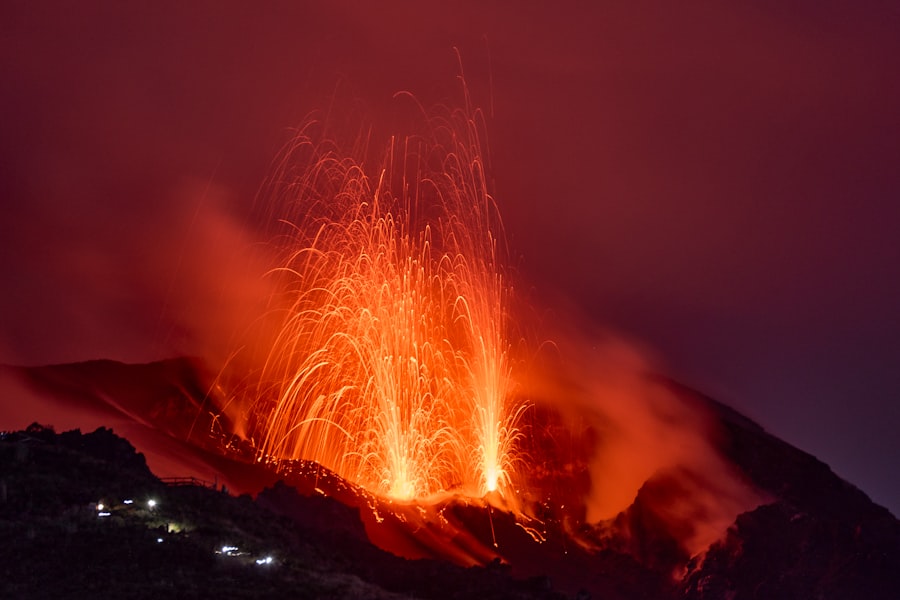
The strength and fidelity of the thermoremanent magnetization acquired by a lava flow are not uniform throughout its thickness. This variation provides me with clues about the cooling history of the flow itself. A thicker lava flow will cool more slowly in its interior compared to its margins. This differential cooling can sometimes be reflected in variations in the magnetic intensity and even direction (due to slight shifts in the magnetic field during the prolonged cooling process) throughout the flow thickness. By meticulously sampling a lava flow from its base to its top, I can sometimes infer its thickness and even the relative rate at which it cooled. It’s like taking the temperature of a meal as it slowly cools, but instead of a thermometer, I’m using the magnetic imprint.
Flow Emplacement and Multiple Flows
Distinguishing individual lava flows in a thick sequence can sometimes be challenging in the field. However, paleomagnetic data can be an invaluable aid. If two apparently distinct “flows” exhibit identical paleomagnetic directions, it might suggest they are actually a single, thicker flow or were emplaced so rapidly that the magnetic field didn’t change significantly between their eruptions. Conversely, if successive flows show subtly different directions, even if they appear lithologically similar, it confirms they are indeed separate eruptive events, each capturing a slightly different magnetic snapshot in time. This level of detail allows me to reconstruct the eruptive sequence more accurately, providing a clearer picture of volcanic activity in a given area.
Revealing Subsurface Processes and Deep-Seated Structures

Baked Contacts and Intrusion Dating
Paleomagnetism is not limited to surface lava flows. It also extends its reach to intrusive igneous rocks, though the magnetization acquired is slightly different. When magma intrudes into older rocks, it heats the surrounding “host” rocks. If the host rocks contain magnetic minerals, and they are heated above their Curie temperature by the intrusion, they will acquire a new thermoremanent magnetization aligned with the magnetic field present at the time of intrusion. This phenomenon is known as a “baked contact.” By analyzing the paleomagnetism of both the intrusion and the baked host rock, I can confirm that the intrusion is indeed younger than the host rock. Moreover, if the host rocks were previously weakly magnetized or non-magnetic, and they become magnetized only in the baked zone, it offers direct evidence of the intrusive event and the magnetic field present at that specific time. This methodology can be crucial for dating intrusive events that might otherwise be difficult to constrain.
Dating Unconformities and Erosional Gaps
Consider a scenario where a sequence of ancient lava flows is capped by an erosional surface, and then overlain by younger sedimentary rocks. This erosional surface represents a period of missing geological time, an unconformity. While radiometric dating can provide ages for the lava flows, paleomagnetic data can help in further refining the duration of the unconformity. If the youngest lava flow immediately below the unconformity has a specific magnetic polarity (e.g., normal), and the oldest sedimentary rocks above the unconformity are dated and their paleomagnetism analyzed to reveal a different polarity (e.g., reversed), it tells me that the period of erosion and deposition of the overlying sediments must have spanned at least one geomagnetic reversal. This adds another layer of chronological constraint, helping me to fill in the gaps in Earth’s history, piece by piece.
Paleomagnetic records of lava flows provide valuable insights into the Earth’s magnetic field history and tectonic movements. For those interested in exploring this fascinating topic further, a related article can be found at this link, which delves into the methodologies used to analyze these geological formations and their implications for understanding past climate changes. By studying these records, scientists can reconstruct the behavior of the Earth’s magnetic field over millions of years, shedding light on both geological and environmental processes.
Forecasting Future Geodynamic Events (with a caveat)
| Sample ID | Location | Age (Ma) | Magnetic Inclination (°) | Magnetic Declination (°) | Intensity (µT) | Rock Type | Flow Thickness (m) |
|---|---|---|---|---|---|---|---|
| LF-001 | Hawai’i | 0.5 | 45.2 | 12.5 | 35.8 | Basalt | 3.2 |
| LF-002 | Iceland | 1.2 | 38.7 | 5.8 | 28.4 | Basalt | 4.5 |
| LF-003 | Canary Islands | 0.8 | 50.1 | 15.3 | 40.2 | Basalt | 2.8 |
| LF-004 | Columbia River | 15.0 | 60.5 | 20.1 | 25.7 | Basalt | 5.0 |
| LF-005 | Deccan Traps | 66.0 | 30.0 | 10.0 | 22.3 | Basalt | 7.5 |
Understanding Past Field Behavior for Future Predictions
While paleomagnetism is primarily a tool for looking into the past, the comprehensive insights it provides into the behavior of the Earth’s magnetic field are invaluable for understanding its future. The Earth’s magnetic field is generated by the complex movement of molten iron in its outer core, a process known as the geodynamo. By studying the frequency and characteristics of past geomagnetic reversals, the intensity of the field during different periods, and the patterns of secular variation (short-term changes in the field), I can develop more sophisticated models of the geodynamo. These models are crucial for understanding the forces at play within our planet.
The Impending Reversal?
There is considerable scientific interest in whether the Earth is currently heading for another geomagnetic reversal. Over the past few centuries, the intensity of the Earth’s magnetic field has been steadily decreasing, a trend that typically precedes a reversal. While paleomagnetic records from lava flows don’t directly predict the exact timing of a future reversal, they provide the statistical framework within which such a prediction can be considered. They tell us how quickly reversals have occurred in the past, how long they typically last, and what the field behavior is like during these transitional periods. This knowledge is not just academic; a reversal could have significant impacts on our technology reliant on the magnetic field, such as satellites and navigation systems. Therefore, my work, and the work of my colleagues, in meticulously documenting past field behavior from lava flows, is a fundamental step in preparing for potential future geodynamic shifts.
In conclusion, when I delve into the paleomagnetic records preserved within ancient lava flows, I am embarking on a journey through deep time. Each rock sample is a page from Earth’s autobiography, chronicling not only the epic tale of continents drifting and poles reversing, but also the more intimate stories of individual eruptions—their violence, their duration, and their contribution to the ever-evolving tapestry of our planet. These “fossilized compasses” offer an unparalleled window into Earth’s past, providing crucial data for understanding its present and preparing for its future. The mysteries held within these magnetic imprints are vast, but with each new analysis, another layer of understanding is peeled away, bringing us closer to a complete picture of our dynamic home.

EXPOSED: The Ring Camera Footage That Ended My Family Fraud!
FAQs
What are paleomagnetic records in lava flows?
Paleomagnetic records in lava flows refer to the natural remanent magnetization preserved in volcanic rocks. When lava cools and solidifies, magnetic minerals within the rock align with the Earth’s magnetic field at that time, effectively recording its direction and intensity.
How do scientists use paleomagnetic records from lava flows?
Scientists analyze the magnetic orientation and strength recorded in lava flows to study past changes in the Earth’s magnetic field, such as geomagnetic reversals, secular variation, and plate tectonic movements. These records help reconstruct the history of the Earth’s magnetic field and continental drift.
What information can be obtained from studying paleomagnetic records in lava flows?
Studying these records can provide data on the timing and duration of geomagnetic reversals, the latitude at which the lava erupted (paleolatitude), and insights into the movement of tectonic plates over geological time.
How are paleomagnetic samples collected from lava flows?
Samples are typically collected by drilling cylindrical cores from solidified lava flows in the field. These cores are then analyzed in laboratories using magnetometers to measure their magnetic properties and determine the ancient magnetic field direction and intensity.
What factors can affect the reliability of paleomagnetic records in lava flows?
Factors include chemical alteration of magnetic minerals, thermal overprinting from later heating events, mechanical disturbance, and weathering. Proper sampling techniques and laboratory analyses are essential to ensure accurate interpretation of the paleomagnetic data.