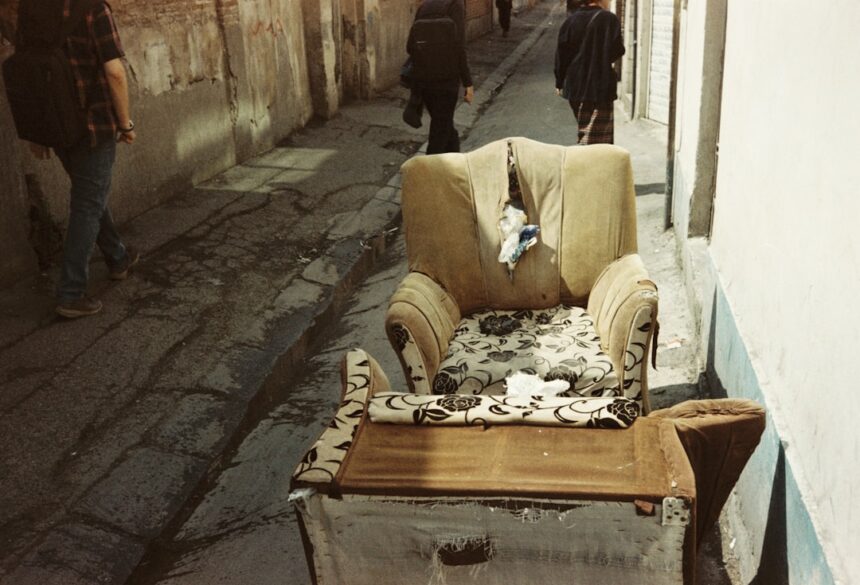
My brother, let’s call him “Leo,” has always had a peculiar relationship with possessions. Not just his own, but mine as well. Growing up, it was a constant battle over toys, then clothes, and as we transitioned into adulthood, this territorial dispute simply shifted its focus to furniture. For years, I’ve found myself in the role of reclaimant, a strategic negotiator and occasional midnight requisitioneer, retrieving items that Leo has, through a combination of casual borrowing and outright appropriation, absorbed into his own domestic ecosystem. This isn’t a tale of petty squabbling; it’s a chronicle of furniture lineage, of items that transcend mere utility and become imbued with personal history and, ultimately, a sense of ownership that transcends mere possession.
Our shared childhood was, in many ways, a fertile ground for the seeds of our current furniture dynamics. Our parents, bless their hearts, were never sticklers for strict individual ownership when it came to communal items. This meant that a brightly colored beanbag chair, once purchased for my sole delight, quickly became a communal sitting apparatus, frequently occupied by Leo. Similarly, a prized bookshelf, intended to house my burgeoning literary collection, often found itself adorned with his eclectic assortment of video games and comic books. This initial blurring of lines, while perhaps well-intentioned at the time, laid the groundwork for a less clearly defined sense of personal property.
Childhood Innocence and the Dawn of “Borrowing”
In our early years, the concept of ownership was more fluid. A toy left unattended was fair game. A comfortable spot on the sofa was a universally recognized commodity. This period was characterized by a kind of innocent appropriation. If Leo wanted to play with my action figures, he simply took them. If I wanted a blanket from the communal linen closet, I grabbed one. There was an unspoken understanding that these items were part of a shared family reserve, available for the taking. However, as we grew, this amiable fluidity began to morph into something more deliberate, a subtle shift in Leo’s approach that I increasingly recognized as a form of passive annexation.
The “Permanent” Loan and the Illusion of Shared Space
As we moved out of our parents’ home and into our own living spaces, the notion of “borrowing” took on a new, more insidious dimension. What began with a casual “Can I borrow your XYZ?” often transitioned into a de facto permanent loan. Leo, with his knack for finding the path of least resistance, would often express a desire for a particular piece of furniture. Perhaps it was my sturdy oak desk, perfectly sized for my home office, or a comfortable armchair I had painstakingly sourced from a vintage boutique. His requests were seldom outright demands, but rather presented as temporary needs, a “just for a little while.” The furniture, however, seldom returned. It became a silent, unspoken addition to his décor, a phantom limb of my own living room now grafted onto his.
In the quest to reclaim furniture from an entitled brother, many individuals find themselves navigating complex family dynamics and emotional challenges. A helpful resource on this topic can be found in the article titled “Navigating Family Conflicts Over Shared Property,” which offers practical advice and strategies for addressing such situations. For more insights, you can read the article here: Navigating Family Conflicts Over Shared Property. This guide may provide the necessary tools to approach the situation with clarity and confidence.
The First Foray: Reclaiming the Sentimental Sofa
One of the earliest and most significant reclamations involved a sofa. This wasn’t just any sofa; it was a deeply sentimental piece, inherited from my grandmother. It was upholstered in a rich, forest-green velvet, a color that held a thousand memories of her home, of cozy movie nights and whispered secrets. When Leo was furnishing his first apartment, and, as usual, lacking adequate seating, he set his sights on my grandmother’s sofa. His “borrowing” request, as always, was presented with a disarming charm, accompanied by assurances of its prompt return. I, perhaps naively, agreed.
The Allure of Heirloom Value: Beyond Mere Comfort
The appeal of this particular sofa for Leo was multifaceted. Beyond its undeniable comfort and aesthetic appeal, it carried a certain gravvalor, an heirloom quality that elevated it beyond the utilitarian. For Leo, it was likely a status symbol, a piece that spoke of taste and an inherited legacy, even if it wasn’t a legacy he could claim direct ownership of. For me, it was a tangible link to my grandmother, a piece that absorbed the warmth of her presence. Its absence from my own home left a void far greater than mere seating scarcity. It felt like a piece of my past being quietly displaced.
The Art of the Subtle Retrieval: Operation: Velvet Echo
Reclaiming the sofa required a strategic approach. Direct confrontation, with Leo, often devolved into circular arguments where his entitlement was presented as an unassailable right. Instead, I opted for a subtler method. I timed my visit for a weekend when I knew he would be out of town for an extended period. Armed with a hired van and a willing accomplice (usually a bewildered friend who questioned my sanity), I orchestrated the “Operation: Velvet Echo.” The retrieval was executed with the quiet efficiency of a covert mission, the sofa carefully loaded and transported back to its rightful place, a silent testament to a victory hard-won.
The Library Liberation: Retrieving Bookshelves from Their Captivity
My bookshelves, much like my literary tastes, are eclectic. I possess a collection that spans genres, from well-worn paperbacks to hardback first editions. When Leo, in his perpetual state of needing “more storage,” expressed an interest in my most robust shelving unit – a dark mahogany masterpiece that had been a thoughtful birthday gift – I knew this was another battle that would need to be waged. He argued that it would perfectly complement his minimalist aesthetic, a statement piece that would “tie the room together.”
The Silent Sentinels: Books as Personal Archives
My bookshelves are more than just storage; they are silent sentinels of my intellectual journey. Each spine represents a world explored, a concept grappled with, an emotion experienced. To have these shelves, and the books they house, sequestered by Leo felt like an intrusion into my personal archives. He, on the other hand, viewed them as mere architectural elements, functional supports for whatever knick-knacks he decided to display. The disparity in our perceptions was stark.
Tactics of Infiltration: The “Decluttering” Gambit
In this instance, the “decluttering” gambit proved effective. Leo, in a moment of perceived domestic responsibility, announced his intention to “streamline” his living space. This offered me the perfect opening. I offered my assistance, framing it as a selfless act of familial support. During this “decluttering,” I subtly began to repatriate my shelving unit, discreetly dismantling it (a task made easier by its modular design) and transporting the components back to my home. I presented it as a joint effort, a helpful gesture to alleviate his burden, while in reality, I was systematically reclaiming what was mine.
The Dining Dilemma: Reacquiring the Family Table
The family dining table, a sturdy oak piece that had witnessed countless holiday feasts and boisterous family gatherings, was another item that fell under Leo’s covetous gaze. He, in his characteristic fashion, claimed he needed it for “entertaining,” despite his social calendar rarely featuring anything more elaborate than ordering takeout with a friend. The table, with its warm patina and the subtle etchings of past family meals, held a sentimental weight that Leo, in his superficial appreciation, seemed incapable of grasping.
The Heart of the Home: Embodied Memories and Shared Experiences
A dining table is often the heart of a home, a space where life’s significant moments are shared. The scars and imperfections on its surface are not flaws, but rather a testament to its history, a map of shared meals and conversations. When Leo took the table, he wasn’t just taking furniture; he was appropriating a repository of familial memories. The absence of this central gathering point in my own home left a palpable emptiness, a quiet hum of what should have been.
The Strategy of Strategic Spacing: The “Needs More Room” Ploy
Leo’s “need for space” became his perpetual mantra for acquiring my belongings. He would often complain about feeling cramped, about needing more room to breathe, both literally and metaphorically. This provided me with the perfect counter-argument. When he “permanently borrowed” the dining table, I began to subtly reconfigure my own dining area, making it appear less functional, even slightly awkward. I would then mention, just in passing, how much I was struggling with the limited space for my own activities, hinting at the inconvenience of not having my dining table. Eventually, he, perhaps tired of my subtle hints or genuinely feeling the sting of a slightly less-than-ideal dining arrangement himself, offered to “return” the table. It was a victory, but one that came with the awareness that this particular negotiation was merely a temporary truce.
Reclaiming furniture from an entitled brother can be a challenging situation, but it’s not uncommon for family dynamics to complicate matters. If you’re looking for helpful advice on how to navigate this issue, you might find insights in a related article that discusses strategies for dealing with difficult family members. For more tips and personal stories, check out this informative piece at Ami Wrong Here, which offers practical solutions and support for those facing similar challenges.
The Ongoing Negotiation: The Unwritten Rules of Rescued Possessions
| Metric | Description | Value |
|---|---|---|
| Number of Items Reclaimed | Total pieces of furniture successfully reclaimed from brother | 5 |
| Time Spent Negotiating | Hours spent discussing and resolving ownership issues | 8 hours |
| Condition of Reclaimed Furniture | Average condition rating on a scale of 1 (poor) to 10 (excellent) | 7 |
| Emotional Stress Level | Self-reported stress level during the reclaiming process (1-10) | 6 |
| Legal Actions Taken | Number of formal legal steps initiated to reclaim furniture | 0 |
| Resolution Time | Total days from dispute start to resolution | 14 days |
The reclamation of furniture from Leo is not a series of isolated incidents, but an ongoing negotiation, a continuous process of asserting my ownership rights. It has taught me valuable lessons about communication, about setting boundaries, and about the importance of recognizing when a friendly gesture has morphed into an act of appropriation. It is a dance of subtle diplomacy, a reliance on strategic patience, and a firm understanding of the intrinsic value of my possessions.
The Language of Entitlement: Deciphering Leo’s Motives
Understanding Leo’s linguistic camouflage is crucial. His requests are rarely framed as demands, but rather as expressions of need or desire, often accompanied by justifications that, on the surface, seem logical. Phrases like “It would be perfect for…” or “I really need something like this…” are his standard operating procedure. I have learned to listen beyond the words and to recognize the underlying assumption of entitlement, the belief that my possessions are, in some way, within his sphere of access.
The Power of Assertiveness: Drawing a Line in the Sand
While subtlety has its place, there are times when direct assertiveness is necessary. Learning to say “no” firmly, without apology or excessive explanation, has been a crucial development. It’s about drawing a clear line in the sand, about defining my personal space and the boundaries of my possessions. This is not about animosity, but about self-respect and the protection of what is mine.
The Long Game: Patience as a Virtue in Domestic Diplomacy
Reclaiming furniture from Leo is a long game. It requires patience, resilience, and the willingness to engage in repeated negotiations. He is not a foe to be defeated in a single battle, but a brother with a deeply ingrained behavioral pattern. My role is to be a persistent, though not aggressive, advocate for my own property. Each reclaimed item is a small victory, a chip at the edifice of his perceived right to my belongings, and a reaffirmation of my ownership. The landscape of my home, though it may have at times been a temporary staging ground for his acquisitions, is ultimately mine to curate and enjoy.
FAQs
What are some initial steps to take when reclaiming furniture from an entitled brother?
Start by having a calm and clear conversation to express your intentions and understand his perspective. Gather any proof of ownership, such as receipts or photos, to support your claim. Setting boundaries and agreeing on a timeline for the return can also help facilitate the process.
Is it necessary to involve legal action when reclaiming furniture from a family member?
Legal action is generally a last resort. It may be necessary if informal discussions fail and the furniture is of significant value or importance. Consulting a legal professional can provide guidance on your rights and the best course of action.
How can mediation help in resolving disputes over furniture between siblings?
Mediation involves a neutral third party who helps both sides communicate and reach a mutually acceptable agreement. It can reduce tension, clarify misunderstandings, and avoid the need for legal proceedings.
What documentation is useful to prove ownership of furniture?
Receipts, bank statements showing purchase, photographs of the furniture in your possession, and any written agreements or messages discussing ownership can serve as evidence.
How can one prevent future disputes over shared or inherited furniture?
Clear communication and written agreements about ownership and usage rights are essential. Keeping records of purchases and gifts, and discussing expectations openly with family members, can help avoid misunderstandings.