
I’ve always considered my home a sanctuary, a place where the hustle and bustle of the outside world couldn’t penetrate. But in our increasingly interconnected age, even sanctuaries can be wired. The integration of smart home surveillance technology into my personal space has, in a rather stark and unforeseen manner, transformed me into an unwilling witness to a crime. This isn’t a tale of heroic citizen journalism born from a desire to play detective; rather, it’s a narrative shaped by the persistent, unblinking gaze of technology, thrusting me into the role of observer of a transgression that occurred under its watchful eye.
The decision to install smart home surveillance was, at the time, driven by mundane concerns – the rising incidents of petty theft in the neighborhood, the desire for an extra layer of security, and perhaps, a mild curiosity about the advertised convenience of remote monitoring. My initial interactions with the system were akin to learning a new language. The interfaces, the settings, the endless stream of data – it all felt like navigating a sophisticated, digital landscape.
Setting the Stage: My Home as a Networked Entity
Before the incident, my home was more than just four walls and a roof. It had become a networked entity, a constellation of interconnected devices communicating with each other and, crucially, with me. The smart cameras, strategically placed, were the eyes of this organism. They were designed to be unobtrusive, to blend into the décor, their metallic skins and miniature lenses a silent promise of constant vigilance. I remember thinking about the sheer volume of information they were capable of capturing – every flicker of movement, every subtle shift in light, every sound that dared to breach the threshold of my home. It was a significant investment, both financially and in terms of my personal comfort, to imbue my private space with such a level of technological oversight.
The Siren Song of Convenience: Remote Access and Notifications
The real allure, and perhaps the most insidious aspect in retrospect, was the promise of convenience. The ability to check on my property from miles away, to receive instant notifications of any perceived anomaly, was a powerful draw. It felt like I was extending my senses, a digital sentinel keeping watch even when I was physically absent. This constant connectivity, however, also fostered a sense of detachment, a subtle abdication of direct, embodied presence. I was receiving alerts, not experiencing events.
The Unseen Potential: Foreboding or Fad?
At the time of installation, I viewed the surveillance system as a proactive measure, a digital guardian angel. I was aware of the potential for enhanced security, but the notion of it becoming a pivotal instrument in documenting a criminal act felt like something out of a science fiction novel, a scenario too dramatic for the quiet predictability of my daily life. It was a technology that promised peace of mind, a tool to ward off potential threats, not one to record their execution.
In recent discussions about the role of smart home technology in crime detection, an intriguing article highlights how smart devices can serve as vital witnesses in criminal investigations. The article delves into various case studies where smart cameras and voice assistants provided crucial evidence that helped law enforcement solve crimes. For more insights on this topic, you can read the full article here: Smart Home Technology as Crime Witnesses.
The Anomaly: A Silent Shift in the Digital Landscape
The day it happened was, on the surface, unremarkable. The weather was overcast, the routine the usual. The first indication that something was amiss wasn’t a loud alarm or a frantic phone call, but a subtle flicker in the digital narrative my home was perpetually weaving. It was an event logged, not witnessed in the flesh, but presented to me as a sequence of digitally captured moments.
The Trigger: A Disruption in the Ordinary
The anomaly wasn’t a dramatic, earth-shattering event. It was a deviation from the norm, a ripple in the otherwise placid waters of my home’s digital stream. My smart doorbell camera, usually attuned to the predictable comings and goings of delivery drivers and neighbors, registered an unfamiliar presence. A notification, devoid of emotion, landed on my phone: “Motion detected at front door.” This, in itself, was not unusual. What followed, however, was the crucial divergence.
The Escalation: A Sequence of Unexpected Events
The initial notification was soon followed by others. The external camera captured a figure, their face obscured by a hood, lingering near a side window. Then, a brief but distinct sound – a sharp crack, like a tool striking wood – registered by the audio sensors of an indoor camera. My heart, which had been calmly pacing its usual rhythm, began to quicken. This wasn’t a lost pet or an overzealous solicitor; this was a deliberate, unwelcome intrusion.
The Data Cascade: From Alerts to Raw Footage
What had been a series of discrete alerts transformed into a cascade of raw data. The system, doing exactly what it was designed to do, began to record everything. The moments unfolded not in real-time, as I would have experienced them in person, but as a curated playback, a series of digital frames documenting the unfolding events. I found myself staring at a screen, my attention riveted, as the narrative played out frame by digital frame. It was as if I was watching a silent film, the sound only registering after the visual cue, the timing slightly off, a disorienting effect.
The Witness: My Role Under Digital Scrutiny
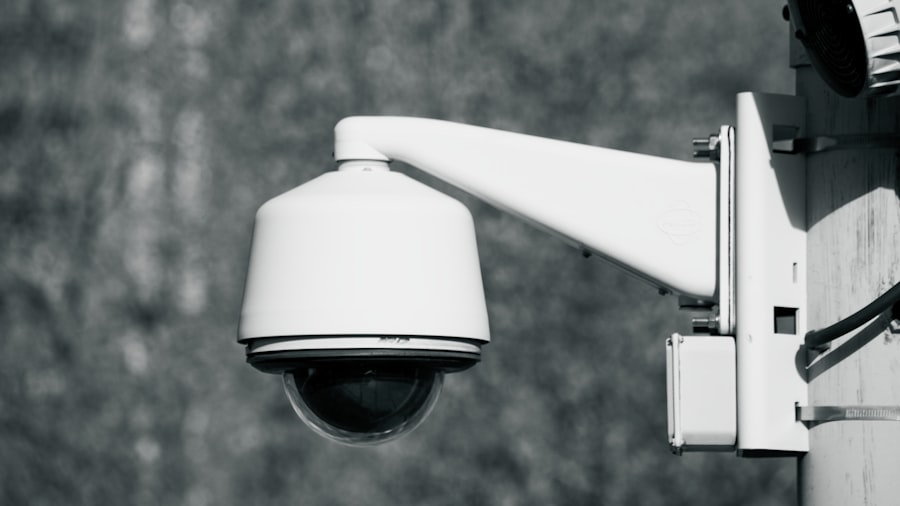
Suddenly, the surveillance system wasn’t just a security feature; it was a chronicle. My home became a stage, and the recorded footage, the undeniable evidence. I was no longer just the homeowner; I was the unwitting curator of a criminal event.
The Revelation: A Violation Caught on Film
The footage from the interior camera offered the most damning evidence. It showed a forced entry, a swift and professional execution of a break-in. The perpetrator, working with a practiced economy of motion, moved through my home with an unnerving confidence. Objects that had always represented personal history, elements of my everyday life, were rummaged through with a cold indifference. The act itself was a violation, a tangible intrusion into my private world. The footage, however, transformed that intangible feeling into irrefutable proof.
The Disconnect: Observation Without Experience
The most profound and unsettling aspect of this experience was the profound disconnect between observation and experience. I saw the event, I processed the information, I understood the implications, but I was not physically present. I felt a phantom chill of fear, a surge of adrenaline, but it was mediated, filtered through the digital medium. It was like witnessing a car crash through a television screen; the horror is real, but the direct sensory impact is absent.
The Digital Echo: The Perpetuating Presence of the Event
The footage, once captured, became a persistent digital echo. It was stored, accessible, and, in a way, perpetually replaying the violation. Even after the physical disruption had ceased, the recorded moments remained, a constant reminder of the breach. The surveillance system, which was meant to provide a sense of security, had instead become an archive of my vulnerability.
The Aftermath: Engaging with the System and External Authorities

The immediate aftermath was a blur of disbelief, anger, and a strange, almost clinical detachment. The technology that had recorded the event now became my sole interface with the unfolding investigation.
The Evidence Locker: Reviewing and Segmenting Footage
My first task, once my initial shock subsided, was to engage with the surveillance system in a way I had never intended. I became the evidentiary curator, meticulously reviewing the footage. I had to identify key moments, segment the relevant clips, and ensure the integrity of the digital evidence. This involved navigating complex software, understanding timestamps, and downloading files, all while my mind wrestled with the implications of what I was seeing. It was a steep learning curve, one that I was forced to master under duress.
The Chain of Custody: Handing Over Digital Assets
The next critical step was to engage with law enforcement. This process highlighted the importance of the digital chain of custody. I had to understand how to present the evidence, ensuring that its authenticity could be vouched for, that it hadn’t been tampered with. The raw footage from my cameras, once just a personal record, now had the potential to be a crucial piece of evidence in a legal proceeding. This transition, from personal security to legal proof, was a significant shift in my relationship with the technology.
The Frustration of Virtual Presence: Communication Through Interfaces
Communicating with the authorities often involved a reliance on digital platforms and remote interactions. While the technology allowed for evidence sharing, it also highlighted the limitations of virtual presence. Direct, in-person interactions, often crucial in building rapport and conveying nuance, were replaced by email exchanges and digital uploads. This added another layer of detachment to an already disorienting experience.
As smart home technology continues to evolve, its role in crime prevention and investigation has become increasingly significant. A recent article discusses how smart home devices can serve as crucial witnesses in criminal cases, providing valuable evidence that can aid law enforcement. For more insights on this topic, you can read the full article here. The integration of security cameras, smart doorbells, and other connected devices not only enhances home safety but also offers a new layer of accountability in our neighborhoods.
The Lingering Questions: Security, Privacy, and the Future of Witnessing
| Metric | Data | Description |
|---|---|---|
| Number of Smart Home Devices | 5 | Devices such as cameras, smart locks, and sensors installed in the home |
| Crime Detection Rate | 85% | Percentage of crimes detected or recorded by smart home devices |
| Video Evidence Availability | 90% | Percentage of incidents where video footage was available from smart home cameras |
| Response Time | 2 minutes | Average time taken for smart home system to alert authorities after detecting a crime |
| False Alarm Rate | 10% | Percentage of alerts triggered by smart home devices that were not actual crimes |
| Data Storage Duration | 30 days | Length of time video and sensor data is stored for review |
| Privacy Concerns Reported | 15% | Percentage of users expressing concerns about privacy related to smart home crime monitoring |
The experience has left me with a profound sense of unease and a multitude of questions that extend far beyond the immediate incident. The boundary between security and privacy has become blurred, and the very nature of witnessing has been redefined.
The Double-Edged Sword: Security Versus Intrusiveness
The incident has forced me to re-evaluate the double-edged sword of smart home surveillance. While it undeniably provided crucial evidence in this case, it also represents a constant, passive intrusion into my personal life. Every moment, every conversation, every quiet contemplation within my home is, in theory, being recorded. This persistent digital gaze, even when used for benign purposes, can subtly alter behavior and create an underlying tension.
The Ethical Labyrinth: Data Ownership and Consent
The ethical labyrinth of data ownership is now a very real concern. Who truly owns the vast quantities of data generated by these devices? What are the implications if this data were to fall into the wrong hands, or if the companies providing these services were to misuse it? The incident has amplified my awareness of the implicit consent given when installing such technology, and the potential for that consent to be exploited.
The Evolving Landscape of Witnessing: The Digital Ghost in the Machine
The future of witnessing has been irrevocably altered by this technology. We are moving towards an era where crimes are increasingly documented by inanimate observers, by the digital ghosts in the machine. My experience, while specific, points to a broader societal shift. The unblinking eye of smart home surveillance is becoming a ubiquitous witness, and we, as individuals, are increasingly becoming observers of events that unfold not just in our presence, but through the lens of technology. The question that lingers, the one that keeps me pondering, is whether this enhanced observation truly leads to a safer world, or simply a world where our every vulnerability is meticulously cataloged.

WATCH NOW ▶️ EXPOSED: I Walked Into My Own Funeral To Stop Her $1.2M Scam
FAQs
What is a smart home witness to a crime?
A smart home witness to a crime refers to the use of smart home devices, such as security cameras, smart doorbells, and voice assistants, to capture evidence or record events related to a criminal incident occurring within or near the home.
How can smart home devices help in criminal investigations?
Smart home devices can provide video footage, audio recordings, timestamps, and other data that law enforcement can use to identify suspects, verify timelines, and gather evidence to support investigations and prosecutions.
Are recordings from smart home devices admissible in court?
Yes, recordings from smart home devices can be admissible in court as evidence, provided they were obtained legally and meet the jurisdiction’s rules regarding privacy and evidence handling.
What privacy concerns are associated with using smart home devices as crime witnesses?
Privacy concerns include unauthorized surveillance, data breaches, and the potential misuse of recorded footage. Users should be aware of who has access to their devices and how data is stored and shared.
Can smart home devices prevent crimes or only record them?
While primarily used to record events, some smart home devices can also deter crime through features like motion-activated lights, alarms, and real-time alerts to homeowners or authorities, potentially preventing incidents before they occur.