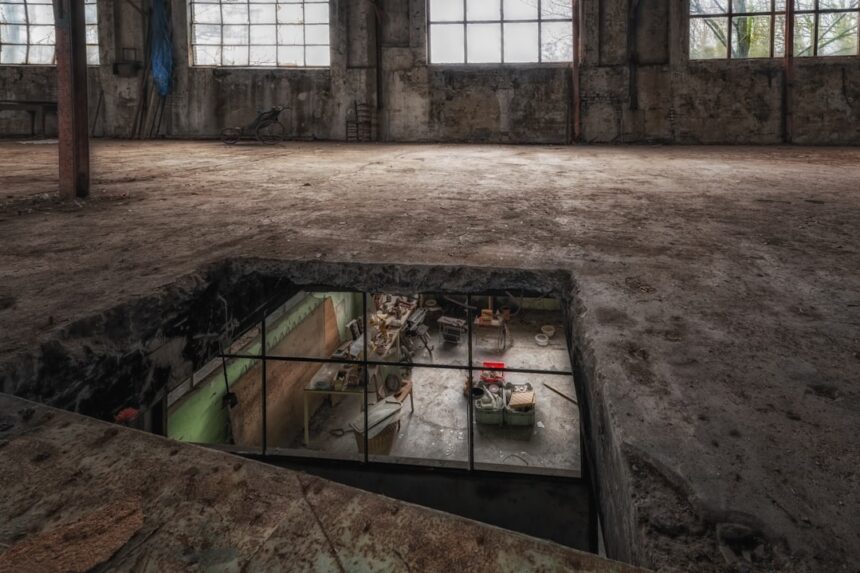
The unassuming wall had always been a part of my life. For years, it stood with an almost defiant plainness, a blank canvas in a room that held more secrets than I, at the time, could comprehend. It was a wall constructed of dark, aged wood, its grain a silent testament to decades, perhaps even centuries, of existence. I had touched its surface countless times, run my fingers over its imperfections, and never once suspected the marvel hidden beneath. This is the story of how I discovered that the ordinary can conceal the extraordinary, and how a simple bookshelf became the gateway to a hidden library.
My childhood home was a place of quiet corners and the lingering scent of old paper. It wasn’t a grand estate, but an old house, the kind that creaked with personality and whispered tales of its past inhabitants. The room in question, which I now refer to as the “study” for the sake of clarity, was a repository for a diverse collection of objects: inherited furniture, stacks of dusty periodicals, and a motley assortment of books that seemed to have been curated by a forgotten scholar. The wall in question dominated one side of this room, a solid expanse that I had, for all intents and purposes, cataloged as a purely structural element.
The Structural Integrity of the Wall
From a purely architectural standpoint, the wall was unremarkable. It was load-bearing, as far as I could ascertain from its sheer mass and the way it anchored the room. Its construction appeared to be a combination of timber framing and plaster, though much of the plaster had long since been replaced or repaired. The wooden panels, however, were the dominant feature, their dark hue suggesting a hardwood, possibly oak or mahogany, though I lacked the expertise to definitively identify it. I recall observing the way the light played on its surface, casting subtle shadows that, in retrospect, might have been clues disguised as mere atmospheric effects.
The Placement of the Bookshelves
The wall wasn’t entirely bare. Built into it, or rather seemingly integrated into its surface, were a series of built-in bookshelves. These were not the sleek, modern units one might find in a contemporary home. Instead, they were robust, their shelves deep and sturdy, capable of holding a significant weight. They were filled, as I mentioned, with a heterogeneous collection of books. Novels, atlases, scientific treatises, even a smattering of leather-bound volumes that appeared to be centuries old, all coexisted in a somewhat haphazard fashion. I had often used these shelves as a convenient place to rest my own reading material when I was in the room, never considering their integrated nature as anything more than a pragmatic design choice.
In recent years, the allure of hidden rooms and secret passages has captivated the imagination of many, particularly in the context of libraries and bookshelves. A fascinating article that delves into this intriguing topic can be found at this link, where the history and design of hidden rooms are explored in detail. These concealed spaces often serve as a testament to creativity and mystery, inviting readers to ponder what secrets might be tucked away behind the shelves of their favorite library.
The Genesis of Curiosity: An Unforeseen Anomaly
My initial assumption was that the wall was precisely what it appeared to be: a solid, unyielding barrier. This belief held firm for many years, a silent constant in my ever-evolving perception of the house. The discovery, when it finally came, was not the result of diligent investigation or a grand quest for hidden treasures. It was, like many significant revelations, brought about by a confluence of mundane circumstances and a single, unexpected anomaly.
The Accidental Inquiry
It began with a minor act of curiosity, born from everyday wear and tear. I had been attempting to secure a slightly wobbly shelf on one of the built-in bookcases. In doing so, I needed to apply more pressure than usual to one of the wooden uprights. As I pushed, I felt a subtle, almost imperceptible give. It wasn’t the expected creak of old wood or the groan of a strained joint. It was something different, a yielding that suggested a hollow space rather than solid resistance. My initial thought was that perhaps a section of the panelling had loosened, a repair that had failed over time.
The Repetitive Nature of the Phenomenon
Intrigued, I repeated the pressure. The same subtle give occurred, and this time, I could discern a faint, hollow sound. It was as if I had knocked on a door that had been disguised as a wall. This repetition was key. If it had been a single, isolated instance, I might have dismissed it as a structural quirk. But the fact that I could reliably elicit this response, consistently in the same area, planted a seed of persistent doubt in my mind. The wall, which had always been a silent observer, suddenly seemed to possess a hidden dimension.
The Moment of Revelation: A Mechanism Unveiled
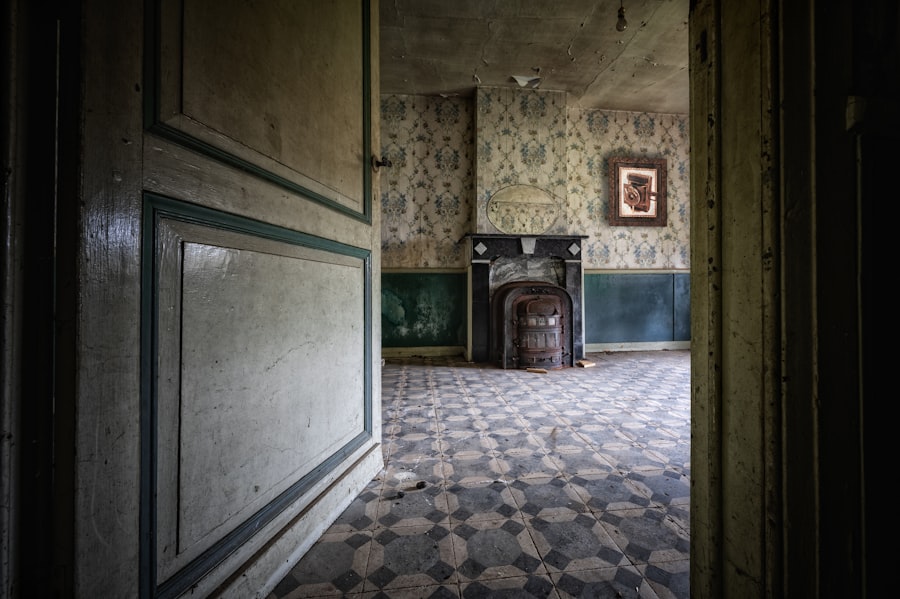
The subsequent investigation was neither dramatic nor particularly arduous, but it required a concentrated focus that I hadn’t previously directed towards this particular section of the room. The subtle give I had felt was the first domino to fall in a chain of discoveries that would ultimately unravel the wall’s secret.
The Gentle Exploration of the Paneling
I began by gently probing the wooden panels around the area where I had felt the give. I employed a thin, blunt object – a butter knife, in fact, the kind that is too dull for spreading but useful for delicate prying. I moved along the seams, looking for any sign of a seam that might indicate a hidden opening. It was painstaking work, like trying to read a book with smeared ink. Most of the wood was tight and seamless, but one particular panel, near the base of the bookshelf, seemed to have a slightly wider gap along its edge.
The Subtle Indentation
Upon closer inspection of this specific panel, I noticed a very slight indentation, almost invisible to the naked eye unless the light caught it at precisely the right angle. It was no larger than a small coin, and I initially dismissed it as a dent or a knot in the wood. However, when I applied a small amount of pressure to this indentation with the tip of the butter knife, I felt a distinct click. It was a soft, metallic sound, almost swallowed by the ambient quiet of the room.
The Unexpected Movement
The click was the confirmation I needed. It was the sound of a latch being disengaged, a mechanism being activated. I held my breath, as if any sudden movement might undo what I had just achieved. I then gently pushed on the panel again. This time, instead of the slight yielding, the entire panel swung inwards, silently and smoothly, revealing not the expected solid wall behind it, but a darkness that hinted at an interior beyond. The wall was not a solid barrier; it was a facade.
The Unveiling of the Hidden Library
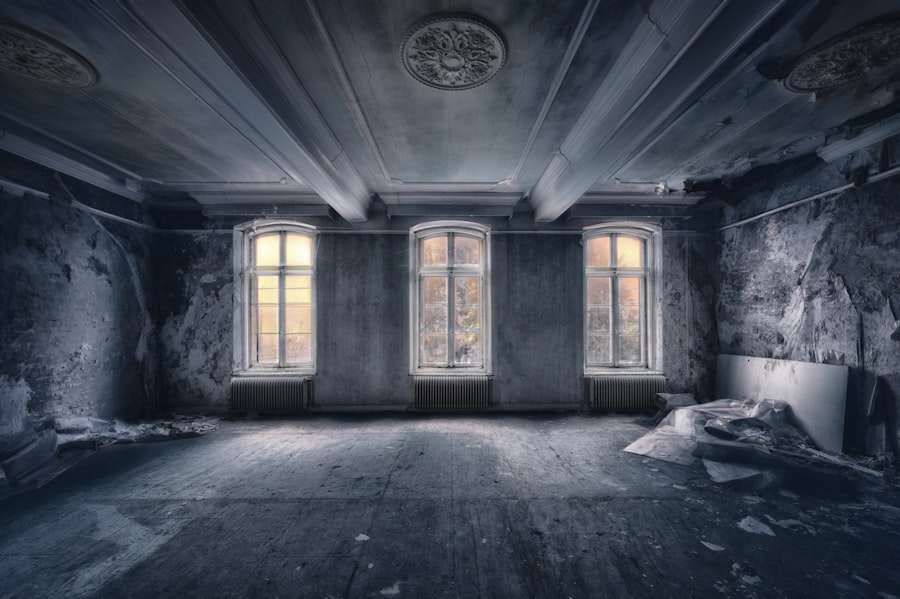
The revelation of the hidden opening was akin to stepping through a looking glass. The initial darkness was quickly illuminated by the limited light of the study, revealing a space that had been concealed for an unknown period. It was a small, enclosed chamber, and as my eyes adjusted, the true nature of its contents became apparent.
The Enclosed Chamber
The chamber itself was modest in size, perhaps no more than ten feet by eight feet. The walls were lined with more of the dark wood panelling, creating a sense of cohesive design with the exterior wall. There was a faint, musty scent, the unmistakable aroma of old paper and undisturbed wood. The air was still and cool, a stark contrast to the ambient temperature of the study, suggesting it had been sealed for a significant duration.
The Sheer Volume of Books
But it was the contents that were truly astonishing. The chamber was, in essence, a perfectly preserved, albeit compact, library. Every available surface – the floor, the shelves that lined the walls – was densely packed with books. They were not merely piled haphazardly; they were arranged with a certain order, suggesting a deliberate curation. From what I could initially discern, the collection spanned a vast array of subjects, from ancient philosophy and classical literature to scientific texts and historical accounts. It was a veritable treasure trove of knowledge, hidden away from the passage of time.
The Nature of the Collection
The sheer variety of the books was striking. There were leather-bound volumes with gilt lettering, their spines worn and faded, hinting at considerable age. There were also more modern-looking books, though their condition suggested they had been placed here long before their contemporary counterparts became commonplace. The titles themselves were a fascinating mix. I spotted works by classical authors, names I recognized from my own infrequent forays into learned literature, alongside titles that were completely unfamiliar to me, speaking of disciplines and eras I had only cursorily encountered.
In recent explorations of architectural secrets, the concept of a hidden room behind a library bookshelf has captured the imagination of many. Such concealed spaces often serve as intriguing backdrops for stories of mystery and adventure. For those interested in delving deeper into this fascinating topic, a related article offers insights into the history and design of these secretive nooks. You can read more about it in this detailed exploration that uncovers the allure and practicality of hidden rooms in homes and libraries alike.
The Legacy and Significance of the Hidden Library Bookshelf Passage
| Room Size | Access | Security |
|---|---|---|
| 10ft x 10ft | Bookshelf opens with a push | Biometric lock |
| Features | Contents | Usage |
| Cozy seating, hidden lighting | Storage for valuables | Private study or relaxation |
The discovery of this hidden library was not an end point, but a beginning. It opened a new chapter in my understanding of the house, its history, and the individuals who had occupied it before me. The bookshelf passage, as I came to call it, was more than just an ingenious piece of engineering; it was a testament to a desire for preservation, a sanctuary for knowledge, and a tangible link to the past.
The Purpose of the Concealment
The question of why this library was created and concealed is a fascinating one. Was it for protection during times of turmoil? Was it a personal sanctuary for a reclusive scholar? Or was it simply a private passion project, a passion for collecting and preserving knowledge that was best kept out of the public eye? The sheer effort involved in constructing such a passage and the careful arrangement of the books suggest a deliberate act of preservation, a desire to shield this collection from external forces or simply from the ravages of time and casual discovery.
A Haven for Endangered Texts
One of the most compelling theories I developed was that this library might have served as a haven for texts that were considered controversial, dangerous, or simply out of favour during certain historical periods. The act of creating a secret passage and a hidden room speaks to a need for discretion, a desire to safeguard information that might otherwise be lost or suppressed. In this context, the bookshelf passage acted as a physical manifestation of intellectual resistance, a silent protest against the ephemeral nature of prevailing opinions.
The Personal Connection and Future Exploration
For me, the discovery of this hidden library has become a profound personal journey. It has ignited a deep appreciation for the act of reading and the enduring power of books. It has also instilled a sense of responsibility to understand and preserve this discovered heritage. The books within this hidden chamber are not just objects; they are vessels of thoughts, ideas, and stories that have weathered the storms of time, waiting patiently to be rediscovered. The exploration of this hidden library is ongoing, a continuous unfolding of narratives and insights, a testament to the fact that even in the most familiar of surroundings, secrets lie waiting to be unearthed, often behind the most unassuming of facades. The bookshelf passage was a key, and the library, a world of knowledge unlocked.
FAQs
What is a hidden room behind a library bookshelf?
A hidden room behind a library bookshelf is a secret space that is concealed behind a bookshelf in a library. It is often used for various purposes such as storage, privacy, or as a unique feature in a building.
How are hidden rooms behind library bookshelves constructed?
Hidden rooms behind library bookshelves are typically constructed by creating a false wall or panel that can be opened to reveal the hidden space. This can be achieved through the use of hinges, sliding mechanisms, or other types of concealed openings.
What are the common uses of hidden rooms behind library bookshelves?
Hidden rooms behind library bookshelves can be used for a variety of purposes, including as a private study or office, a storage area for valuable items, a safe room for emergencies, or simply as a fun and unique feature in a building.
Are hidden rooms behind library bookshelves legal?
The legality of hidden rooms behind library bookshelves depends on local building codes and regulations. In some areas, there may be specific requirements for safety features, such as ventilation and emergency exits, that must be met in order for a hidden room to be legal.
Can anyone install a hidden room behind a library bookshelf?
Installing a hidden room behind a library bookshelf typically requires construction and carpentry skills, as well as a good understanding of building codes and regulations. It is important to consult with a professional contractor or architect to ensure that the installation is done safely and in compliance with local laws.