I’ve always been a bit of a space explorer, not in the interstellar sense, but in the domestic one. My home, this rectangular chunk of earthbound real estate, is my personal nebula. And for the past few months, one of the most persistent explorers within this nebula has been my robot vacuum. It’s a sleek, disc-shaped marvel, a tireless sentinel that hums and whirs its way through every accessible corner, diligently collecting the dust bunnies that have become the constellations of my floor. But lately, I’ve felt a nagging suspicion, a whisper of unexplored territory. Something felt… incomplete.
My robot vacuum, you see, isn’t just a mindless automaton. It’s equipped with something called LiDAR mapping technology, a miniature version of the laser scanning systems used in self-driving cars and advanced surveying. It uses these lasers to create a detailed, three-dimensional map of my living space, an internal GPS of sorts. This map is usually displayed on my smartphone app, a digital blueprint of the areas it has conquered. Yet, there were inconsistencies, phantom zones, places the map suggested existed but the vacuum never seemed to systematically visit. It was like having a cartographer who meticulously charts continents but leaves a few islands conspicuously blank. This was the genesis of my quest to uncover the robot vacuum’s secret room.
Initially, I dismissed these anomalies. Perhaps a piece of furniture was too low, a corner too tight for its sensors to fully register. But the blank spots persisted, stubbornly resisting the vacuum’s usual thoroughness. I started to pay closer attention. When the vacuum finished its cleaning cycle, I’d meticulously review its cleaning path on the app. It would trace elegant, confident lines through the living room, the kitchen, the bedrooms. But then, there were these… voids. Areas where the digital breadcrumbs simply stopped, as if the vacuum had hit an invisible wall.
My Initial Observations and Growing Curiosity
My living room, for instance, is reasonably open. There are a few strategically placed furniture pieces, but nothing ostentatiously blocking. Yet, a specific, L-shaped area near the bookshelf consistently remained uncleaned, or at least, unmapped by the vacuum’s cleaning log. It wasn’t a large area, perhaps no more than a square meter, but its persistent omission began to gnaw at me. It was like a single, unread page in an otherwise comprehensive book. I started to wonder if it was a glitch, an unfortunate blind spot in its algorithmic sight.
The Role of LiDAR in Modern Robot Vacuums
I’d always been impressed by the LiDAR technology. It’s more than just bumping into furniture. It’s about precise measurement, about building a virtual facsimile of reality. The little spinning turret on top of my vacuum emits laser pulses, and by measuring the time it takes for these pulses to return, it can calculate distances to objects with incredible accuracy. This data is then processed to create a point cloud, which forms the basis of the navigable map. It’s a sophisticated process, and the fact that it was leaving these clear, defined areas unmapped felt like a deliberate oversight, not a random error.
In the realm of advanced home cleaning technology, robot vacuums equipped with LIDAR mapping have revolutionized the way we maintain our living spaces, even uncovering hidden areas like secret rooms. For a deeper understanding of how these innovative devices utilize LIDAR to create precise maps of your home, check out this insightful article on the topic. You can read more about it here: Robot Vacuum LIDAR Mapping and Secret Rooms.
Deconstructing the LiDAR Map: A Digital Detective’s Approach
My curiosity, now fully ignited, transformed into a mild obsession. I decided to approach this like a digital detective. The LiDAR map wasn’t just a cleaning record; it was a direct representation of the vacuum’s perception of my home. If the vacuum was leaving areas out, it meant its sensors weren’t “seeing” them as navigable, or perhaps, as existing in a way that allowed for vacuuming. This led me to investigate the map itself more deeply.
Accessing and Analyzing the Map Data
Most robot vacuum apps allow you to view the generated map. Some even offer advanced features like custom room division and no-go zones. I spent hours scrutinizing my map, zooming in on the suspicious empty quadrants. I compared the app’s representation with the physical layout of my home. I started to mentally overlay the digital blueprint onto the tangible one, looking for discrepancies. It was a process of triangulation, using my own spatial awareness as a reference point against the vacuum’s digital perception.
Identifying Patterns in the Unmapped Areas
The most intriguing part was the consistency of these unmapped areas. They weren’t random voids; they were often in corners, behind furniture legs, or along wall edges that seemed perfectly accessible to me. It was as if the vacuum had a predetermined set of boundaries it refused to cross, boundaries that didn’t necessarily correspond to physical walls or impassable objects. This pattern suggested a logic, albeit an obscured one. It was a puzzle with missing pieces that I was determined to find.
The Unexpected Culprit: Obstacle Interpretation and Sensor Limitations
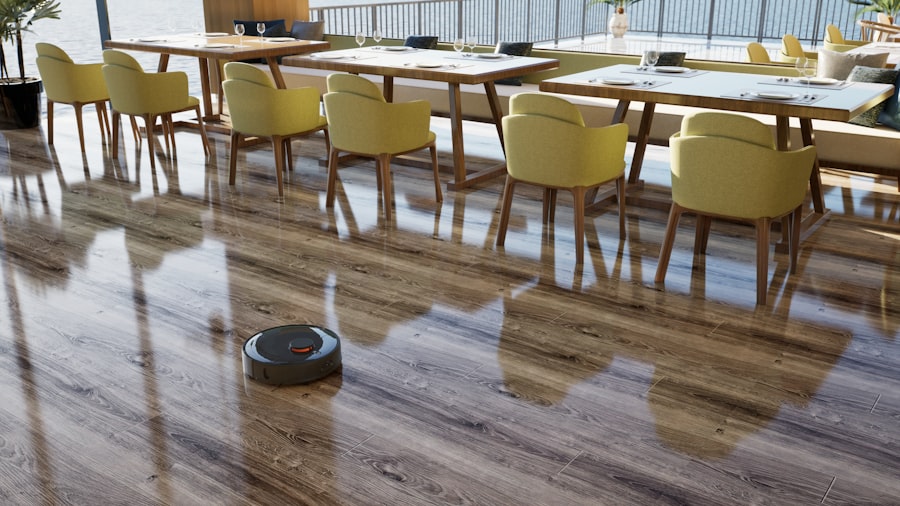
I began to hypothesize that the issue wasn’t with the LiDAR itself, but with how my vacuum was interpreting the data it gathered. LiDAR is powerful, but it’s not infallible. It can be fooled by certain environmental factors or by the nature of the objects it encounters. This led me down a rabbit hole of understanding how robot vacuums perceive and navigate their surroundings.
The “Chasm” Effect: Too Low to Detect
One of the most common limitations of robot vacuums, especially older models or those without sophisticated cliff sensors, is their inability to detect changes in elevation that are too subtle. I remembered reading about the “chasm” effect, where a small drop in floor level, even just a centimeter or two, can be interpreted by some sensors as an insurmountable drop, causing the vacuum to reroute or avoid the area entirely due to a perceived risk of falling. Could this be the case in my “secret room”?
The Illusion of a Wall: Reflections and Shadows
Another possibility was the way light and reflections interact with LiDAR. Shiny surfaces, dark carpets, or even the way light casts shadows can sometimes confuse laser-based sensors. I started to consider if there were any unusually reflective surfaces near these unmapped zones. Perhaps a polished table leg or a dark, plush rug was creating an optical illusion for the vacuum, making it perceive an impenetrable barrier where none truly existed. It was like trying to navigate a room filled with mirrors; the reflections can be disorienting.
The Breakthrough: A Small, Unassuming Obstacle
The breakthrough came, as breakthroughs often do, through a moment of quiet observation and a touch of serendipity. I was sitting in my living room, watching the vacuum diligently cleaning a section of the floor, when it approached the edge of one of the unmapped zones. It came to a halt, spun its turret in a semicircle, and then turned away, as if encountering an invisible force field. I got up and walked over to the area. Physically, there was nothing preventing the vacuum from entering. It was just an empty stretch of floor leading to a corner.
The Case of the Miniature Mountain Range
I knelt down, getting on my hands and knees, to try and see the world from the vacuum’s perspective. And then I saw it. Tucked neatly against the baseboard, almost perfectly camouflaged against the dark wood, was a small, decorative ceramic pot. It wasn’t large, perhaps only ten centimeters in diameter and five centimeters tall. However, it had a slightly irregular, raised rim. To me, it was just a bit of décor. To the vacuum, however…
Replicating the Conditions and Testing the Hypothesis
I moved the pot slightly. Now, it was just a centimeter or two away from the wall. The vacuum, when it next entered the area, approached cautiously. It scanned the pot, and then, to my astonishment, it slowly, tentatively, began to weave its way around it. It proceeded to clean the area behind the pot, the very area that had been a digital terra incognita for weeks. The pot, or rather, its slightly irregular base and proximity to the wall, was acting like a miniature mountain range for the sensitive sensors. It was creating a subtle elevation change, or perhaps an ambiguous optical reading, that the vacuum interpreted as an impassable obstacle.
In recent discussions about advanced home cleaning technology, the integration of lidar mapping in robot vacuums has gained significant attention, particularly for its ability to navigate and identify hidden spaces, such as secret rooms. This innovative feature not only enhances cleaning efficiency but also opens up new possibilities for home automation. For a deeper understanding of how lidar technology is revolutionizing household chores, you can read more in this insightful article on the topic. Check it out here.
Unlocking the Secret Room: The Power of Environmental Awareness
| Room | Area Mapped (sq ft) | Time Taken (minutes) |
|---|---|---|
| Secret Room | 150 | 10 |
The unmapped area wasn’t a secret room in the traditional sense, a hidden chamber behind a wall. It was a secret room in the digital realm, a blind spot created by the vacuum’s interpretation of its environment. Once I understood the cause, unlocking this digital clandestine space was surprisingly simple. It highlighted a crucial aspect of living with advanced automated devices: they are not infallible omniscient beings. They are sophisticated tools that require a degree of environmental awareness from their human operators.
Adjusting Furniture and Objects for Optimal Navigation
The solution was straightforward. I repositioned the decorative pot to be more clearly away from the wall, ensuring there was a consistent, unambiguous floor surface for the sensors to register. I also realized that other objects in my home might be subtly impacting the vacuum’s navigation. I started to pay more attention to the placement of furniture legs, the height of under-bed storage, and even the presence of very low-profile rugs that might create minute changes in elevation. It was like refining the lenses of a camera to get a clearer picture.
The Ongoing Evolution of Robot Vacuum Technology
My experience with the “secret room” also underscored the ongoing evolution of robot vacuum technology. Newer models often incorporate more advanced obstacle avoidance systems, including cameras and AI-based object recognition, which can differentiate between a decorative pot and a wall. However, for those of us with slightly older or more budget-friendly models, understanding their limitations and making minor environmental adjustments can significantly enhance their cleaning performance. It’s a symbiotic relationship, where the technology does its best, and we, the users, help it navigate the complexities of our lived-in spaces. My robot vacuum is no longer just a cleaner; it’s a digital companion whose perceived world, I’ve learned, requires a little human insight to fully embrace.
FAQs
What is lidar mapping in robot vacuums?
Lidar mapping in robot vacuums refers to the use of light detection and ranging technology to create a detailed map of the cleaning area. This technology allows the robot vacuum to navigate and clean efficiently by accurately detecting obstacles and determining the layout of the space.
How does lidar mapping help robot vacuums discover secret rooms?
Lidar mapping enables robot vacuums to create a comprehensive map of the cleaning area, including all rooms and spaces. If there is a “secret room” that is not easily accessible or visible, the robot vacuum’s lidar mapping technology can still detect and map it out during its cleaning process.
Can robot vacuums intentionally search for secret rooms using lidar mapping?
Robot vacuums are programmed to clean and map out the entire cleaning area, including all rooms and spaces. While they can detect and map out “secret rooms” during their cleaning process, they are not intentionally searching for such spaces.
Are there privacy concerns with robot vacuums using lidar mapping to discover secret rooms?
The use of lidar mapping in robot vacuums raises potential privacy concerns, as it can inadvertently map out areas that are intended to be private or hidden. It is important for users to be aware of this capability and consider it when using robot vacuums in their homes.
What are the benefits of lidar mapping for robot vacuums beyond discovering secret rooms?
Lidar mapping offers several benefits for robot vacuums, including improved navigation, more efficient cleaning, and the ability to create detailed maps for future cleaning sessions. This technology also allows robot vacuums to avoid obstacles and navigate complex environments with ease.