
I often consider the harsh realities faced by the intricate machines I design and operate in the unforgiving vacuum of space. As an engineer specializing in spacecraft systems, I am intimately familiar with the concept of Total Ionizing Dose (TID) and its pervasive role in the aging of satellites. It’s not a matter of if, but when, and for how long, a satellite will be exposed to this insidious form of degradation. My objective in this article is to demystify TID, explaining its mechanisms and consequences, and to provide insight into the strategies we employ to mitigate its effects, ensuring the longevity and reliability of our orbital assets.
From my perspective, TID is an accumulation of energy deposited in materials by ionizing radiation. Imagine, if you will, a microscopic hailstorm constantly bombarding the critical electronic components of a satellite. Each individual hailstone, whether it’s a high-energy proton, an electron, or a heavy ion, carries a small amount of energy. When these particles penetrate the protective layers and strike the semiconductor material of an integrated circuit, they deposit this energy. Over time, these seemingly insignificant depositions accumulate, like grains of sand slowly filling a container. This accumulation, this “total ionizing dose,” is what leads to the gradual, and ultimately fatal, degradation of electronic systems.
Sources of Ionizing Radiation
I categorize the primary sources of ionizing radiation in space into three main types, each presenting its own unique challenge to spacecraft designers.
Solar Particle Events (SPEs)
As an engineer, one of my greatest concerns is the unpredictable nature of Solar Particle Events. These events are like sudden solar flares or coronal mass ejections that eject vast quantities of high-energy protons and electrons into space. When a satellite is caught in the path of an SPE, it experiences a sharp, intense increase in radiation flux. The dose rate during an SPE can be orders of magnitude higher than background levels, and while these events are often short-lived, the accumulated dose during a single severe SPE can significantly shorten a satellite’s operational lifespan. My design considerations often include strategies for “weathering the storm” during such events.
Galactic Cosmic Rays (GCRs)
Galactic Cosmic Rays, to me, are the ever-present, insidious background hum of space radiation. These are extremely high-energy particles, primarily protons and atomic nuclei (heavy ions), originating from outside our solar system, perhaps from supernovae or other energetic astrophysical phenomena. Unlike SPEs, GCRs are relatively constant in flux, but their high energy means they can penetrate considerable shielding. While the dose rate from GCRs is lower than from SPEs, their continuous bombardment contributes significantly to the overall TID over a satellite’s mission duration. I consider them the slow, relentless erosion of a spacecraft.
Trapped Radiation Belts (Van Allen Belts)
The Van Allen Belts, for me, represent a region of particular concern, especially for satellites in Earth orbit. These are toroidal regions of space around Earth where charged particles, predominantly electrons and protons, are trapped by Earth’s magnetic field. Satellites passing through these belts experience a significantly enhanced radiation environment. The characteristics of these belts, including their intensity and extent, vary with solar activity. I must meticulously plan orbital trajectories and shielding for any satellite that will traverse these regions, as the dose accumulated here can be substantial and rapid.
Mechanisms of Degradation
My understanding of TID extends beyond just the sources; I delve into the fundamental mechanisms by which this deposited energy causes damage.
Oxide Trapping
When ionizing radiation strikes the silicon dioxide (SiO2) layer, which is crucial for insulating and passivating semiconductor devices, it generates electron-hole pairs. The electrons, being more mobile, tend to be swept away, while the positively charged holes can become trapped at defects within the oxide layer or at the interface between the oxide and the silicon substrate. I visualize these trapped holes as tiny, static charges that shift the electrical characteristics of the device. This accumulation of positive charge alters the threshold voltage of transistors, making it harder for them to turn on or causing them to remain on when they should be off.
Interface Traps
In addition to oxide trapping, the radiation also creates new interface traps at the silicon-silicon dioxide interface. These are energy states within the band gap that can capture and release charge carriers. The presence of these traps further degrades device performance by reducing carrier mobility, increasing leakage currents, and decreasing transconductance. From my perspective, these interface traps are like microscopic speed bumps and potholes in the electrical pathways, hindering the smooth flow of information.
Total ionizing dose (TID) is a critical factor in understanding satellite aging, as it directly impacts the performance and longevity of electronic components in space environments. For a deeper insight into the effects of TID on satellite systems, you can refer to the article available at this link. This resource provides valuable information on how ionizing radiation contributes to the degradation of satellite electronics and discusses potential mitigation strategies to enhance their resilience in orbit.
The Manifestation of Damage: TID Effects on Electronics
As an engineer, I see the damage from TID manifesting in a variety of ways, some subtle, others catastrophic, all impacting the operational integrity of the satellite.
Functional Degradation
The most common consequence I observe is a gradual but inexorable functional degradation of electronic components.
Threshold Voltage Shifts
One of the primary effects I monitor is the shift in threshold voltage (Vth) of MOSFETs (Metal-Oxide-Semiconductor Field-Effect Transistors). This shift can cause digital circuits to malfunction, leading to incorrect logic states, or it can significantly alter the operating points of analog circuits, compromising their precision and linearity. Imagine a digital switch that, instead of flipping cleanly, slowly starts to become less responsive or even gets stuck in an “on” or “off” position due to a weakened control signal.
Increased Leakage Currents
Another critical degradation I observe is the increase in leakage currents. The trapped charges and interface traps created by radiation provide alternative conduction paths, leading to current flowing where it shouldn’t. In digital circuits, this can increase power consumption and generate heat, reducing efficiency. In analog circuits, leakage can introduce noise and offset errors, corrupting sensitive measurements. I often see this as an electrical system becoming “sieve-like,” slowly letting current bleed away.
Reduced Transconductance
Transconductance (gm), a measure of a transistor’s effectiveness in converting input voltage to output current, is often reduced by TID. This reduction weakens the device’s ability to amplify signals, leading to slower circuit responses and a decrease in overall circuit gain. For me, this is akin to an amplifier losing its power and clarity over time, making it less effective at its primary function.
System-Level Impacts
The degradation at the component level cascades into significant impacts at the system level, threatening the entire mission.
Power Supply Unit (PSU) Failure
I view the Power Supply Unit (PSU) as the heart of the satellite, and its susceptibility to TID is a major concern. Radiation-induced degradation of power management integrated circuits can lead to voltage instability, increased ripple, and even complete failure of the power supply, rendering the entire satellite inoperable. A failing heart means a failing body.
Data Corruption and Processing Errors
The impact on data processing units, such as microprocessors and FPGAs, is also profound for me. Threshold voltage shifts and increased leakage currents can lead to bit flips, incorrect calculations, and ultimately, data corruption. This isn’t just an inconvenience; it can jeopardize scientific payloads, navigation systems, and communication links, making the satellite unable to perform its primary mission.
Communication System Outages
Finally, communication systems, vital for telemetry, commanding, and data downlink, are highly susceptible. Degradation of radio frequency (RF) components, such as low noise amplifiers (LNAs) and power amplifiers (PAs), due to TID can lead to weakened signals, increased noise, and ultimately, a loss of communication. Without a voice, even the most capable satellite is deaf and mute in space.
Guarding Against the Invisible: Mitigation Strategies
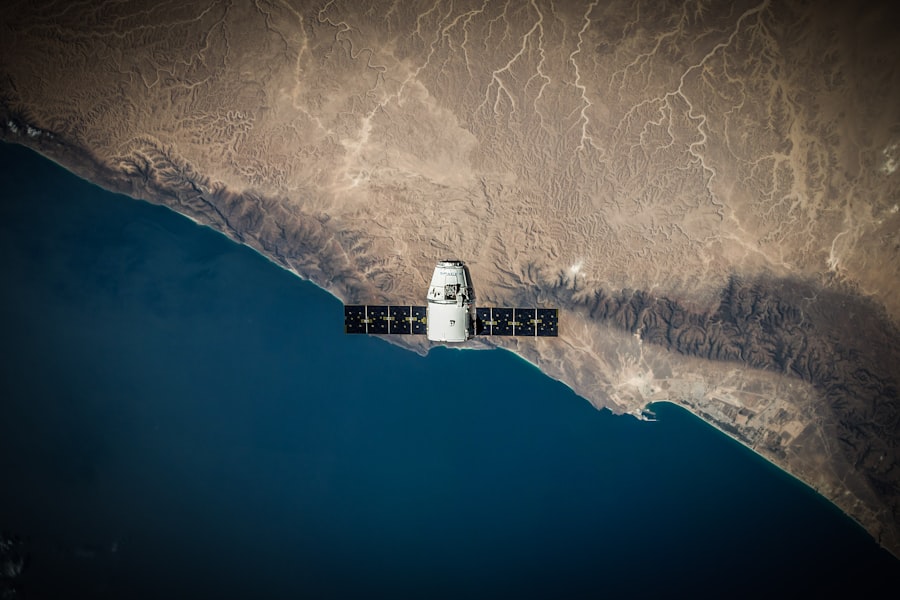
My work often revolves around designing systems that can withstand these stressors. We employ a multi-faceted approach to mitigate the effects of TID.
Radiation Hardening by Design (RHBD)
RHBD is a proactive strategy I implement at the very conceptual stage of a circuit. It’s about building resilience directly into the silicon.
Layout Techniques
I use specific layout techniques, such as enclosed geometry transistors, which minimize the areas of the gate oxide exposed to the side walls where interface traps tend to form. Additionally, using larger transistor sizes and incorporating guard rings can help shunt leakage currents away from sensitive areas, mitigating their impact. It’s like using reinforced concrete in critical structural elements.
Circuit Design Approaches
At the circuit level, I often incorporate redundant components or employ fault-tolerant designs. For example, using triple modular redundancy (TMR) where three identical circuits operate in parallel and a majority vote determines the output. This ensures that even if one circuit is affected by TID, the system can still function correctly. I also design circuits with wider operating margins, making them more tolerant to threshold voltage shifts.
Radiation Hardening by Process (RHBP)
RHBP focuses on modifications to the semiconductor manufacturing process itself to create devices inherently more resistant to radiation.
Thinner Gate Oxides
One approach is to use thinner gate oxides. While counterintuitive for some older technologies, in modern devices, thinner oxides mean fewer trapped holes can accumulate, and the electric field across the oxide is higher, which helps sweep trapped charge more effectively. This results in less charge build-up and a more stable threshold voltage. I see this as making the “hailstorm” less able to cause significant damage because there’s less material for the “hailstones” to get stuck in.
Specialized Doping Profiles
I also consider specialized doping profiles around sensitive regions within the device. By carefully controlling the concentration and type of dopants, we can create electric fields that accelerate charge carriers away from critical areas, reducing the likelihood of charge trapping and interface state formation.
Shielding Solutions
When I cannot harden the component or process sufficiently, I turn to physical protection in the form of shielding.
Material Selection
The choice of shielding material is crucial. High-Z materials like tantalum or lead are effective at stopping electrons and low-energy protons due to their high atomic number and density, which leads to increased scattering and absorption. However, for high-energy protons and GCRs, these materials can actually create secondary radiation (spallation) when the incident particle fragments the nucleus of the shielding material. For these higher energy particles, low-Z materials like aluminum or even polyethylene are more effective, as they interact predominantly through ionization, without producing as many secondary particles. My approach often involves a multi-layered shield, combining different materials to optimize protection against the diverse radiation spectrum.
Strategic Component Placement
Beyond the materials themselves, I strategically place components within the spacecraft. Sensitive electronics are often located in the core of the satellite, benefiting from the inherent shielding provided by other structural elements, fuel tanks, and less sensitive components. It’s like putting the most valuable items in the strongest vault at the very center of the bank.
Testing and Characterization: Ensuring Reliability

My relentless pursuit of reliability is heavily dependent on rigorous testing and characterization.
Total Dose Testing Facilities
Before any component is integrated into a space-bound system, I subject it to total dose testing at specialized facilities. These facilities, like cobalt-60 gamma-ray irradiators or proton accelerators, simulate the space radiation environment. By exposing candidate devices to controlled doses of radiation, I can observe their degradation characteristics in a predictable manner, allowing me to project their performance over the mission lifetime.
Cobalt-60 Gamma-Ray Sources
My primary tool for simulating the effects of trapped electrons and lower-energy protons is the Cobalt-60 gamma-ray source. Gamma rays interact with materials in a way that effectively mimics the ionization caused by these particles, providing a relatively uniform dose distribution. I use these sources to determine the TID hardness of components, often irradiating them to levels far exceeding their expected mission dose to establish safety margins.
Proton Accelerators
For simulating the effects of high-energy protons, especially those encountered during SPEs and in the inner Van Allen belt, I utilize proton accelerators. These facilities allow me to expose devices to high-energy proton beams, providing a more accurate representation of the degradation mechanisms specific to proton bombardment, including displacement damage, which is less prevalent with gamma rays.
In-Orbit Data Analysis
Once a satellite is in orbit, my work doesn’t stop. I meticulously analyze the telemetry data it sends back, looking for any signs of performance degradation that correlate with radiation exposure.
Performance Telemetry
I monitor various performance parameters of critical electronic systems, such as power consumption, voltage levels, current draws, and communication link margins. Any deviation from the expected baseline, especially after periods of high solar activity or passage through intense radiation belts, can indicate TID-induced degradation.
Correlation with Radiation Monitor Data
Crucially, I correlate this performance telemetry with data from on-board radiation monitors. These instruments directly measure the radiation flux and integrated dose experienced by the satellite. By comparing changes in component performance with the accumulated dose, I can gain valuable insights into the actual TID effects on my specific design and validate our ground-based testing results. This feedback loop is essential for continuous improvement in my future designs.
Total ionizing dose (TID) is a critical factor in understanding satellite aging, as prolonged exposure to radiation can significantly impact the performance and longevity of spaceborne systems. A related article discusses the effects of TID on satellite components and offers insights into mitigation strategies that can enhance resilience against radiation damage. For more detailed information, you can read the article here, which provides valuable data and analysis on this important topic.
The Future of TID Mitigation: Evolving Challenges
| Parameter | Unit | Description | Typical Range for Satellites | Impact on Satellite Aging |
|---|---|---|---|---|
| Total Ionizing Dose (TID) | krad(Si) | Cumulative radiation dose absorbed by satellite materials | 10 – 1000 krad(Si) | Degradation of electronic components, threshold voltage shifts |
| Displacement Damage Dose (DDD) | MeV/g | Non-ionizing energy loss causing lattice defects | 0.1 – 10 MeV/g | Degradation of solar cells and sensors |
| Single Event Effects (SEE) Rate | Events/year | Frequency of single event upsets or latch-ups | 1 – 100 events/year | Transient or permanent failures in electronics |
| Shielding Thickness | mm Aluminum Equivalent | Thickness of protective shielding around components | 1 – 10 mm | Reduces TID and SEE rates |
| Operational Lifetime | Years | Expected mission duration | 5 – 15 years | Accumulated radiation effects over time |
As an engineer constantly looking forward, I recognize that the challenge of TID mitigation is continuously evolving.
Miniaturization and Scaling Effects
The relentless drive towards miniaturization in semiconductor technology presents new challenges. As devices shrink, gate oxides become thinner, and electric fields within the devices increase. While thinner oxides can be more TID-tolerant in some ways (fewer holes to trap), the reduced feature sizes also mean that a single trapped charge can have a proportionally larger impact on device performance. I am always exploring how these scaling effects influence TID susceptibility.
New Materials and Technologies
The introduction of new materials and advanced device architectures, such as FinFETs or materials like GaN and SiC, also requires me to continually reassess TID effects. These novel technologies often have different radiation response characteristics compared to traditional silicon-based devices. My research and testing efforts are expanding to understand and characterize the TID vulnerability of these emerging technologies.
Longer Mission Lifetimes
Finally, as mission requirements push for longer operational lifetimes—ten, fifteen, or even twenty years in orbit—the cumulative effects of TID become exponentially more significant. This necessitates even more robust radiation hardening strategies, more accurate predictive models, and more resilient designs. My goal is to ensure that satellites designed today can not only survive but thrive throughout their extended missions, continuing to deliver invaluable data and services from the hostile environment of space. Understanding Total Ionizing Dose is, therefore, not just an academic exercise for me; it is a fundamental aspect of my mission to push the boundaries of space exploration.

EXPOSED: The Ring Camera Footage That Ended My Family Fraud!
FAQs
What is total ionizing dose (TID) in the context of satellites?
Total ionizing dose (TID) refers to the cumulative amount of ionizing radiation energy absorbed by satellite materials and electronic components over time while in space. It is a key factor in assessing radiation damage and aging effects on satellites.
How does total ionizing dose affect satellite aging?
TID causes gradual degradation of satellite components by inducing charge buildup, damaging semiconductor devices, and altering material properties. This leads to performance deterioration, increased error rates, and potential failure of satellite systems as they age.
What are the primary sources of ionizing radiation contributing to TID in satellites?
The main sources include cosmic rays, solar particle events, and trapped radiation belts such as the Van Allen belts. These high-energy particles penetrate satellite shielding and deposit energy, contributing to the total ionizing dose.
How is total ionizing dose measured or estimated for satellites?
TID is measured using radiation sensors onboard satellites or estimated through ground-based simulations and modeling. Engineers use radiation transport codes and historical space environment data to predict TID exposure over the satellite’s mission lifetime.
What methods are used to mitigate the effects of total ionizing dose on satellites?
Mitigation strategies include using radiation-hardened components, applying shielding materials, implementing error correction codes in software, and designing redundant systems. These approaches help extend satellite operational life despite TID-induced aging.