
I find myself compelled to share insights into a technology often taken for granted, yet one that underpins much of our modern world: satellite clocks. My aim is to illuminate the intricate mechanics and profound impact of these seemingly esoteric devices. As I delve into this topic, I invite you, the reader, to consider the silent, ubiquitous influence of precise timing.
When I speak of satellite clocks, I am not referring to glorified wristwatches in orbit. Instead, I envision an unseen orchestra, each satellite playing its part with absolute, unyielding precision. This precision is not a luxury; it is a fundamental requirement for the myriad applications that rely on satellite navigation and communication.
The Genesis of GPS Accuracy
My understanding of satellite clocks began to crystallize when I first explored the Global Positioning System (GPS). I learned that the revolutionary accuracy of GPS, which allows me to pinpoint my location on Earth within meters, is not achieved by simple triangulation from fixed points. It is, at its heart, a time-based system. Each GPS satellite broadcasts a signal containing its precise location and, crucially, the exact time the signal was sent. My receiver, upon receiving signals from multiple satellites, calculates its distance to each by measuring the time delay between transmission and reception. Without exceptionally accurate clocks on board the satellites, these distance calculations would be hopelessly flawed, rendering GPS practically useless. The genesis of GPS accuracy, therefore, lies squarely with the unwavering regularity of these orbital timekeepers.
The Problem of Relativity
One of the most fascinating aspects I uncovered about satellite clocks is their direct interaction with the laws of physics, specifically Einstein’s theories of relativity. I discovered that were it not for precise relativistic corrections, the accuracy of GPS would degrade by approximately 10 kilometers per day. This is a staggering figure.
Special Relativity’s Influence
From my perspective, special relativity plays a critical role. Each GPS satellite orbits at a speed of approximately 14,000 km/h relative to an observer on Earth. According to special relativity, moving clocks run slower than stationary clocks. This phenomenon, known as time dilation, means that the atomic clocks on board the satellites would appear to tick slower by about 7 microseconds per day when viewed from Earth.
General Relativity’s Influence
Complementing this, general relativity also exerts its influence. The satellites orbit at an altitude of approximately 20,200 kilometers, where the Earth’s gravitational field is weaker than on its surface. General relativity dictates that clocks in a weaker gravitational field run faster than clocks in a stronger gravitational field. This effect, in the context of GPS, causes the satellite clocks to run faster by approximately 45 microseconds per day.
The Net Relativistic Correction
The net effect, then, is a difference of approximately 38 microseconds (45 – 7 = 38 microseconds) per day. To compensate for this, the atomic clocks on GPS satellites are deliberately set to run slightly slower before launch. It is a testament to the predictive power of Einstein’s theories that such seemingly abstract concepts have such a tangible and necessary application in our everyday technology. My admiration for the engineers who incorporate these relativistic adjustments is immense.
Precision timing satellite clocks play a crucial role in various applications, including global positioning systems and telecommunications. For a deeper understanding of how these advanced timekeeping devices function and their impact on technology, you can read a related article that explores the intricacies of satellite clocks and their significance in modern navigation systems. To learn more, visit this article.
The Heart of the Matter: Atomic Clock Technology
When I peel back the layers of a satellite system, I inevitably arrive at the heart of its timing mechanism: the atomic clock. These are not grandfather clocks or quartz watches; they are instruments of extraordinary precision, leveraging fundamental properties of atoms to define a second with unparalleled accuracy.
The Principle of Atomic Clocks
For me, the principle behind atomic clocks is both elegant and profound. They operate by measuring the precise frequency of electromagnetic radiation required to cause a “quantum jump” between two specific energy levels of an atom. Specifically, I refer to the oscillations of a caesium or rubidium atom. The internationally recognized definition of a second is based on the transition between two hyperfine energy levels of the ground state of the caesium-133 atom. It is defined as “the duration of 9,192,631,770 periods of the radiation corresponding to the transition between the two hyperfine levels of the ground state of the caesium-133 atom.” This is the standard I observe being upheld by satellite clocks.
Types of Atomic Clocks in Space
My research indicates that several types of atomic clocks have been employed in space, each with varying degrees of accuracy and stability.
Rubidium Atomic Clocks (RAC)
I often encounter references to Rubidium Atomic Clocks (RACs) within satellite constellations. These are typically smaller and consume less power than their caesium counterparts, making them suitable for space applications where resource constraints are paramount. While not as stable as caesium clocks over long periods, their performance is more than sufficient for many navigation and timing demands, especially when periodically recalibrated against ground-based master clocks. I see them as robust workhorses of the satellite timing world.
Caesium Atomic Clocks (CAC)
The gold standard for primary timing in many satellite systems, including earlier generations of GPS, has historically been the Caesium Atomic Clock (CAC). These clocks offer superior long-term stability. From my viewpoint, their ability to maintain time for extended periods without significant drift is invaluable for maintaining the integrity of the satellite’s broadcast signal. However, their size, weight, and power consumption present engineering challenges for extended missions.
Hydrogen Maser Clocks
In more advanced systems, or for experimental missions seeking even greater precision, I find Hydrogen Maser clocks. These devices are exceptionally stable over shorter periods (hours to days), outperforming both rubidium and caesium clocks in this regard. However, their complexity and greater energy requirements tend to limit their widespread deployment across entire constellations. When I consider the cutting edge of timing technology, hydrogen masers are frequently at the forefront.
The Global Timing Network: A Web of Synchronization

I view the sum total of satellite clocks not as isolated units, but as a vast, interconnected global timing network. This web of synchronization is critical for maintaining the coherence and utility of satellite navigation systems. Each satellite, with its meticulously tuned atomic clock, contributes to this grand tapestry of precise time.
Ground Control and Clock Monitoring
My understanding of this network emphasizes the role of ground control. The atomic clocks on board satellites, despite their extraordinary precision, are not entirely self-sufficient. They are constantly monitored and, when necessary, recalibrated by a network of ground control stations. These stations house even more stable and accurate atomic clocks, often hydrogen masers, which serve as the ultimate reference. I perceive these ground stations as the conductors of our unseen orchestra, ensuring every instrument remains perfectly in tune.
Drift Measurement and Correction
I’ve learned that even the best atomic clocks exhibit some minute drift over time. Ground control meticulously measures this drift. By comparing the satellite’s clock with their master clocks, they can calculate the precise difference. This information is then uploaded to the satellite, allowing it to adjust its broadcast time accordingly. For me, this continuous feedback loop is testament to the engineers’ dedication to maintaining impeccable timing.
Leap Second Management
Another interesting aspect I’ve discovered is the management of leap seconds. The Earth’s rotation speed is not perfectly constant; it varies slightly. Atomic time, which is incredibly stable, can therefore gradually diverge from Universal Time (UT1), which is based on the Earth’s rotation. To prevent this cumulative difference from becoming too large, a leap second is occasionally added or subtracted. Ground control systems are responsible for broadcasting information about these leap seconds to the satellites, which then adjust their timing outputs to reflect this correction. I see this as a necessary dance between artificial precision and natural variability.
Inter-Satellite Links and Clock Synchronization
In modern satellite navigation systems, I observe a trend towards increased reliance on inter-satellite links for clock synchronization. This approach helps to overcome some of the limitations of relying solely on ground stations.
Reducing Ground Segment Reliance
By allowing satellites to communicate directly with each other, they can cross-check their timing signals. This reduces my reliance on a constant stream of uplinks from ground stations, which can be vulnerable to interference or outages. I believe this move towards inter-satellite communication enhances the robustness and autonomy of the constellation.
Enhancing Clock Stability and Accuracy
Direct inter-satellite comparisons can also help to identify and correct clock drifts more rapidly than waiting for the next ground station contact. This means that the entire constellation can maintain a more synchronous and accurate time reference, benefiting all users. From my perspective, this creates a more tightly integrated and self-correcting timing system.
Applications Beyond Navigation: The Pervasive Influence
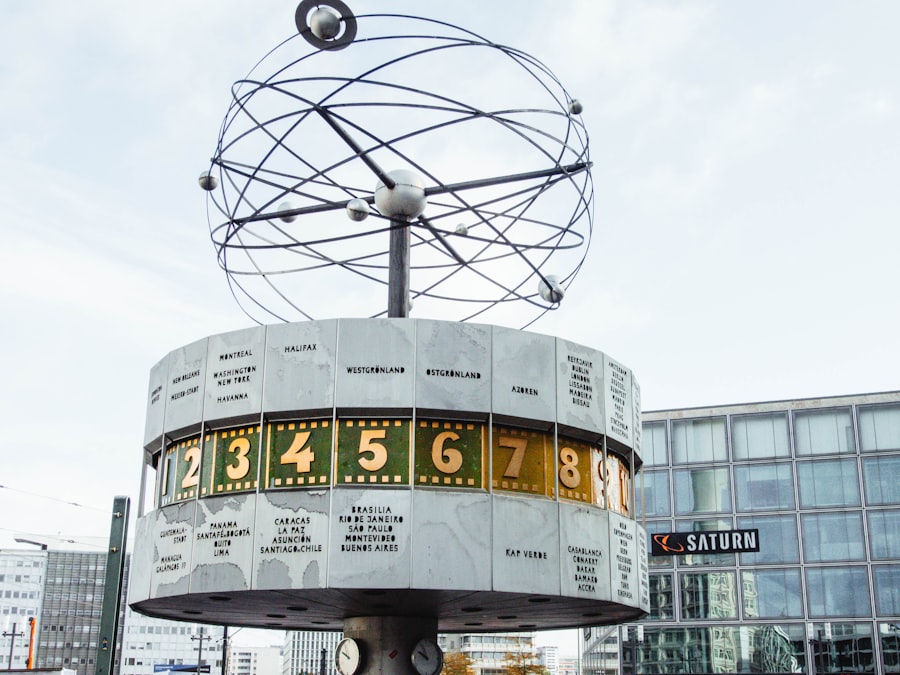
While satellite navigation immediately springs to my mind when discussing satellite clocks, my exploration reveals their pervasive influence extending far beyond simply knowing my location. They are the unseen glue holding together numerous critical infrastructure elements.
Synchronizing Communication Networks
I realize that precise timing is paramount for modern communication networks. Cellular networks, for instance, rely on incredibly accurate timing to synchronize their base stations, ensuring seamless handoffs between towers and preventing dropped calls. The timing provided by satellite clocks is a foundational element for this synchronization, allowing vast and complex networks to operate efficiently. When I use my mobile phone, I am implicitly relying on these satellite clocks.
Financial Transactions and High-Frequency Trading
Another area where I see the critical role of satellite clocks is in the financial sector, particularly in high-frequency trading. These systems execute millions of transactions per second, and even microscopic timing discrepancies can lead to significant financial implications. Regulators often require precise time synchronization for audit trails, and satellite clocks provide the common, highly accurate time reference needed to timestamp these transactions. I consider them the impartial timekeepers of the global economy.
Scientific Research and Earth Observation
I also find myself looking at scientific research as a major beneficiary. Applications in geodesy, for example, rely on extremely precise measurements of Earth’s shape and gravitational field. Satellite clocks contribute to the accuracy of these measurements. Furthermore, in fields like radio astronomy, vast arrays of telescopes are synchronized to act as a single, giant instrument (Very Long Baseline Interferometry, VLBI). The precision timing from satellite clocks is essential for combining the data from these geographically dispersed telescopes, allowing me to “see” the universe with unprecedented detail.
Critical Infrastructure Synchronization
Beyond these specific examples, I recognize that countless other critical infrastructure components, from power grids to air traffic control systems, depend on precise time synchronization. A disruption in this synchronization could have cascading effects, leading to widespread outages or safety hazards. Satellite clocks, therefore, act as a silent guardian, ensuring the smooth and reliable operation of these vital systems. I am often struck by the profound impact of technologies I rarely consciously consider.
Precision timing satellite clocks play a crucial role in various applications, from global positioning systems to telecommunications. For those interested in exploring the advancements in this field, a related article discusses the latest innovations and their implications for technology. You can read more about it in this insightful piece on timing technologies, which highlights how these satellite clocks are revolutionizing our understanding of timekeeping and synchronization.
The Future of Satellite Clocks: Innovations on the Horizon
| Metric | Description | Typical Value | Unit |
|---|---|---|---|
| Clock Type | Type of atomic clock used in satellite | Cesium, Rubidium, Hydrogen Maser | N/A |
| Frequency Stability | Measure of clock frequency variation over time | 1 × 10-13 to 1 × 10-15 | Allan Deviation |
| Time Accuracy | Precision of time measurement relative to UTC | 1 to 10 | Nanoseconds |
| Drift Rate | Rate at which clock frequency changes over time | 1 × 10-14 per day | Fractional Frequency |
| Temperature Sensitivity | Change in clock frequency per degree Celsius | 1 × 10-12 | Fractional Frequency / °C |
| Power Consumption | Electrical power required to operate the clock | 5 to 15 | Watts |
| Operational Lifetime | Expected functional duration of the clock in orbit | 7 to 12 | Years |
As I look to the future, I see an ongoing drive for even greater precision and resilience in satellite clock technology. The relentless pursuit of accuracy is not merely an academic exercise; it promises to unlock new capabilities and further enhance existing services.
Optical Atomic Clocks in Space
One of the most exciting developments I am tracking is the deployment of optical atomic clocks in space. These clocks, which use laser light to interrogate atoms at optical frequencies, are orders of magnitude more stable and accurate than the microwave atomic clocks currently in use.
Unprecedented Accuracy
I anticipate that integrating optical atomic clocks into future satellite constellations could lead to unprecedented levels of timing accuracy. This could translate into centimeter-level positioning accuracy for ordinary users, far surpassing the current meter-level capabilities. Imagine a world where my mobile phone could pinpoint my exact location with such precision – the possibilities for augmented reality, autonomous vehicles, and location-based services are immense.
Enhanced Fundamental Physics Research
Beyond practical applications, I believe these ultra-precise clocks in space will open new avenues for fundamental physics research. They could be used to test theories of relativity with even greater rigor, search for variations in fundamental constants, or even contribute to the detection of gravitational waves. For me, this is where science and engineering converge to push the boundaries of human knowledge.
Miniaturization and Redundancy
My perspective on the future also includes a strong emphasis on miniaturization and enhanced redundancy. As satellites become smaller and constellations grow larger, there’s a drive to develop smaller, lighter, and more power-efficient atomic clocks that can still maintain exceptional performance.
Swarm Satellite Constellations
I foresee the potential for swarm satellite constellations, where hundreds or even thousands of small satellites work together. For such constellations, miniature, robust atomic clocks will be absolutely essential for maintaining synchronization and data integrity across the entire network. This would allow for even more comprehensive global coverage and resilience.
Enhanced Robustness Against Failures
By having multiple, smaller, and redundant clocks on each satellite, the overall system becomes significantly more robust against individual clock failures. If one clock malfunctions, others can seamlessly take over, maintaining the integrity of the timing signal. I view this as a crucial step towards ensuring the uninterrupted availability of satellite-based services.
In conclusion, my journey through the world of satellite clocks reveals a complex, yet elegant system. From the careful handling of relativistic effects to the unwavering precision of atomic transitions, these orbital timekeepers are the silent enablers of our technologically advanced society. As I reflect on their pervasive influence and the innovations on the horizon, I am reminded that even the most seemingly abstract scientific principles can have the most profound and tangible impact on my daily life and on the future of humanity.

EXPOSED: The Ring Camera Footage That Ended My Family Fraud!
FAQs
What is the purpose of precision timing satellite clocks?
Precision timing satellite clocks are used to provide highly accurate time measurements essential for navigation, communication, and scientific applications. They enable systems like GPS to determine precise locations by synchronizing time signals transmitted from satellites to receivers on Earth.
How do precision timing satellite clocks work?
These clocks typically use atomic clock technology, such as cesium or rubidium atoms, to maintain extremely stable and accurate time. The clocks measure the vibrations of atoms, which occur at consistent frequencies, allowing the satellite to keep time with minimal drift over long periods.
Why is precision timing important for satellite navigation systems?
Accurate timing is crucial because satellite navigation systems calculate positions based on the time it takes for signals to travel from satellites to receivers. Even tiny errors in timing can lead to significant errors in location determination, so precision timing ensures reliable and accurate navigation.
What types of atomic clocks are commonly used in precision timing satellites?
The most common atomic clocks used in satellites are cesium beam clocks and rubidium atomic clocks. Cesium clocks offer very high accuracy and stability, while rubidium clocks are smaller and consume less power, making them suitable for various satellite applications.
How do satellite clocks maintain accuracy over time?
Satellite clocks are regularly synchronized and corrected using ground control stations and inter-satellite communication. Additionally, advanced algorithms compensate for environmental factors such as temperature changes and relativistic effects caused by the satellite’s speed and gravitational field differences.