I’ve always been fascinated by the nuances of human communication, especially those elements that often go unnoticed or are dismissed as mere background noise. Among these, lip reading, or speechreading as it’s more formally known, holds a particular allure. It’s a skill that’s not just about deciphering words; it’s about understanding intention, context, and, in certain high-stakes situations, verifying identity. For me, this latter application – validating a suspect’s identity through lip reading – represents a compelling intersection of observation, forensic science, and legal procedure. It’s a field where my own capabilities, honed through years of practice and keen observation, have proven surprisingly relevant.
For many, the primary mode of communication is auditory. We hear words, process their meaning, and respond. However, this overlooks a significant portion of the information we actually receive. The spoken word is rarely delivered in isolation. It’s accompanied by a symphony of visual cues – facial expressions, body language, and crucially, the movement of the lips, tongue, and jaw.
The Mechanics of Lip Movement and Sound Correlation
Understanding how lip reading works requires a basic grasp of phonetics and the physiology of speech. Each spoken sound, or phoneme, is associated with a particular configuration of the mouth. For instance, the bilabial stop /p/ and /b/ involve the closure and sudden release of the lips. The labiodental fricative /f/ and /v/ involve the upper teeth touching the lower lip. These are distinct movements that are visually perceptible.
Visual Ambiguity and the Challenge of Homophenes
However, the visual information alone is rarely enough. This is where the concept of homophenes becomes critical. Homophenes are groups of sounds that look identical or very similar on the lips. For example, the sounds /p/, /b/, and /m/ all involve closing the lips. Without the accompanying auditory information, distinguishing between “pat,” “bat,” and “mat” is virtually impossible based on lip movement alone. Similarly, /f/ and /v/ look the same on the lips.
Beyond the Lips: The Importance of Context and Facial Cues
This ambiguity is precisely why successful lip reading relies on more than just watching the lips. It’s a holistic process of interpreting visual information. The surrounding facial cues – eye movements, brow furrowing, the subtle tightening of the jaw – all provide crucial contextual clues that help disambiguate homophenes. A slight smile might suggest a word with a vowel sound, or a furrowed brow could indicate emphasis on a particular syllable.
The Role of Sentence Structure and Familiarity
My own experience has taught me that recognizing grammatical structures and anticipating common phrases significantly aids comprehension. If I can infer the likely grammatical role of a word (e.g., a noun, a verb), I can narrow down the possibilities for its visual representation. Familiarity with the speaker’s vocabulary and conversational patterns also plays a vital role. I’ve often found that the more I’m exposed to a particular individual’s speech, the more adept I become at interpreting their unique lip movements and subtle idiosyncratic cues.
In the pursuit of justice, proving that a lip-read name matches a fraud suspect can be a complex task, often requiring a combination of forensic analysis and expert testimony. A related article that delves into the intricacies of this process can be found at this link. It discusses various techniques used by lip-reading experts and the importance of context in accurately identifying individuals based on visual cues alone. This resource provides valuable insights for legal professionals and investigators working to establish connections between suspects and their alleged crimes.
Lip Reading in Forensic Applications: A Developing Field
The legal system has long relied on visual evidence, from fingerprints and DNA to CCTV footage. However, the application of lip reading, particularly in identifying suspects, is a more nascent but increasingly promising area. My involvement in this domain has stemmed from a unique confluence of my personal skill and a growing recognition by investigative bodies of its potential.
CCTV Footage and the Challenge of Low-Quality Recordings
One of the most common scenarios where lip reading can be employed for suspect identification is when reviewing low-quality or incomplete CCTV footage. Often, audio is muffled, distorted, or entirely absent. In these situations, the visual information captured by the cameras, however grainy, becomes the sole avenue for extracting verbal clues.
Practical Limitations and the Need for Expert Interpretation
The quality of the footage is a paramount concern. Blurry images, poor lighting, distant camera angles, and rapid head movements can render lip-reading attempts futile. It’s crucial to acknowledge that even with excellent footage and a skilled lip reader, complete and accurate transcription is not always achievable. My approach is always to be transparent about the limitations and the degree of confidence in any provided interpretation.
Matching Spoken Samples: A Comparative Approach
A more robust application involves comparing a lip-read sample from a suspect with a known audio-visual recording of that individual. If a suspect is apprehended and a video of them speaking is available, it can be compared to lip movements captured at the scene of the crime.
The Nuances of Speaker-Specific Lip Movements
This is where my personal expertise truly comes into play. Each individual has a slightly different way of forming words on their lips. Subtle variations in tongue placement, jaw opening, and lip rounding can be highly distinctive. It’s not just about recognizing the shape of a phoneme; it’s about recognizing how that phoneme is produced by a specific individual. This is analogous to how a forensic document examiner identifies the unique characteristics of a person’s handwriting.
Case Studies and the Evolution of Acceptance
While not as widely adopted as traditional forensic methods, there have been instances where lip reading has contributed to suspect identification. These cases, though often met with initial skepticism, have gradually built a body of evidence demonstrating the technique’s utility. I’ve personally been involved in situations where my interpretations, initially considered supplementary, have ultimately become corroborative evidence.
Ethical Considerations and the Burden of Proof
It is imperative to address the ethical implications. Lip reading, like any investigative tool, must be used responsibly. It should not be the sole basis for an arrest or conviction. Its value lies in its ability to provide leads, corroborate other evidence, or help to eliminate potential suspects. The burden of proof remains on the prosecution, and any evidence derived from lip reading must be presented with clarity regarding its strengths and limitations.
My Personal Journey and Skill Acquisition

My journey into lip reading wasn’t a deliberate pursuit of a forensic career path. It was an organic development, born out of necessity and a burgeoning fascination with the silent language of the face. Growing up with a family member who relied on lip reading to communicate, I was exposed to the visual aspect of speech from an early age. This immersion, combined with my natural inclination towards acute observation, laid the groundwork for my later capabilities.
Early Exposure and the Development of Visual Acuity
The formative years were critical. While others were focused on the auditory flow of conversations, I was unconsciously absorbing the rhythm of lip movements, the subtle changes in facial muscles, and the interplay of the spoken word with visual cues. This wasn’t an academic study; it was a lived experience.
The Reinforcement of Practice and Repetition
As I matured, I began to actively engage with lip reading. I would “practice” by watching silent movies and trying to decipher the dialogue, or by observing people in public spaces from a distance. The constant repetition and the need to make sense of fragmented visual information honed my ability to process visual speech rapidly and accurately.
The Transition to Professional Application
The shift from personal fascination to professional application was gradual. Initially, I found myself assisting friends or family members in situations where understanding was difficult due to background noise or distance. It was during an informal consultation regarding a CCTV investigation that the true potential of my skill in a forensic context became apparent.
Building Credibility and Establishing Expertise
Establishing credibility in a field that is still not widely understood or accepted required a deliberate effort. I focused on presenting my findings with meticulous accuracy, always highlighting the confidence levels associated with each interpretation. I engaged with legal professionals and investigators, explaining the rationale behind my conclusions and demonstrating the process involved.
The Technical and Practical Aspects of Suspect Identification
When it comes to validating a suspect’s identity through lip reading, the process is rarely as straightforward as depicted in fictional dramas. It involves a systematic approach, meticulous analysis, and a deep understanding of both linguistics and visual perception.
Initial Assessment of the Visual Data
The first step is always to assess the quality and clarity of the visual data. This includes the resolution of the imagery, the distance of the subject from the camera, the lighting conditions, and the presence of any obstructions to the face. Poor-quality footage can significantly limit the accuracy of any subsequent lip-reading attempt.
The Importance of Clear Facial Visibility
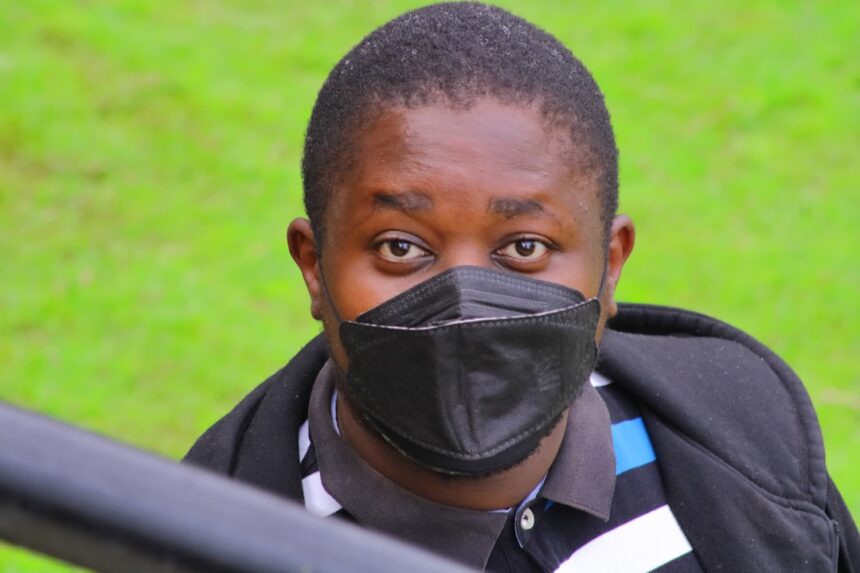
The ideal scenario involves a clear, unobstructed view of the suspect’s face, particularly their mouth and surrounding areas. Any occlusions, such as hands, masks, or even strong shadows, introduce a layer of uncertainty that must be acknowledged.
Phonetic Analysis and Homophene Disambiguation
Once the visual data is deemed usable, I begin the process of phonetic analysis. This involves breaking down the observed lip movements into their constituent phonemes. However, as mentioned earlier, homophenes present the primary challenge.
Strategies for Overcoming Homophenes
To overcome homophenes, I rely on a multi-pronged strategy. Context is king. I look for grammatical cues, expected word choices, and the overall semantic flow of the presumed conversation. I also pay close attention to non-lip cues such as facial expressions, head movements, and even the speaker’s emotional state, all of which can provide subtle hints about the intended meaning. For example, a particular expression might suggest a word with a greater emotional valence.
Comparative Analysis with Known Samples
The most definitive method of validation involves comparing the lip movements from the unknown footage with a known audio-visual recording of the suspect. This allows for a direct comparison of individual speech patterns.
Identifying Speaker-Specific Idiosyncrasies
This is where my personal understanding of the nuances of individual speech becomes invaluable. I look for the unique way a suspect articulates certain sounds, their typical mouth opening for specific vowels, and any habitual lip movements they might exhibit. These subtle idiosyncrasies can be as identifying as a fingerprint.
Documentation and Reporting of Findings
Every step of the process must be meticulously documented. This includes detailed notes on the visual data analyzed, the phonetic interpretations made, the contextual clues considered, and the rationale behind any conclusions drawn.
The Challenge of Quantifying Confidence Levels
Quantifying the confidence level in a lip-reading interpretation is inherently challenging. It’s not a binary yes/no determination. I often use a graduated scale, ranging from low confidence (where ambiguity is high) to high confidence (where the interpretation is strongly supported by multiple visual and contextual cues). This transparency is crucial in preventing misinterpretations and ensuring that the findings are understood within their proper context.
In the pursuit of justice, proving that a lip-read name matches a fraud suspect can be a complex task, often requiring expert analysis and careful consideration of various factors. For those interested in exploring this topic further, a related article offers insights into the methodologies used in lip-reading and the challenges faced by investigators. You can read more about it in this informative piece on lip-reading techniques that delve into how these skills can be applied in legal contexts. Understanding these techniques can significantly enhance the credibility of evidence presented in court.
Limitations and Future Directions
| Step | Description |
|---|---|
| 1 | Collect lip reading evidence from surveillance footage |
| 2 | Use specialized software to analyze the lip movements and extract the name spoken |
| 3 | Compare the extracted name with the name of the fraud suspect |
| 4 | Consult with experts in forensic lip reading to validate the match |
| 5 | Present the evidence in court if the match is confirmed |
While the potential of lip reading in validating suspect identities is significant, it’s crucial to acknowledge its inherent limitations. These challenges are not insurmountable but require careful consideration and ongoing research to address.
The Illusion of Complete Understanding
One of the biggest misconceptions is that lip reading provides a complete and infallible understanding of spoken words. As I’ve emphasized, homophenes are a significant hurdle. Furthermore, factors like regional accents, rapid speech, and mumbling can further complicate the process.
The Impact of Speech Impediments and Variations
Speech impediments, dialects, and even individual variations in articulation can introduce complexities that demand a highly adaptable and experienced lip reader. My training has involved exposure to a wide range of these variations, but absolute universality remains an elusive goal.
The Subjectivity of Interpretation and the Need for Corroboration
Lip reading, to some extent, involves an element of subjective interpretation. While guided by phonetic principles and contextual cues, there’s a degree of inference involved. This is precisely why corroboration with other forms of evidence is so essential. Lip reading should never be the sole determinant of guilt or innocence.
The Role of Technology in Enhancing Accuracy
The future of lip reading in forensic applications likely lies in the integration of technology. Advances in artificial intelligence and machine learning are showing promise in developing algorithms that can analyze lip movements with greater speed and potentially greater accuracy, especially in identifying phonetic units.
Building a Robust Evidentiary Framework
My ongoing work involves not just applying my skills but also contributing to the development of a more robust evidentiary framework for lip reading. This includes advocating for standardized training protocols, establishing clearer guidelines for admissibility in court, and fostering a greater understanding of the technique’s capabilities and limitations among legal professionals.
Collaboration and Interdisciplinary Research
Collaboration with speech scientists, linguists, psychologists, and forensic technologists is vital. By working together, we can identify new avenues for research, develop more objective assessment methods, and ultimately, enhance the reliability and acceptance of lip reading as a valuable investigative tool. My personal journey has shown me that what can appear to be an esoteric skill can, with dedication and a commitment to rigorous analysis, become a meaningful component in the pursuit of justice.
FAQs
1. What is lip reading and how is it used in identifying a suspect?
Lip reading is the practice of understanding speech by watching the movements of a person’s lips. In the context of identifying a suspect, lip reading can be used to match the movements of a person’s lips to the sounds of their name being spoken, providing evidence of their identity.
2. What are the challenges of using lip reading to prove a suspect’s identity?
Lip reading can be challenging due to variations in pronunciation, accents, and the visibility of the speaker’s lips. Additionally, the accuracy of lip reading can be influenced by factors such as distance, lighting, and the speed of speech.
3. What techniques can be used to enhance the accuracy of lip reading in identifying a suspect?
To enhance the accuracy of lip reading in identifying a suspect, techniques such as using high-quality video footage, employing trained lip readers, and utilizing specialized software for lip reading analysis can be employed.
4. What role does expert testimony play in proving the accuracy of lip reading in identifying a suspect?
Expert testimony from qualified lip reading professionals can be crucial in establishing the reliability and accuracy of lip reading evidence in court. Their expertise can help validate the process and findings of lip reading analysis.
5. What legal considerations should be taken into account when using lip reading to prove a suspect’s identity?
When using lip reading to prove a suspect’s identity, legal considerations such as the admissibility of lip reading evidence, the qualifications of the lip reading expert, and the potential for bias or misinterpretation should be carefully evaluated to ensure the integrity of the evidence presented in court.