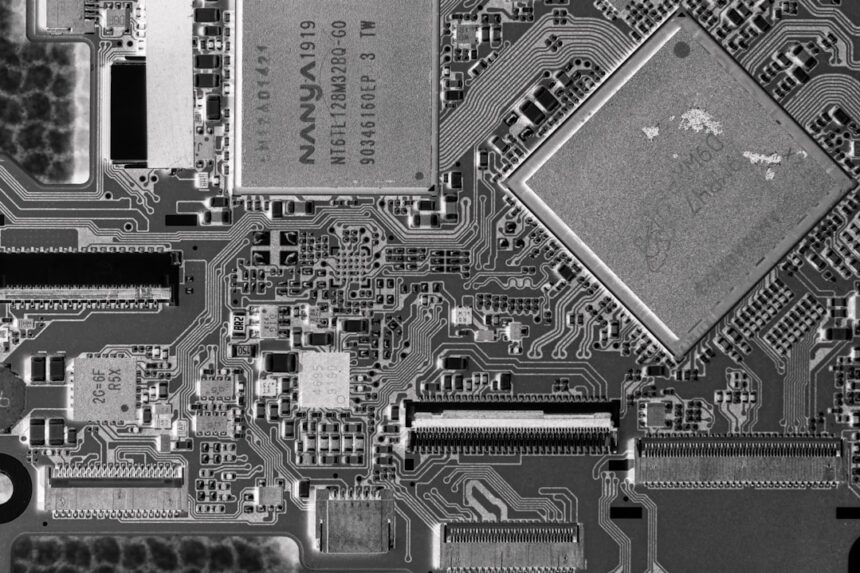
I embark on a journey into the intricate world of safeguarding our orbital sentinels, those tireless observers and communicators that circle our planet. My focus today is on a crucial aspect of their longevity and functionality: protecting satellites with radiation-hardened electronics. I see this as a vital endeavor, a constant battle against an invisible yet pervasive enemy.
From my perspective, the space environment is a double-edged sword. While it offers an unparalleled vantage point for scientific discovery, communication, and navigation, it also presents a formidable challenge to unshielded electronics. This challenge primarily comes from various forms of radiation, a relentless barrage that can cripple or destroy sophisticated instruments. I understand that to comprehend the solution, I must first grasp the nature of the problem.
Galactic Cosmic Rays (GCRs)
I consider GCRs to be the heavy artillery of cosmic radiation. These highly energetic atomic nuclei, originating from outside our solar system, traverse vast distances, carrying immense energy. When they strike a satellite, their high kinetic energy can cause significant damage.
- Ionization Effects: As a GCR passes through semiconductor material, it leaves a trail of ionized atoms. This sudden influx of charge can disrupt the delicate balance of an integrated circuit, leading to transient errors. I envision this as a tiny, high-speed projectile slamming into a finely tuned clockwork mechanism, momentarily throwing it off timing.
- Single Event Effects (SEEs): This is a broad category of phenomena caused by a single energetic particle. I’ve learned that a particularly problematic SEE is the Single Event Upset (SEU), a transient change in the state of a memory cell or register, which can corrupt data. While often non-destructive, repeated SEUs can lead to persistent errors or even system failure if not mitigated. I think of it as a momentary glitch, an unintentional flick of a switch that changes a ‘0’ to a ‘1’. More severe SEEs include Single Event Latch-up (SEL), where a parasitic circuit is accidentally activated, potentially causing a destructive overcurrent, akin to a short circuit. Then there’s Single Event Burnout (SEB) or Single Event Gate Rupture (SEGR), which are catastrophic failures, like a permanent electrical scar.
Solar Particle Events (SPEs)
My understanding is that SPEs are more localized and episodic than GCRs, but equally, if not more, dangerous. These events, typically associated with solar flares and coronal mass ejections, unleash a torrent of high-energy protons and electrons.
- Proton Fluence: During an SPE, satellites are bombarded with a surge of protons. These particles, though less massive than GCRs, are far more abundant during such events. I see this as a sudden, intense downpour after a constant drizzle, overwhelming the system. Their cumulative effect can degrade performance and lead to long-term damage.
- Geomagnetic Storms: While not directly radiation particles, I recognize that SPEs can trigger geomagnetic storms in Earth’s magnetosphere. These storms can accelerate existing particles in the Van Allen belts to dangerous energy levels, increasing the radiation dose for satellites passing through these regions. I perceive this as a secondary wave of attack, augmenting the primary one.
Van Allen Radiation Belts
I consider the Van Allen belts to be Earth’s natural defense against much of the incoming cosmic radiation, but they also trap energetic particles, creating regions of intense radiation. Satellites in certain orbits, particularly Medium Earth Orbit (MEO) and Geosynchronous Earth Orbit (GEO), spend significant time transiting or residing within these belts.
- Trapped Electrons and Protons: Within these belts, electrons and protons are trapped by Earth’s magnetic field. My research indicates that these particles, though generally lower in energy than GCRs or SPE particles, are present in much higher concentrations. Their continuous bombardment can lead to cumulative damage over time, a slow erosion of functionality rather than a sudden catastrophic event. I liken this to a constant sandblasting, slowly wearing down the resilience of the components.
- Total Ionizing Dose (TID): This is a critical metric I consider. TID measures the cumulative energy deposited by radiation in a material over time. Even at low doses, over the lifespan of a satellite, this continuous exposure can cause a gradual degradation of electronic components, altering their electrical characteristics and eventually leading to failure. I see it as the gradual aging process accelerated by an external force.
Radiation-hardened electronics are crucial for the reliability of satellites operating in harsh space environments. For those interested in learning more about the advancements and challenges in this field, a related article can be found at this link. This article delves into the latest technologies and methodologies used to protect electronic components from radiation damage, ensuring the longevity and functionality of satellite systems in orbit.
The Pillars of Protection: Radiation Hardening Strategies
Having laid out the formidable nature of the threat, I now turn my attention to the countermeasures. Protecting satellites involves a multi-layered approach, a strategic deployment of defenses to ensure continued operation in a hostile environment. I view radiation hardening as an essential discipline, a blend of materials science, electrical engineering, and intelligent system design.
Material Selection and Shielding
My initial line of defense always begins with material selection. Just as an architect chooses robust materials for a building, I advocate for components that inherently possess a higher tolerance for radiation.
- Intrinsic Component Hardness: I am keenly aware that some semiconductor materials and device architectures are naturally more resilient to radiation effects. For example, Silicon-on-Insulator (SOI) technology is often preferred over bulk silicon due to its dielectric isolation, which can reduce parasitic effects caused by radiation. I see this as building a stronger foundation from the outset.
- Spot Shielding and Bulk Shielding: When intrinsic hardness isn’t enough, or when dealing with highly sensitive components, I consider shielding. Bulk shielding, using materials like aluminum, provides a general level of protection. However, I understand that too much shielding can add prohibitive mass to a satellite, so a more targeted approach is often employed. Spot shielding involves placing localized, heavier shielding around particularly vulnerable components. I think of this as strategically placed armor plating, protecting the most vital organs.
- Passive and Active Shielding Concepts: While most current shielding is passive (simply a barrier), I’ve explored potential future applications of active shielding, which could use electromagnetic fields to deflect charged particles. While still largely theoretical for practical satellite applications due to power and mass constraints, I keep this concept in my long-term vision.
Redundancy and Error Correction
I consider redundancy and error correction to be the backbone of fault tolerance in any complex system, especially in radiation-prone environments. These techniques act as safety nets, ensuring that even if a component is affected, the system can continue to function.
- Triple Modular Redundancy (TMR): This is a widely adopted technique I observe in critical satellite systems. It involves using three identical modules for a particular function, with a voter circuit determining the correct output based on a majority vote. If one module experiences a single event upset, the other two can correct the error. I visualize this as having three identical brains, and if one briefly glitches, the other two override the error, keeping the system on track.
- Error Correcting Code (ECC) Memories: For memory systems, I prioritize the use of ECC. These codes add redundant bits to data, allowing the system to detect and correct single-bit errors and often detect multi-bit errors. This is crucial for maintaining data integrity in the face of SEUs. I see ECC as a built-in editorial team, constantly proofreading and correcting any accidental typos introduced by radiation.
- Watchdog Timers and System Resets: I also include watchdog timers in my design considerations. These are hardware timers that, if not periodically reset by the software, will automatically trigger a system reset. This mechanism helps recover from system hangs or unrecoverable software errors caused by radiation-induced glitches. I like to think of this as an automatic reboot button, a failsafe for when the system gets stuck.
Hardening at the Circuit Design Level
Beyond materials and system architecture, I delve into the very fabric of the electronic circuits themselves, implementing design techniques to enhance their radiation tolerance.
- Layout Techniques: My experience tells me that careful attention to circuit layout can significantly improve radiation hardness. This includes increasing the distance between sensitive nodes, using guard rings to prevent latch-up, and optimizing transistor sizing to reduce sensitivity to charge collection. I consider this akin to meticulous urban planning, designing the city’s infrastructure to withstand environmental stresses.
- Device Sizing and Operating Point Optimization: Adjusting the size of transistors and optimizing their operating voltages and currents can make them less susceptible to radiation effects. For instance, larger transistors tend to be less prone to SEUs. I see this as tuning an engine to perform optimally under adverse conditions, ensuring its robustness.
- Specialized Transistor Designs: I am also aware of specialized transistor designs, such as hardened MOSFETs, which incorporate features to mitigate dose effects and single-event effects. These designs are meticulously crafted to withstand the harsh space environment.
Testing and Verification: The Crucible of Reliability
I firmly believe that theoretical hardening strategies are incomplete without rigorous testing and verification. Just as a bridge is stress-tested before opening to traffic, satellite electronics must prove their resilience in simulated space conditions. This phase is where I gain confidence in the effectiveness of the chosen protection mechanisms.
Ground-Based Radiation Testing Facilities
I frequently utilize ground-based facilities that can replicate the effects of space radiation. These specialized laboratories are invaluable for evaluating the radiation performance of electronic components and systems.
- Heavy Ion Accelerators: For simulating GCRs and severe SEEs, I turn to heavy ion accelerators. These machines can fire precisely controlled beams of high-energy ions at components, allowing me to observe their response to individual particle strikes. This provides critical data on SEU rates, potential for latch-up, and other single-event phenomena. I see this as a controlled bombardment, a systematic resilience test.
- Proton Accelerators: To simulate SPEs and the effects of trapped protons, I use proton accelerators. These facilities provide high-fluence proton beams, enabling me to assess TID effects and single-event effects caused by protons. This helps me understand the cumulative damage these particles can inflict.
- Co-60 Gamma Ray Irradiators: For simulating the total ionizing dose primarily caused by trapped electrons and photons, I rely on Cobalt-60 gamma ray irradiators. These facilities provide a steady, uniform dose of gamma rays, allowing me to accelerate the aging process of components and determine their TID tolerance. I view this as a rapid-aging chamber, compressing years of exposure into weeks or months.
Component-Level and System-Level Testing
My testing regimen extends from individual components to fully integrated systems, providing a holistic view of radiation tolerance.
- Device Under Test (DUT) Characterization: At the component level, I perform detailed characterization of DUTs during and after radiation exposure. This involves monitoring electrical parameters like threshold voltage, leakage current, and gain to quantify degradation. This is akin to a detailed medical check-up, diagnosing any subtle changes in functionality.
- System-Level Performance Evaluation: Ultimately, I need to ensure the entire satellite system can operate reliably. This involves integrating the radiation-hardened components into larger subsystems and performing end-to-end functional tests under simulated radiation. I focus on ensuring that protective measures at the component level translate into robust system performance, that the individual bricks contribute to a strong wall.
- Test Plans and Standards: I adhere to established industry standards and develop comprehensive test plans tailored to the specific mission profile and target radiation environment. These plans dictate the radiation types, energy levels, and dosimetry required for accurate assessment. This provides a structured and verifiable approach to qualification.
The Future Landscape: Evolving Challenges and Solutions
As I look ahead, I anticipate an ever-evolving landscape of challenges and innovations in protecting satellites. The quest for more capable, yet smaller and lighter, satellites drives continuous research in radiation hardening.
Advancements in Radiation-Hardened Technologies
I foresee a future where materials science and semiconductor technology converge to produce even more intrinsically robust electronics.
- Novel Materials and Architectures: Research into new semiconductor materials with wider bandgaps and higher displacement damage thresholds promises enhanced radiation tolerance. I’m also observing the development of more advanced SOI variants and other insulating substrates. I imagine developing super-materials for our orbital guardians.
- 3D Integrated Circuits (3D-ICs): While compact, the inherent complexity of 3D-ICs presents challenges for power dissipation and radiation shielding. However, I believe that careful design could potentially offer avenues for integrating shielding layers or redundant elements more effectively within the stacked architecture.
- Self-Healing and Adaptive Systems: I envision the development of electronics that can not only detect radiation-induced errors but also actively self-heal or adapt their operating parameters to mitigate damage. This could involve reconfiguring circuits or dynamically allocating resources away from damaged sections. I see this as the ultimate defense, a system that repairs itself while under attack.
Emerging Threats and Mission Requirements
My understanding is that future space missions will push the boundaries of what is possible, bringing new radiation challenges.
- Deep Space Missions: As we venture further into the solar system, away from Earth’s protective magnetosphere, missions will face significantly higher and more sustained levels of GCRs and SPEs. Hardening requirements for these missions will be exceptionally stringent. I prepare for even more hostile frontiers.
- Small Satellite Constellations: The rise of large constellations of small satellites brings a different challenge. While individual satellites may be cheaper, the sheer number means a greater collective risk of radiation-induced failures if not properly hardened. Cost-effective hardening solutions will be paramount. I acknowledge the need to scale up our protective measures efficiently.
- Commercial Off-The-Shelf (COTS) Components: To reduce costs, there’s a growing desire to use COTS electronics in space. However, these components are not designed for radiation environments, necessitating rigorous testing and often extensive external hardening measures. I believe this presents a significant hurdle, a constant weighing of cost against reliability.
In conclusion, my journey through the realm of radiation-hardened electronics reveals a continuous and dynamic battle. I am convinced that the reliable operation of our satellites, those silent sentinels guiding our modern world, hinges on our ability to outwit the invisible forces of space radiation. From the fundamental understanding of the cosmic adversary to the sophisticated design of resilient circuitry and the rigorous crucible of testing, every step is crucial. As I look towards the future, I see an ongoing evolution, a relentless pursuit of innovation to ensure that our eyes and ears in orbit remain steadfast, delivering their invaluable services for generations to come. I am dedicated to this endeavor, understanding its profound implications for humanity’s presence and progress in space.

EXPOSED: The Ring Camera Footage That Ended My Family Fraud!
FAQs
What are radiation hardened electronics used in satellites?
Radiation hardened electronics are specially designed components that can withstand the harsh radiation environment of space. They are used in satellites to ensure reliable operation despite exposure to cosmic rays, solar flares, and other forms of ionizing radiation.
Why is radiation hardening important for satellite electronics?
Radiation hardening is crucial because space radiation can cause malfunctions, data corruption, or permanent damage to electronic circuits. Hardening helps maintain satellite functionality, prolongs mission life, and prevents costly failures.
How are electronics radiation hardened for satellite applications?
Electronics can be radiation hardened through various methods, including using radiation-tolerant materials, shielding, specialized circuit design techniques, error correction codes, and manufacturing processes that reduce susceptibility to radiation-induced effects.
What types of radiation affect satellite electronics?
Satellite electronics are primarily affected by high-energy particles such as protons, electrons, and heavy ions from solar wind, cosmic rays, and trapped radiation belts around Earth. These particles can cause single-event upsets, latch-ups, and cumulative damage.
Are radiation hardened electronics more expensive than standard electronics?
Yes, radiation hardened electronics typically cost more due to specialized design, testing, and manufacturing processes. However, the increased reliability and mission assurance they provide justify the higher expense for space applications.