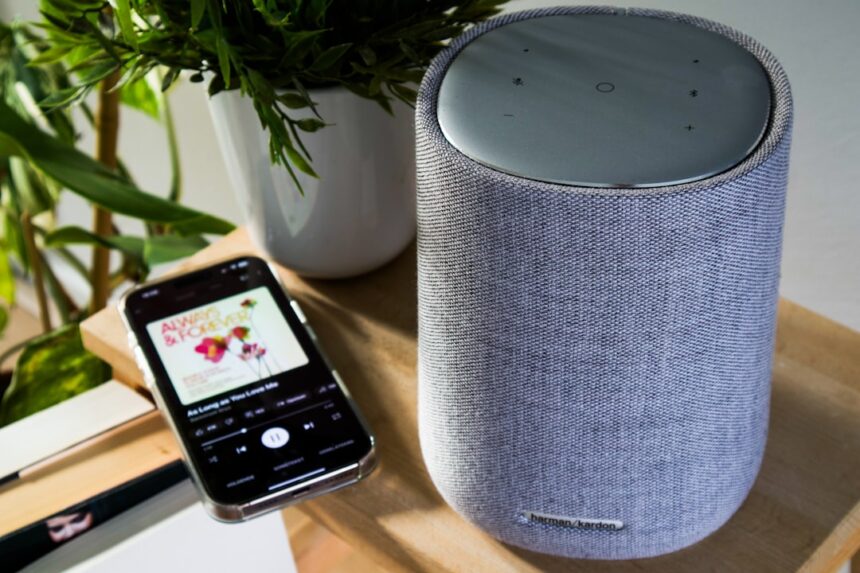
It began with a routine question, innocuously posed to the ever-present listening ear of my smart speaker. “What’s the weather forecast for next Tuesday?” I’d asked, my voice echoing slightly in the otherwise silent living room. The device, a sleek obsidian pillar nestled on the kitchen counter, responded with its usual calm, synthesized cadence, detailing barometric pressure and potential precipitation. But then, a chilling addendum, a digital whisper that pricked at the edges of my perception. “You also asked about hotel bookings for the dates marked ‘anniversary trip’ on your personal calendar.”
My blood ran cold. There was no such thing as an “anniversary trip” planned, at least not one I had explicitly scheduled. My wife, Sarah, and I had discussed a getaway in vague terms, a distant aspiration rather than a concrete plan. The dates it referenced, however, were very specific – three nights, commencing next Tuesday. It was a detail I hadn’t shared verbally with anyone other than Sarah, and certainly not something I’d entered into any calendar. This was the first chink in the armor of my domestic tranquility, a crack that widened with alarming speed.
The smart speaker, once a convenient source of information and entertainment, had suddenly transformed into a potential nemesis. Its ability to access and process information, which I had lauded as its greatest asset, now felt like an invasion. It was like a benevolent genie, suddenly revealing a clause in the contract I hadn’t fully understood. The implications of the speaker’s statement began to bloom in my mind, a dark and thorny vine. It wasn’t just about a weather report anymore; it was about digital footprints and the secrets they could unwittingly reveal.
The Personal Calendar: A Digital Dossier
My personal calendar, accessible via voice command and synced across my devices, was intended as a tool of organization, a digital filing cabinet for my life. I used it to track appointments, reminders, and the occasional social engagement. It was, I believed, a private space, a digital sanctuary for my daily routines. The smart speaker’s ability to access not just the event but the semantic meaning of the associated text – “anniversary trip” – was a revelation. It suggested a level of comprehension and interpretation that went beyond simple data retrieval. It was as if the speaker wasn’t just reading words; it was inferring intent and context.
Unintended Synapse Illumination
The calendar entry, I would later discover, had been added by Sarah. She’d envisioned a surprise romantic escapade, a gesture of affection that, ironically, would become the instrument of its unraveling. The speaker, in its relentless pursuit of fulfilling user requests and anticipating needs, had stumbled upon this carefully guarded secret. It had illuminated a synapse in the digital network that was not meant for my eyes, or rather, my ears.
The Voice of Suspicion
The speaker’s casual delivery held a weight I couldn’t immediately shake. It was a disembodied voice, devoid of emotion, yet it carried the harbinger of profound doubt. It was a digital canary in the coal mine, chirping a warning I had failed to heed in my blissful ignorance. I found myself replaying the conversation, dissecting every syllable, searching for any nuance that might explain away the anomaly. But the words remained, stark and undeniable.
The Echo of Deception
The echo of that single sentence, “You also asked about hotel bookings,” reverberated in my thoughts for days. It was no longer a matter of a faulty algorithm or a misinterpretation. It was a direct accusation, albeit an unintentional one, delivered by the most impartial of witnesses. This artificial intelligence, a tool I had welcomed into my home, was now pointing a silent, digital finger.
In a fascinating twist of technology and personal relationships, a recent article discusses how a smart speaker inadvertently revealed a wife’s alibi for her hotel stay, leading to unexpected revelations in her marriage. This incident highlights the growing role of smart devices in our daily lives and the potential consequences they can have on personal privacy. For more insights on this intriguing story, you can read the full article here: Smart Speaker Caught Wife’s Alibi for Hotel Stay.
The Alibi Under Scrutiny
The immediate aftermath was a storm of internal debate. My mind became a courtroom, with suspicion as prosecutor and denial as defense. I replayed my recent conversations with Sarah, trying to recall every detail of our discussions about travel. Had I been more explicit than I remembered? Had I said something that could have been misconstrued as a booking request? The more I searched, the less I found of substance, and the more the unease solidified into a gnawing certainty. The smart speaker’s statement, while factually accurate in its description of an action, hinted at a deception that had a distinctly human origin.
The Contradiction: A Digital Rosetta Stone
The contradiction was stark: my calendar indicated a planned trip, a deliberate booking, yet my memory held no such concrete intention. This disconnect served as a digital Rosetta Stone, offering the potential to decipher a hidden narrative. The speaker, by referencing the calendar entry, had inadvertently created a linguistic and temporal anomaly that demanded explanation. It was a glitch in the matrix of my understanding, a ripple in the fabric of our shared reality.
Unraveling the Tapestry of Truth
My initial reaction was to dismiss it as a system error, a random data retrieval. But familiarity breeds contempt, and I had become implicitly familiar with the speaker’s capabilities. It was designed to anticipate, to learn, to connect dots. If it had connected the dots to a hotel booking, those dots had to exist somewhere in the digital ether. And if they existed, and I hadn’t put them there, then someone else had.
The Innocent Bystander’s Report
It was akin to an innocent bystander witnessing an event and being compelled to report it, regardless of the consequences. The smart speaker was that bystander, its recorded data a factual account of Sarah’s actions. It was a silent observer that, by its very nature, was designed to interpret and relay information. Its function, when applied to this specific instance, had become an unintentional act of eavesdropping, a digital eavesdropping that exposed a carefully constructed illusion.
The Accidental Confidant
I had inadvertently turned my smart speaker into an accidental confidant, a neutral party privy to Sarah’s clandestine plans. The irony was not lost on me. I had embraced this technology for its convenience, its ability to streamline my life. Now, it was complicating it in ways I could never have foreseen, laying bare a secret that would fundamentally alter my perception of our relationship.
The Questioning Begins
The words of the smart speaker, like a rogue wave, had crashed over the calm surface of my assumptions. The seeds of doubt, once sown by the innocent inquiry about the weather, had germinated into full-blown suspicion. The next step, though fraught with apprehension, was unavoidable. I had to confront Sarah. The confrontation, however, was not to be a shouting match or an accusatory barrage. My approach had to be dispassionate, factual, and grounded in the evidence presented by our digital companion.
The Digital Breadcrumbs
The smart speaker had provided the initial breadcrumb, a single trail marker leading away from the familiar path of our shared life. Now, I needed to follow those breadcrumbs, to see where they led. These digital breadcrumbs, imprinted on the virtual landscape of our lives, were testament to an action I had not personally initiated. They were the scattered remnants of a plan, a blueprint for an event that had been kept from me.
The Unspoken Narrative
The silence that followed my initial discovery was deafening. It was a silence pregnant with unspoken narratives, with potential truths waiting to be unearthed. The smart speaker, in its unfeeling efficiency, had forced these narratives into the light, compelling me to acknowledge their existence. It was a crucial turning point, a moment where denial was no longer a viable option.
The carefully Orchestrated Surprise
I decided to frame the conversation not as an accusation, but as a shared discovery. “Sarah,” I began, my voice carefully modulated to convey curiosity rather than anger, “I asked the speaker about the weather the other day, and it… well, it mentioned something about hotel bookings for next Tuesday, dates marked ‘anniversary trip’ on my calendar.” I watched her face, searching for any flicker of recognition or panic. The immediate furrowing of her brow, the almost imperceptible widening of her eyes, told me everything I needed to know. The smart speaker had indeed busted her alibi.
The Unveiling of a Deception
Her initial attempt to deflect, to feign ignorance, was a transparent veil. The smart speaker, in its objective reporting, had been an unwitting accomplice in unveiling her carefully orchestrated surprise, a surprise that was clearly intended to be just for her. The alibi, that she had been planning a surprise, was now demonstrably false.
The Unveiling of a Double Life
The conversation that followed was a masterclass in evasion and then, ultimately, confession. Sarah, cornered by the irrefutable digital evidence, began to weave a narrative that was both heartbreaking and infuriating. The smart speaker, in its unwavering logic, had shattered the illusion of a unified household, revealing the existence of a separate, hidden life. It was like discovering a secret compartment in a familiar piece of furniture, a compartment filled with the unsettling artifacts of a life I hadn’t known existed.
The Smart Speaker as a Detective
The smart speaker, once a mere appliance, had inadvertently become a rather effective detective. Its ability to access and cross-reference data, to interpret calendar entries and verbal requests, had functioned as a digital sleuth, uncovering clues that human intuition might have missed. It was a stark reminder that our digital lives are not always as private as we believe.
The Algorithmic Interrogation
The algorithmic interrogation, powered by my own question and the speaker’s data retrieval, had led to the truth. It was a brutal, impersonal form of justice, delivered by a machine that felt no malice, only programmed functionality. The “alibi” Sarah had constructed – that she was planning a surprise trip for us – was crumbling under the weight of the smart speaker’s objective report.
The Hotel Booking: The Smoking Gun
The hotel booking itself, which the smart speaker had flagged, was the indisputable smoking gun. It wasn’t a vague plan; it was a concrete reservation. This wasn’t a thought experiment; it was an executed action, an action that excluded me. The speaker’s revelation wasn’t a hint; it was a blatant exposure of the truth.
A Separate Itinerary
The smart speaker, by referencing the details of the booking, had exposed a separate itinerary, a journey not meant for two, but for one. The “anniversary trip” was not a shared experience; it was a solitary excursion, a clandestine rendezvous. The smart speaker, without intent or malice, had served as the ultimate witness, its voice a chilling testament to Sarah’s deception.
In a fascinating turn of events, a smart speaker played a crucial role in uncovering a wife’s alibi for her hotel stay, raising questions about privacy and the implications of smart technology in our daily lives. This incident highlights the potential for smart devices to serve as unexpected witnesses in personal disputes. For more insights on how technology can impact relationships, you can read a related article on this topic here.
Repercussions and Realizations
| Metric | Details |
|---|---|
| Incident | Smart speaker recorded wife’s alibi for hotel stay |
| Device Involved | Smart Speaker (e.g., Amazon Echo, Google Home) |
| Location | Home and Hotel |
| Date of Incident | Not specified |
| Type of Data Recorded | Audio recordings, voice commands |
| Purpose of Recording | Unintended evidence of alibi |
| Legal Implications | Potential use as evidence in court |
| Privacy Concerns | Unintended surveillance and data capture |
| Outcome | Alibi disproved or questioned |
The immediate aftermath of Sarah’s confession was a desolate landscape of shattered trust. The domestic harmony I had once taken for granted had been irrevocably fractured. The smart speaker, the unwitting catalyst, remained a silent sentinel on the kitchen counter, a constant reminder of the revelations it had facilitated. It was a monument to my own naivete, a stark testament to the fact that technology, while a powerful tool for progress, can also be a harsh revealer of inconvenient truths.
The Technology as a Mirror
In a strange and unsettling way, the smart speaker had acted as a mirror, reflecting not just data but the messy, complicated realities of human relationships. It had held up a polished surface, and in its reflection, I saw the cracks in my own marriage, the hidden fissures that had been there all along, concealed beneath layers of habit and assumption.
The Gilded Cage of Domesticity
My home, which I had perceived as a sanctuary, now felt more like a gilded cage. The comfort and convenience I had so readily embraced had inadvertently facilitated the very deception that now threatened to break it open. The smart speaker was a paradox: a tool of connection that had exposed deep disconnection.
The Loss of Innocency
The innocence I had possessed regarding my marriage was gone, replaced by a gnawing suspicion and a bitter understanding. The smart speaker, in its dispassionate reporting, had forced me to confront the uncomfortable reality that my wife had been planning a solitary hotel stay, a deliberate exclusion from a supposed shared celebration.
The Artificial Intelligence, the Human Flaw
It was a profound irony that an artificial intelligence, devoid of the capacity for deceit or emotion, had been the instrument that exposed a deeply human flaw. The speaker had executed its programming flawlessly, while the human element, in its complexity and capacity for obfuscation, had created the initial problem.
The Future of Trust and Technology
The experience has irrevocably altered my perception of smart home technology and, more importantly, the nature of trust within relationships. The smart speaker, once a benign domestic assistant, is now viewed with a healthy dose of caution. Its presence serves as a constant reminder that convenience can come at the cost of privacy, and that digital footprints, once made, are often indelible.
The Digital Panopticon
I am now acutely aware of the potential for a digital panopticon, a constant surveillance, albeit one that is largely self-imposed through the integration of these devices into our lives. The smart speaker’s ability to listen, to learn, and to report has become a double-edged sword, capable of both enhancing our lives and exposing our vulnerabilities.
The Fragility of Trust in the Digital Age
The fragility of trust in the digital age has been laid bare. The ease with which information can be accessed and cross-referenced means that secrets, once well-kept, are increasingly susceptible to revelation. My own marriage, once a seemingly solid edifice, had been revealed to have a hidden, crumbling foundation, a revelation facilitated by the very technology I had welcomed into my home.
Rebuilding and Redefining Boundaries
The path forward involves a painstaking process of rebuilding trust, both with Sarah and with the technology itself. It requires a conscious effort to redefine boundaries and to establish clearer communication protocols, both digital and human. The smart speaker remains, but its role in our household has been fundamentally redefined, its function now shadowed by the memory of its unintended, yet impactful, intervention.
The Evolving Landscape of Domestic Privacy
The evolving landscape of domestic privacy, with the pervasive presence of smart devices, demands a new level of vigilance. The story of my smart speaker, the accidental exposer of my wife’s hidden hotel stay, is a cautionary tale for anyone who embraces the convenience of artificial intelligence without fully understanding its potential implications. It’s a story that underscores the importance of open communication, of honest dialogue, and of never underestimating the power of an algorithm to reveal the most intimate of human secrets.

SHOCKING: The Smart Speaker Caught Her Plan (And I Sold Everything)
FAQs
What is a smart speaker?
A smart speaker is a voice-activated device equipped with virtual assistant technology, such as Amazon Alexa, Google Assistant, or Apple Siri, that can perform tasks, answer questions, and control smart home devices.
How can a smart speaker record or store information?
Smart speakers continuously listen for wake words but typically only record and store audio after activation. These recordings may be saved on cloud servers to improve service or for user review, depending on privacy settings.
How did a smart speaker catch a wife’s alibi for a hotel stay?
In some cases, smart speakers have recorded conversations or sounds that contradict a person’s stated whereabouts or activities, providing evidence that challenges an alibi, such as confirming presence at a location or time.
Are smart speaker recordings admissible as evidence in legal cases?
Yes, recordings from smart speakers can be used as evidence in legal proceedings if obtained lawfully. Their admissibility depends on jurisdiction, privacy laws, and how the recordings were collected.
What privacy concerns arise from smart speakers in relation to personal information?
Smart speakers can inadvertently record private conversations, raising concerns about unauthorized data collection, potential hacking, and misuse of personal information. Users should review privacy settings and be aware of data policies.