I grew up believing that fairness was an immutable law of the universe, like gravity or the sun rising. My parents, bless their well-meaning hearts, didn’t exactly disabuse me of this notion. They’d talk about Mom’s apple pie being divided equally amongst us children, or how Dad’s prized comic book collection, a tangible representation of his youthful dreams, would one day be shared. These were the foundational bricks of my understanding of inheritance and familial obligation. I envisioned a future where tangible assets, however modest, would be distributed with a surgeon’s precision, each equal in value or sentimental weight. Then, my parents passed, and the carefully constructed edifice of my childhood expectations crumbled.
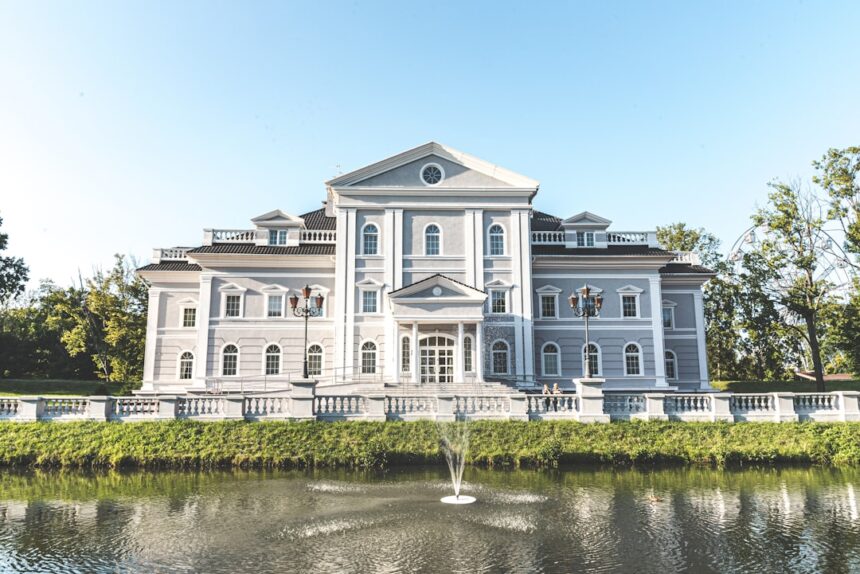
The reality of my father’s estate, when it was finally untangled, was less a surgical divvying and more a chaotic demolition. My brother, let’s call him Mark, emerged from the legal proceedings clutching the keys to the family homestead. Not the modest bungalow where I grew up, but a sprawling, multi-story mansion on the other side of town that my father had acquired decades ago as an investment and largely left to languish, a silent monument to unrealized potential. It was a property that had always existed more in whispered anecdotes than in my direct experience, a gilded cage of my parents’ ambition that I barely knew.
Meanwhile, my portion of the inheritance was, to put it mildly, less substantial. It was a collection of my father’s accumulated debris: a dilapidated storage unit crammed with decades of unfinished projects, yellowing newspapers, and enough obsolete electronics to populate a museum of forgotten technology. Amongst the detritus were a few pieces of furniture that had seen better days, well-worn books that had already been read, and a moderate savings account that, after legal fees and taxes, felt more like a consolation prize than a tangible legacy. It was, to all intents and purposes, a lifetime’s worth of the accumulated detritus of a life, and I was the designated curator of its less glamorous components.
The initial shockwave of the inheritance distribution was profound. It wasn’t just the material disparity; it was the psychological blow. For years, I had envisioned a balanced dispersal, a tangible acknowledgment of shared history. The mansion, a symbol of my father’s success but also a place I had rarely visited, was now Mark’s. My storage unit, filled with the ephemera of a life less lived, was mine. The irony was almost theatrical. It felt like a cosmic joke, a cruel twist of fate that the glittering prize went to the sibling who had been most distant, while I, the one who had remained tethered to our parents’ suburban roots, was left to sift through the remnants.
The Mansion: A Gilded Cage of Memory
The family mansion, a towering structure of red brick and ivy, had always been something of an enigma. My father had purchased it in the late 80s with a vision of grandeur, a statement piece to signify his arrival. For me, it was a place visited on rare occasions, accompanied by a sense of hushed awe and a vague feeling of being out of place. It was too big, too formal, filled with furniture that felt more like exhibits than comfortable seating. My parents spent more time and emotional energy maintaining its upkeep than actually enjoying it. It was a silent aspiration, a dream deferred. Now, it was Mark’s. He had always gravitated towards the more ostentatious aspects of our family’s potential, while I found solace in the practical. He had the business acumen, or so he claimed, to perhaps one day unlock its true value, a fortune I could only imagine.
The Legacy of Property: More Than Bricks and Mortar
The significance of the mansion extended beyond its monetary value. It was the physical embodiment of my father’s ambitions, a tangible manifestation of his professional journey. It held memories, not necessarily happy ones for me, but memories nonetheless. For Mark, it represented a significant financial windfall and, perhaps, a perceived legitimacy tied to our father’s legacy. My connection to the family home, the smaller, more intimate bungalow where I had spent my formative years, had been my constant. This feels like a displacement, a severing of a familiar tether. The unequal division felt like a betrayal of the unspoken covenant of shared heritage.
The Storage Unit: A Museum of the Unfinished
My inheritance was a stark contrast. A storage unit, perpetually rented and overflowing, became my designated legacy. The sheer volume of items was overwhelming. It was a physical manifestation of “what if” and “almost.” There were half-finished woodworking projects, meticulously organized but ultimately abandoned. There were stacks of technical manuals for obsolete computer systems. There were boxes labeled “Ideas” which contained nothing more than a few scribbled notes on napkins. It was a veritable graveyard of intentions, a testament to a mind that was perhaps more excited by the conception of projects than their completion.
The Ephemeral Nature of Belongings: What Truly Holds Value?
This curated collection of discarded ambitions presented me with a profound question about the nature of value. Is value solely found in quantifiable assets like real estate, or does it reside in the intangible, the memories, the efforts, even the failures? I found myself sifting through these remnants, not with resentment, but with a growing sense of melancholy. Each item was a tiny shard of my father’s existence, a forgotten conversation starter. The irony was that while Mark inherited a potential empire, I inherited a repository of the past, a task of sorting and deciding what, if anything, held enduring significance.
The Burden of Debris: Sorting Through the Remnants of a Life
The physical act of going through the storage unit was a Herculean labor. It was like excavating an archaeological site, except the artifacts were less ancient pottery and more dusty circuit boards. I spent days, then weeks, in that musty space, the air thick with the scent of cardboard and forgotten dreams. Each item I touched brought a fresh wave of realization. This wasn’t just junk; it was a part of my father, a part of our history, albeit a history that felt unevenly distributed. I was tasked with the less glamorous, more emotionally draining aspect of his life’s accumulation.
In exploring the themes of familial relationships and the disparities in life choices, a related article titled “Navigating Sibling Rivalry: The Emotional Toll of Comparison” delves into the complexities that arise when one sibling seems to have it all, while another feels left behind. This article provides insights into how such dynamics can affect personal growth and self-esteem. For more information, you can read the article here: Navigating Sibling Rivalry: The Emotional Toll of Comparison.
The Legal Labyrinth: Where Fairytales Go to Die
The legal process itself was a masterclass in dispassion. Lawyers, with their practiced cadences and detached professionalism, dissected our parents’ assets with the precision of surgeons operating on a cadaver. Throughout this clinical procedure, discussions of fairness and equitable distribution felt increasingly hollow. The legal framework, designed to ensure a just outcome, seemed to operate on a different plane of reality, one where sentimental value and familial history held little sway against the cold, hard facts of property deeds and financial statements.
The Will: A Document Dictating Destiny
Our parents’ will, a document I had always assumed would be a straightforward guide, became the focal point of contention, or rather, the catalyst for the unequal division. It was meticulously drafted, but lacked the nuance to address the emotional complexities of our family. It outlined the distribution of assets in a way that, while legally sound, felt intuitively unjust. The lawyers explained the clauses, the legal precedents, the interpretation of certain phrases. They spoke of “bequests” and “residuary estates” as if they were interchangeable terms for equitable inheritance. But the outcome, the stark contrast between what Mark received and what I received, defied any reasonable definition of fairness.
The Interpretation of Intent: Whose Version Prevails?
The interpretation of our parents’ intent became a subtle battleground. Mark’s legal team, which operated with a far greater perceived efficiency and financial backing, seemed adept at framing the distribution in a light that favored his acquisition of the mansion. They spoke of my father’s long-term vision for the property, of its potential as an investment, arguments that resonated more with their client’s financial interests than with the shared childhood memories I held dear. My own counsel, while diligent, seemed to operate with a more limited scope, focusing on the concrete values rather than the subtle emotional currents that were being so readily overlooked.
The Executor’s Role: A Tightrope Walk of Obligation
The executor of the estate, a position I had assumed would be a neutral arbiter, found themselves navigating a minefield. While technically bound by the will’s directives, there was also an implicit expectation of familial harmony. The executor, a close family friend of my father’s, was clearly uncomfortable with the palpable tension and the evident imbalance. However, their hands were tied by the legal document. The execution of the will, therefore, became less about fulfilling the spirit of our parents’ love and more about adhering strictly to the letter of the law, a letter that seemed to favor a singular, opulent outcome.
The Weight of Responsibility: Navigating Familial Tensions
The executor’s role was a delicate balancing act. They were simultaneously responsible for adhering to the legal finality of the will and for attempting to maintain a semblance of familial peace. This pressure, I suspect, contributed to the swiftness with which the division was finalized, leaving little room for renegotiation or heartfelt appeals. The executor was the gatekeeper to our inheritance, and in this instance, the gate was opened much wider for one than for the other.
The Aftermath: A Tale of Two Legacies
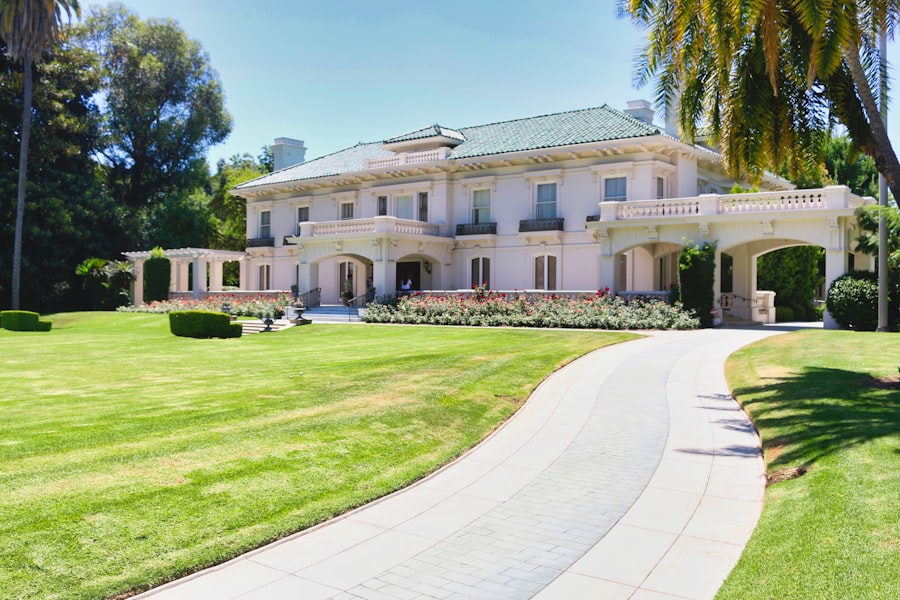
The weeks and months following the finalization of the estate were a study in contrasts. Mark, now the proprietor of the grand mansion, embarked on a renovation project, transforming it into a modern marvel that was, to my knowledge, still rarely visited by its owner. I, on the other hand, faced the daunting task of sorting through my inherited “treasures,” a process that was less about discovery and more about discarding. The disparity in our outcomes became a silent, yet ever-present, wedge between us.
Mark’s Grand Endeavors: A Symbol of Unearned Advantage
Mark’s embrace of the mansion was swift, almost immediate. He spoke of its potential, its architectural significance, and the vast sums he would invest in its restoration. His narrative was one of opportunity seized, of a windfall that would propel him forward. He spoke of future parties, of entertaining clients, all within the imposing walls of a house I barely recognized from our childhood. It was a narrative that felt alien to me, a story of opulence that I could only observe from a distance, like a spectator at a grand opera without a ticket.
The Grandeur of the New: How Material Wealth Silences Sentiment
The renovations at the mansion were extensive. Walls were moved, modern amenities were installed, and the entire structure was infused with a contemporary aesthetic. While I acknowledged the architectural merit and the investment, I couldn’t help but feel a profound disconnect. The character, the history, the subtle nuances that had made it our parents’ home, however imperfectly, seemed to be systematically eradicated. It was as if the physical structure was being valued above the memories it contained, a common theme in my evolving understanding of this inheritance.
My Endeavors as Curator: The Unseen Labor of Sorting
My days were filled with the less glamorous, but no less essential, task of curating my inheritance. I hauled boxes, sorted through files, and made difficult decisions about what to keep, what to donate, and what to discard. It was a painstaking process, often emotionally draining. Each yellowed photograph, each half-written letter, was a reminder of a life lived, a path taken, and an outcome that felt disproportionately allocated. I became a reluctant archivist of my father’s unfinished business.
The Labor of Love (and Obligation): Unearthing the Past
There were moments of unexpected discovery. A collection of my mother’s poetry, tucked away in a box of old records, brought a pang of bittersweet nostalgia. A set of antique tools, though I had no immediate use for them, held a certain craftsmanship that spoke of a different era, a different skill set. These were the moments where the “trash” began to reveal glimmers of genuine value, not in monetary terms, but in their connection to the people who had shaped my life. The work was a labor of obligation, certainly, but it also became a labor of love, a way of honoring the past, even the parts that were less glamorous.
The Unspoken Divide: Sibling Estrangement

The unequal distribution of our inheritance created a subtle but persistent rift between Mark and me. What had once been a generally harmonious sibling relationship, characterized by shared history and occasional disagreements, began to fracture. Discussions about our parents, about our respective lives, became fraught with unspoken tension. The mansion, a symbol of his accrued advantage, and the storage unit, a symbol of my perceived disadvantage, became silent monuments to our diverging paths and vastly different interpretations of familial legacy.
Conversations Lost in Translation: The Language of Assets
Conversations between Mark and me became increasingly awkward. He would speak of market valuations and renovation costs, while I found myself searching for common ground, for a shared understanding of the emotional weight of our parents’ lives. Our attempts to connect often devolved into him explaining the financial prudence of his inheritance, and me trying to articulate the intangible value of what I had received, a value that remained largely inarticulate and unacknowledged. It was as if we were speaking different languages, one of concrete assets and the other of ephemeral memories.
The Silence of Resentment: When Words Fail to Bridge the Gap
The silence that fell between us was, at times, more deafening than any argument. It was a silence born of unspoken resentment, of perceived injustices that neither of us felt empowered to fully address. I found myself withdrawing, less inclined to engage in conversations that felt inherently imbalanced. The emotional cost of this estrangement was, in its own way, a significant part of my inheritance, an unexpected burden that weighed heavily on my shoulders.
A Future Uncertain: Rebuilding Bridges or Building Walls?
The question of our future relationship loomed large. Could we bridge the gap created by this unequal distribution? Could we find a way to acknowledge the disparate outcomes without letting them define our bond? Or had the foundation of our siblinghood been irrevocably chipped away by the cold logic of legal inheritance? I found myself grappling with this uncertainty, a constant undercurrent to my days as I continued the arduous task of sifting through the remnants of our shared past.
Distant Shores: The Growing Chasm Between Us
The physical distance between the mansion and my small apartment, once a minor inconvenience, now felt like a metaphor for the emotional chasm that had opened between us. He was on his island of opulent inheritance, and I was on mine, surrounded by the sedimentary layers of our parents’ past. We were, in essence, on distant shores, with the turbulent waters of unequal wealth and differing perspectives separating us.
In exploring the themes of familial relationships and the disparities in life choices, a related article can provide further insight into the dynamics of sibling rivalry and the emotional complexities that arise from such situations. For a deeper understanding of these themes, you might find it interesting to read this article on sibling relationships, which discusses how different paths can lead to feelings of resentment or acceptance. You can check it out here.
Re-evaluating Value: Beyond the Tangible
| Category | Brother’s Mansion | My Trash |
|---|---|---|
| Property Size | 10,000 sq ft | 500 sq ft |
| Value | High | Low |
| Condition | Excellent | Poor |
| Location | Prime Neighborhood | Outskirts |
| Maintenance Cost | High | Minimal |
| Emotional Impact | Positive | Negative |
The experience has forced me to fundamentally re-evaluate my understanding of value and inheritance. While the initial sting of receiving the “leftovers” was profound, the ongoing process of sorting through my inheritance has revealed a different kind of richness, one that is less quantifiable but no less profound. It has been a journey of self-discovery, a lesson in resilience, and a stark reminder that true legacy is not always measured in square footage or market capitalization.
The Intrinsic Worth of Sentiment: Discoveries in the Discarded
As I’ve delved deeper into the contents of the storage unit, I’ve unearthed items that, while financially worthless, possess significant sentimental value. My father’s worn leather-bound journal, filled with observations and reflections, offers a glimpse into his inner world that I had previously lacked. A collection of my mother’s favorite LPs, though scratched and faded, evokes memories of cozy evenings and shared music. These are not assets that can be easily appraised, but they are invaluable to me, a testament to the enduring power of personal connection and shared experience.
The Unseen Treasures: Finding Gold in the Gravel
It’s a slow process, like panning for gold in a riverbed. You sift through an immense amount of gravel, the mundane and the discarded, searching for that glint of precious metal. My inheritance is that gravel. It’s the yellowed invoices, the half-used cans of paint, the tangled cords of obsolete electronics. But amongst it, I occasionally find a nugget of pure sentiment, a handwritten letter, a photograph that captures a fleeting moment of pure joy. These are the treasures, the true inheritance, that no legal document could ever fully account for.
Redefining Legacy: From Property to Perspective
Perhaps my parents’ will, in its own way, intended to teach me a lesson. While Mark inherited the tangible edifice of wealth, I inherited the less visible, but arguably more challenging, task of understanding the human story behind it. I am learning to see legacy not as a collection of assets, but as a tapestry woven from experiences, relationships, and the imprint we leave on each other’s lives. This perspective shift, though born of an unequal distribution, is proving to be an incredibly valuable inheritance in itself. It’s a recalibration of what truly matters.
The Legacy of Understanding: A Different Kind of Wealth
The wealth Mark has inherited is undeniable, a tangible manifestation of our father’s success. But my inheritance, while less material, offers a different kind of wealth – the wealth of understanding, of perspective, of a deeper appreciation for the complexities of human lives. It’s a wealth that cannot be taxed, repossessed, or diminished, a wealth that is uniquely my own. I am no longer just sorting through discarded items; I am sifting through the very essence of a life, and in doing so, I am finding a profound and unexpected sense of peace.
FAQs
1. What is the main theme of the article “Brother Got the Mansion, I Got the Trash”?
The article explores themes of family dynamics, inheritance disputes, and feelings of unfairness when one sibling receives a valuable asset like a mansion while another receives something perceived as less valuable, such as trash or a worthless item.
2. Does the article provide any legal advice regarding inheritance issues?
The article discusses common legal considerations in inheritance cases, such as wills, estate planning, and the rights of heirs, but it does not offer specific legal advice. Readers are encouraged to consult a qualified attorney for personal legal matters.
3. Are there any psychological impacts mentioned related to unequal inheritance among siblings?
Yes, the article touches on the emotional and psychological effects that can arise from perceived unequal treatment in inheritance, including feelings of resentment, jealousy, and family conflict.
4. Does the article suggest ways to resolve conflicts over inheritance?
The article suggests open communication, mediation, and seeking professional legal or counseling assistance as ways to address and potentially resolve disputes over inheritance between family members.
5. Is the story in the article based on a real event or fictional scenario?
The article is based on a common scenario that many families face regarding inheritance but does not specify whether it is a true story or a fictional example used to illustrate the issues involved.